
Mthobeli Jiwulane
Is Africa weaning itself from the grip of Western imperialism with its new rhetoric that is about getting out of the pockets of the big powers?
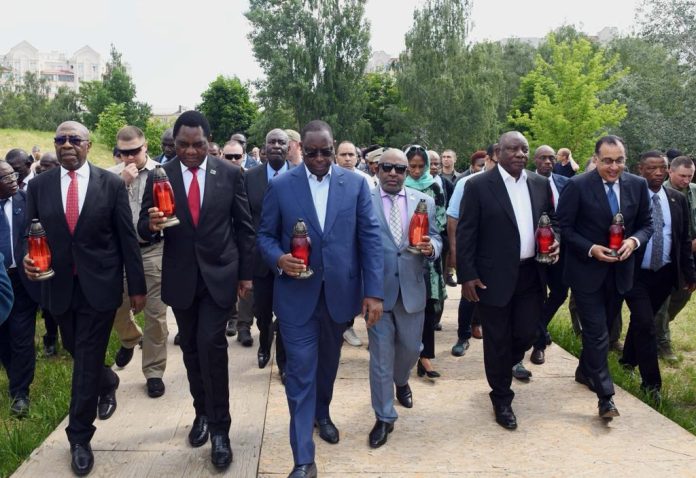
It has been sounded by many leaders of Africa that Africa needs to unite and speak with one voice and act in unison when dealing with international issues particularly conflicts. The leaders appear to be tired of lining up for photo ops and enjoying dinner in the Western capitals or as one of the leaders, Kenyan President William Ruto, put it “being loaded in buses like school children” to go and listen to what one man has to say.
The sentiments from many Africa leaders is that the days are gone when they had to be summoned to conferences and summits and subjected to treated as underlings in a game they should be playing themselves. Instead they want to be treated as equals by the countries that invite them and besides, according to Ruto, their engagements with their hosts must be meaningful.
The Kenyan leader cited the recent US-Africa, China-Africa and the Russia-Africa summits, among others as examples. “We have made a decision very respectfully as heads of states in Africa that any engagement with other partners must be an engagement of equals,” he says.
There is a growing concern among African leaders that the habit to invite only the heads of states of Africa not only undermines them but often such engagements produces no meaningful outcomes except good sounding speeches by the 50 heads of African state and government and a photo op. Often they attended because they were blackmailed by some hosts countries with threats of consequences if they failed to honour the summit with their presence.
Rather the African Union resolved to be represented as a bloc by the African Union (AU) troika comprising the current, outgoing and incoming AU chairpersons plus the African regional economic communities.
Any future meetings with the big powers should be attended by this group not the entire leaderships of African states and that the host nation must respect Africa’s rules and architecture as presented to them and not put their own terms.
Before Ruto, the initial proponents of this approach based on the view that Africa must stand on its own were the presidents Paul Kagame of Rwanda, the late Tanzania’s John Magufuli and even outspoken Zimbabwean-born anti-imperialist and diplomat, Dr Arikana Chihombori-Quao. They took up the cudgels from previous Pan Africanism champions such as Kwame Nkrumah of Ghana, Libya’s Muammar Gadaffi and Thabo Mbeki, former President of South African who pursued a rigorous African renaissance.
Although Nkrumah and Gaddafi’s vision of a united states of Africa was yet to be realised Mbeki’s initiative of a stand-alone Africa in the context of Africa Rising vision, laid the foundation for the establishment of African Continental Free Trade Area (AfCFTA) aimed to intensify trade among African states. AfCFTA, launched recently, emerged directly from the New Partnership for Africa’s Development (NEPAD) a brainchild of South Africa under Mbeki and Nigeria, under its former president Olusegun Obasanjo. Both countries are Africa’s two leading economies.
But there is a problem with the new approach from the perspective of the West. The United States objects to the close ties by some African countries with Russia to such an extent that Washington, through its respective ambassadors to the two countries threatened both South Africa and Malawi for their strong ties with Moscow. This is exactly what makes some leaders, including South Africa, object to being bullied by the US on who they should choose as their friends, a view that seems to resonate throughout Africa. This has prompted Kagame to state clearly that ‘Russia should be everywhere it wants to be’ like all other countries.
Clearly Africa does not choose Russia or the United States but prefers to be neutral or be a friend of both. But the US does not accept that, an attitude that appears to antagonise many African states to choose the old friend, Russia which supported their anti-colonial struggles as then Soviet Union while the US backed the colonial oppressors.
This becomes a Catch-22 situation for Washington which must convince Africa it has its interests at heart rather than merely trying to isolate Vladimir Putin so as to reinforce its own imperial hegemony. Instead of bowing to pressure to help marginalised Russia, many African countries had welcomed Putin with open arms at their state houses in the recent past much to the chagrin of the White House. In fact Putin has been to the African capitals more than any other Russian or Soviet leader in history. Instead of joining Joe Biden’s anti-Russian bandwagon, many African countries had been moving towards Moscow but without necessarily ditching Washington, to emphasise their neutrality.