
By Mirna Fahmy
In the aftermath of the October 7 attack on Israel, a wave of hostilities emerged across the Middle East. Iran and its regional proxies intensified their operations against Israel, prompting renewed calls for a decisive strategy to curtail Iran’s influence. As tensions escalated, the idea of targeting Iran’s nuclear weapons infrastructure gained traction as a means to weaken what many view as the epicenter of regional instability since the rise of the clerical regime.
Before the most recent military exchanges between Israel and Iran in June 2025, United States President Donald Trump sought to prevent Iran from reaching full nuclear capability by negotiating a new deal. Despite multiple attempts, Iran remained defiant, consistently rejecting any agreement that would fully dismantle its nuclear program.
“The closest one can get to a ‘peaceful’ resolution, therefore, is through surgical strikes against their nuclear capacities,” said Irina Tsukerman, an American national security and human rights lawyer, in an interview with Diplomatic Insider.
That line of thinking culminated in a bold military move. On Saturday, June 21, 2025, the United States (US) launched targeted airstrikes on key Iranian nuclear sites, marking a dramatic escalation in the longstanding conflict between Iran and Israel. President Trump announced the strikes on his Truth Social account, declaring, “We have successfully completed our attack on the three nuclear sites in Iran, which include Fordow, Natanz, and Esfahan. All aircraft are now outside Iranian airspace.”
He emphasized that the Fordow facility, known for its deep underground uranium enrichment capabilities, had been hit with a full payload of bombs. Describing the mission as a “spectacular military success,” Trump underscored the significance of disabling one of Iran’s most fortified nuclear installations.
No casualties have been reported so far. Tsukerman clarified the operational planning behind the attack. “Geographically, many of these facilities are located in mountainous regions, minimizing direct civilian proximity. Even when they are closer to populated areas, that is often a deliberate choice for protection,” she noted.
According to her, most conventional military locations, including missile and nuclear research centers, are deeply concealed. The individuals working at these sites are primarily scientists and technical personnel directly involved in the nuclear program. In the eyes of military strategists, they are considered legitimate targets due to their roles in weapons development.
Prior to the assault, Trump had posted a series of warnings. He claimed that the US had “total control of the air spaces of Iran” and urged Tehran to surrender. In a separate post, he advised residents in the capital to seek shelter in safe locations, indicating the gravity of the impending operation.
The Strategic Stakes and the Limits of the Strike
Tsukerman clarified that this is not “Iraq’s war,” noting that the U.S. had previously “basically given Iraq to Iran,” and Europe could have intervened with better economic deals for a more predictable and less corrupt group. Trump emphasized that the strikes aimed to eliminate Iran’s nuclear threat, not to pursue regime change or a ground war.
Iran’s nuclear program dates back before the 1979 revolution. It began as a civilian energy initiative with American support in the 1950s and 1970s during the rule of the Shah. At the time, the Shah regarded nuclear energy as a pathway to modernization and industrial advancement. After the Islamic Revolution, the US withdrew support, and Western concerns grew about potential weaponization.
While it is not illegal for Iran to possess a nuclear weapon, a complete change of mindset is required, according to Tsukerman. “This means not only removing the current leadership but fundamentally transforming the underlying ideology, much like Germany and Japan were entirely reconstructed after World War II,” she stated.
As of June 2025, Iran does not possess nuclear weapons but is very close to having the capability. The International Atomic Energy Agency (IAEA) reported that Iran has enriched uranium up to 60% purity, which is just below weapons-grade (90%) and has stockpiled over 408 kilograms of this material—enough for multiple nuclear weapons if further enriched.
Iranian officials confirmed they relocated nuclear materials from key sites before the U.S.-led strikes. Iran’s state broadcaster IRNA, citing a senior political official, reported materials were moved from Fordow, Natanz, and Esfahan prior to the attacks. This has minimized contamination risk and limited damage to the program.
“The nuclear program is unlikely to disappear because it’s a tool that can be used for various justifications, whether religious, nationalist, or simply for imperialist power plays,” Tsukerman highlighted. “The most that can be done is to degrade their capacities and set them back as far as possible.”
U.S. Vice President JD Vance reinforced the administration’s stance: “We’re not at war with Iran. We’re at war with Iran’s nuclear program.” He reiterated that the ultimate goal is to prevent nuclear weapons acquisition, not provoke regime change or a full-scale conflict.
Tsukerman, outlined that“The end of this war lies in the hands of the US,” she said. “And that’s sceptical to happen or unless the administration feels it has nothing to lose like a couple of symbolic strikes and bombardments”
However, provocations continue. Iran has already targeted American military bases in Syria, prompting growing speculation about the potential for escalation in Iraq. Despite years of American involvement, Iranian influence remains strong there through its network of proxy groups and political alliances.
Nonetheless, Trump has consistently shown a preference for negotiating deals. “He wants a diplomatic victory,” Tsukerman noted. “That is more valuable to him than an extended military engagement.”
Economic realities could also push Tehran to the negotiating table. Iran lacks the financial means for sustained, high-cost weapons imports from China. Oil, the primary revenue source, is limited. “Iran is floating on an ocean of oil,” Tsukerman said, “but that does not mean it has strong oil exports. Without diverse sources of income, the pressure to return to the bargaining table will intensify.”
Is it World War III?
Fears of a global conflict have recently gripped the Middle East. The escalation between Israel and Iran, combined with an expanded American military presence, has led some to speculate if the region is witnessing the start of a third world war.
The U.S. has significantly reinforced its military posture, deploying new fighter jets—including F-16s, F-22s, and F-35s—and extending existing deployments to bolster defensive operations. These aircraft aim to intercept drones and projectiles and shield American personnel and assets. The U.S. also maintains approximately 40,000 troops in the region, supported by air defense systems, fighter squadrons, and naval forces.
Despite the growing military footprint, Tsukerman maintained that the buildup is designed solely for defensive purposes. “From the perspective of comparing this to World War I or World War II, we are not yet in a state of total war,” she said. “Instead, what we are seeing is the emergence of multiple flashpoints around the globe.”
In terms of military alliances, Iran’s closest strategic partner, China, provides weapons but has not committed troops. Russia, another potential ally, is heavily engaged in its war against Ukraine, which began in 2022. While North Korea has sent troops to Russia for its “special operation” in Ukraine, it’s not a declared war, and participation remains limited by agreement.
The nature of warfare itself is evolving. Tsukerman explained that the trend is to minimize direct human involvement. “The aim now is not to maximize boots on the ground, but to rely on advanced technologies like drones,” she noted. “Russia’s use of human waves in Ukraine, for example, reflects a lack of equipment and resources due to international sanctions, rather than an effective or preferred military strategy.”
What Is the Future of Iran’s Regime?
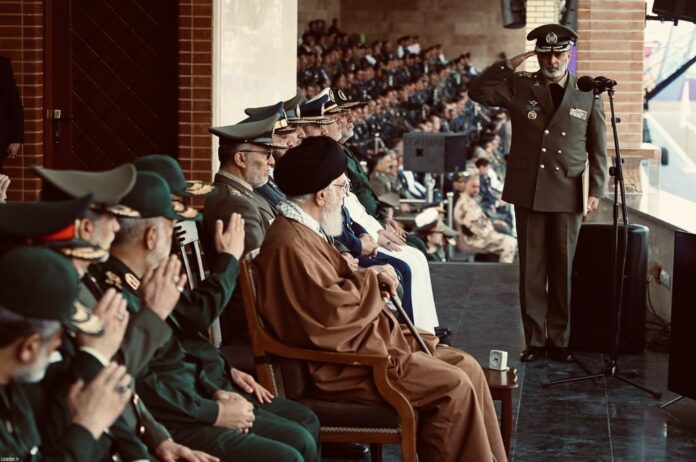
As the conflict unfolds, questions arise about the long-term fate of Iran’s clerical leadership. Israel’s ultimate goal appears to be the dismantling of the Mullah regime. JD Vance recently stated that Ayatollah Ali Khamenei’s future might ultimately lie in Israel’s hands, with Trump even claiming, “they know where Khamenei is hiding.”
Tsukerman pointed out that the Iranian regime is not isolated, even under intense pressure. “The current regime has supporters outside the country who provide intelligence, logistical, and financial assistance.”
Among speculated successors to Iran’s leadership is Reza Pahlavi, the exiled son of the former Shah of Iran. He has publicly supported Iranians’ right to resist the current regime, particularly in defense of women’s rights. However, Tsukerman dismissed Pahlavi’s political prospects as lacking credibility. “He did not grow up in a functioning court or assume any governing responsibilities like crown princes in active monarchies do. He has no real experience and no operative network within Iran,” she said.
She also emphasized that the late Shah did not abdicate in his son’s favor, so any claim to power lacks formal legitimacy. Additionally, Iran’s internal diversity presents a challenge to any transition. “Iran is a highly diverse society. Only a minority are ethnic Persians (Farsis), and while groups like the Azeri-Turkic and Kurdish populations have distinct identities, there is no cohesive opposition movement within these communities,” Tsukerman explained.
Despite widespread dissatisfaction with the regime, a successful revolution requires organization and strategy—both currently lacking. “There is no unified transitional plan, no mass mobilization, and very few credible opposition voices outside of Pahlavi represented in Western media,” she said.
Rather than pushing for regime change, regional players—including Türkiye, Gulf states, and even Israel—are thought to prefer a weakened but intact Iranian government. “This avoids a refugee crisis, civil war, and the risk of a hardline replacement that could be even more difficult to engage diplomatically,” said Tsukerman. While Gulf states are wary of Iran’s regional interference, they seem more comfortable with the status quo than with the uncertainty of political collapse. “They don’t want Iran’s assets activated on their soil, but they’re not exactly eager for regime change either,” she added.
The Future of the Middle East
The recent escalations have led many to believe a “new Middle East” is emerging. Israel, through its social media and news, has repeatedly emphasized its goal to terminate the 4-decade Mullah regime. This isn’t just speculation; many newspapers, like Time Magazine, and politicians and journalists in the Arab region have echoed this sentiment.
“There is a new Middle East emerging,” said Tsukerman. “But it’s not necessarily a safer one.”
Although the Iranian proxies have been weakened, as she explained, that doesn’t mean they’re fully gone. This will create a space for other actors to take over, like China. China is considered a huge power, through cybersecurity and intelligence strategies. Russia has been diminished in Syria, but they will try to compensate for it through businesses and exporting their strategies. Türkiye is emerging as a significant winner, gaining more influence in Syria, alongside several Gulf countries, making it difficult for the current regime there to dissolve, even with internal instability. Qatar’s global influence is also expanding despite criticism.
Regarding regional re-emergences, they are unlikely unless an Arab country attacks Israel. As long as cooperation continues between Israel and Arabic-speaking countries, Israel has no need to attack any ruling power. “And if that happens, it would be through back channels, and there will be no proof that Israel is behind it,” Tsukerman pointed out.
Finally, the fate of the Palestinians has become vague after the October 7 attack. Tsukerman said it is up to the Palestinians to decide their future in the two conflicted areas.
“There is actually no plan. This means that anyone can use this situation to their own advantage, inciting a problem. Indecisive Israel’s Prime Minister Benjamin Netanyahu is trying to replace Hamas by arming other gangs in the region. The problem is not who rules Gaza but who funds Gaza. Current funders must be removed and new actors installed behind the scenes to provide support for a new transitional government; otherwise, the situation will always be problematic.”