
By Lesedi Sibiya-Diplomatic Insider
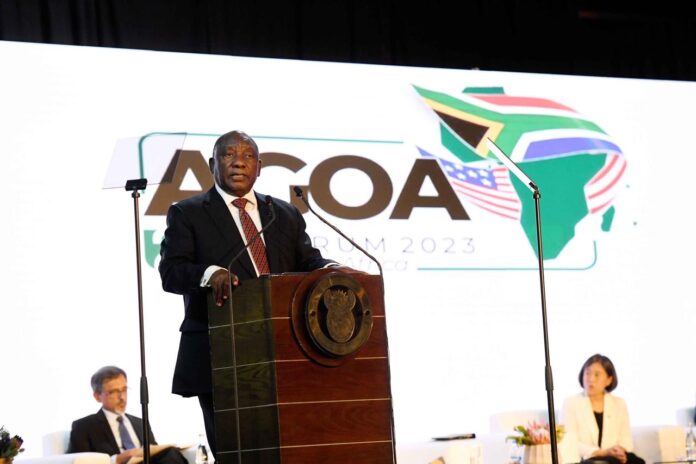
With Donald Trump’s tariff increase set to kick in from the 1st of August, there is looming concern over the end of the African Growth and Opportunity act (AGOA), a US trade program which ensures that Sub-saharan African countries receive preference of access to the US trading market.
AGOA was established in 2000, and has been at the core of U.S economic policy and commercial engagement with Africa. AGOA ensures that eligible Sub-Saharan African countries receive duty-free access to the U.S trade market for 1,800 products, with an additional 5,000 products that are eligible for duty-free access under the Generalized System of Preferences Program. In order to be eligible for AGOA, countries are required to make continual progress towards establishing a market based economy, right of law, political pluralism, and the right to due process.
Minister of Agriculture, John Steenhuisen is amongst those who believe that this recent tariff hike by U.S President Donald Trump could signal the end of AGOA. “Whilst we can breathe a sigh of relief that this did not come into effect as it was due to tomorrow, it does give us an opportunity to urgently use the next few weeks to try and negotiate a way forward to prevent this…whilst not explicit, the announcement would signal the end of the African Growth and Opportunity Act.” said Steenhuisen during the National Assembly.
Donald Trump sent various leaders including South African President Cyril Ramaphosa an open letter expressing that there will be an increase in tariffs from next month. Despite this air of uncertainty Trump has expressed in the letter that he is open to negotiations from these leaders, when asked by reporters during his visit with Israeli Prime Minister Benjamin Nethanyahu, Trump expressed that these tariff increase is not set in stone; “I would say firm, but not 100 percent firm.” said Trump.
At the 17th BRICS leaders summit which was held from 6 July-7 July 2025, various leaders expressed that these tariff hikes would also mean that countries in the global south will have to rely on each other to ensure that multilateralism is a priority in regards to trade relations and cannot rely on western entities for sustainable development. South Africa will also work towards negotiating a more reasonable percentage or at the very least a slight adjustment, which all countries who were hit with this tariff increase will have the opportunity to do as well. Although Donald Trump has expressed that the increase in these tariffs is to reduce the trading deficit between South Africa and the United States, this may also be the first phase of Donald Trump’s tariff war that he has been threatening against countries who oppose American policies, and may be using this reason to act on his recent threats.
“Any country aligning themselves with the Anti-American policies of BRICS, will be charged an additional 10% tariff.” Trump wrote on his social media platform Truth Social.
Relations between South Africa and the United States has been on decline in recent months due to a variety of reasons which include the Afrikaner farmers seeking refuge from a so-called “white genocide” which Ramaphosa and his delegation jumped to de-escalate, as well South Africa being vocal about their opposition of Israel and their attacks on Gaza and now Iran, as the United States is an ally to Israel this push back is viewed as retaliatory and goes against America’s interests.
The South African government will act swiftly in negotiating the adjustment of these tariff increases by Donald Trump before it is fully implement from 1 August 2025