

By Lesedi Sibiya-Diplomatic Insider
This year has been a bittersweet in terms regarding the dwindling relations between South Africa and the United States, from tariff hikes, to apparent “white genocides”, to South Africa taking Israel to the International Court of Justice and South Africa’s close ties with Russia and China have really put the country on America’s bad side and now in the latest string of events, the U.S House of Foreign Affairs Committee have discussed imposing sanctions on certain members of the African National Congress (ANC).
The committee had introduced a bill to the United States Congress named, the US-South Africa Bilateral Relations Act of 2025, which aims to review the working relationship between the United States and South Africa.
The bill intends to carefully seek out South African government officials or ANC members who are eligible for these sanctions. Ronny Jackson, a Republican Representative, had led the charge to introduce this bill to the United States Congress on 3 April, 2025 as this was the catalyst towards the legislative process becoming concrete law.
The Foreign Affairs Committee cleared the bill which has now passed the first stage of it becoming actual law.
“Today, my bill to fully review America’s relationship with South Africa and give President Trump the tools necessary to hold their corrupt government accountable passed through committee,” said Jackson.
“The days of allowing our so-called allies to walk all over us are over. South Africa made its choice when it abandoned America and our allies and sided with communists and terrorists.” Jackson added in regards to his reasons to why he felt strongly about proposing the bill to congress.
Jackson rebukes the relationship that South Africa holds with Iran, China, Russia and Hamas and that South Africa must face the consequences of fostering those relations. Allegedly the ANC have had direct contact with the leadership of Hamas much to the disdain of the United States government . This coupled with South Africa taking Israel to the ICJ last year did not make a compelling case for South Africa in terms of the conversation surrounding this bill coming into law.
However not everyone supported this bill, with certain committee members believing that this matter can only be resolved through diplomatic conversation. The bill is seen by opposing members of the committee as a very harsh approach towards handling the fractured relationship between South Africa and the United States.
Opposing members finding the bill to be too heavy handed did not ease their concerns over South Africa’s change in foreign policy and are very fearful that if this bill is passed into law it will drive South Africa further away from them, largely due to the fact that America considers South Africa as the most important economy and if the US continue with imposing these sanctions it will destroy trade relations and bilateral relations. 34 members of the committee voted for the bill to be passed against 16 members who were opposed which meant that the bill was cleared through the committee, however was denied by the senate, and for this bill to become actual law approval from both entities is required.
Despite President Donald Trump’s administration having control over both the House and the Senate, there is doubt that this bill will actually come into law.
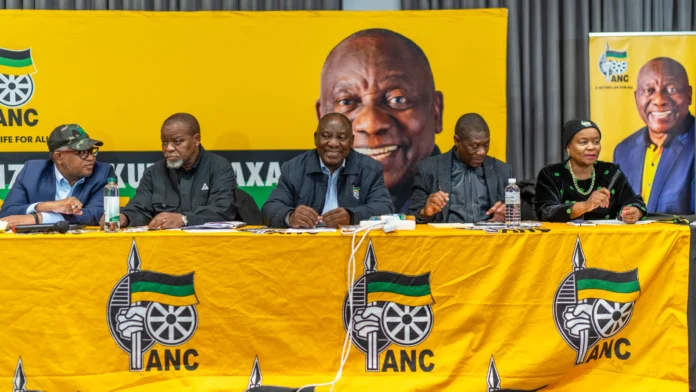
ANC spokesperson Bhengu-Motsiri has expressed that these sanctions that the United States are threatening to impose is nothing more than propaganda fueled by the agendas of those that have interests in America and by America themselves, and has said that the ANC will regroup in order to assess the severity of the situation.
“We will have to calmly sit down and reflect on the situation and the implications of this proposed bill that is still going for debate in one of those houses at the U.S Congress.” said Bhengu Motsiri as per eNCA.
“We are also in contact with our historical allies who were active in the fight against Apartheid and are residents in the U.S” Bhengu Motsiri added.
Bhengu-Motsiri has agreed with various international relations analysts regarding the fact that South Africa will finally need to take a stand on where their position is on the United States and all parties must in some sense share a monolith perspective regarding this stance.