


In the vast story of Africa’s development, there is a chapter we have not yet written. It is the chapter where energy no longer limits us. Where the map of our continent glows evenly at night from Cairo to Cape Town, Lagos to Nairobi. Where industrial corridors hum with machinery, desalination plants turn seawater into drinking water, hydrogen refineries fuel green transport, and our ports become global hubs of maritime trade. This chapter begins with nuclear power.
It is fashionable to speak of renewable energy in hushed reverence, as though solar and wind alone will rescue us. They will help, yes, but Africa’s growth trajectory demands more than intermittent supply. Our factories will not pause when the wind stops. Our hospitals cannot dim their lights when the sun sets. Africa needs reliable baseload power to match the ambitions of the African Union’s Agenda 2063 and beyond — and nuclear power, with its decades of proven performance, is the key. In the AU’s 2048 vision for a continent that is prosperous, industrialised, and self-reliant, nuclear energy is not a luxury. It is the foundation stone.
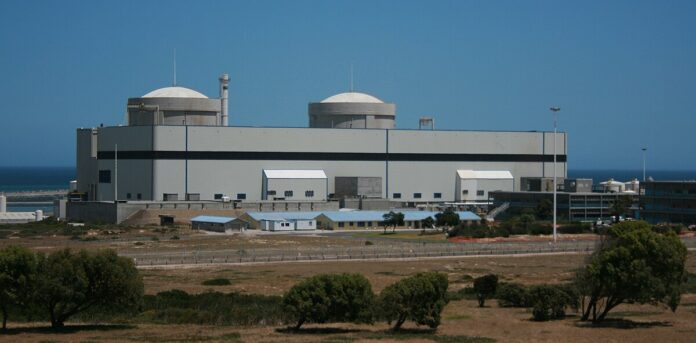
But energy policy and infrastructure cannot live apart from each other. They must grow together, like intertwined roots. Too often in Africa we draft policies that look magnificent in PDF form yet are not grounded in real-world technical pathways. If nuclear energy is to be Africa’s lever, then policy development must walk in step with the actual deployment of small modular reactors (SMRs) and micro modular reactors (MMRs). These technologies are designed for Africa’s reality — scalable, safer, and deployable in areas that are far from national grids. Imagine SMRs powering rural mining hubs in the Democratic Republic of Congo, or an MMR driving a green hydrogen plant in coastal Namibia.
The challenge is that nuclear is often spoken of as something for governments and mega-corporations alone. Yet some of the most transformative innovation in our time has come from small startups — the same spirit that has built Africa’s fintech revolution could also shape its nuclear future. We must open the gates for African startups to enter this space. Not just in reactor design, but in robotics for maintenance, AI for reactor monitoring, 3D printing for component manufacturing, environmental monitoring tools, and maritime nuclear propulsion systems. These entrepreneurs need targeted funding, regulatory support, incubation hubs, and partnerships with research institutions.
Africa also holds a natural advantage that cannot be overlooked — uranium reserves. Countries like Niger, Namibia, South Africa, and Malawi hold some of the world’s richest deposits. Yet much of our uranium is exported raw, without capturing the greater value that lies in fuel fabrication and downstream industries. A continental nuclear development plan must integrate uranium beneficiation, fuel manufacturing, and even the export of nuclear-grade fuel assemblies. This keeps wealth on the continent and positions Africa not just as a consumer of nuclear technology but as a global supplier.
Equally critical is the question of spent fuel storage. Nuclear power is often unfairly criticised on this point, yet the technology and regulatory frameworks for safe long-term storage are well established. Africa has the opportunity to develop regional spent fuel management centres — secure, well-engineered facilities built to international safeguards standards — which can also serve as hubs for research into reprocessing and recycling of nuclear fuel. This approach turns a perceived liability into a strategic resource, where spent fuel is recognised for its remaining energy potential rather than dismissed as waste.
Public awareness cannot be an afterthought. We must begin at the level — the street level, the community level, the school level. Nuclear literacy should not be an elite vocabulary. Children in rural schools should know what an SMR is before they turn eighteen. Communities should be involved in site selection and environmental review processes not just as consultees but as participants in the knowledge-making process. This is how trust is built.
The beauty of nuclear development in Africa is how it interlocks with other sectors. Nuclear-produced electricity can power electrolysers for green hydrogen, which in turn fuels clean transport and maritime shipping. It can supply heat for industrial processes, reducing the continent’s dependence on imported fossil fuels. It can provide stable electricity for desalination plants, securing water for agriculture and human consumption in drought-prone regions. In transportation, it can electrify rail networks and provide shore power for ports, cutting emissions while strengthening trade. Environmentally, it allows us to decarbonise without sacrificing economic growth.
Sceptics will point to costs, safety fears, and historical baggage. But this is precisely where Africa has an advantage — we can leapfrog to new generation nuclear without inheriting the mistakes of the past. SMRs and MMRs are designed with passive safety features and modular construction methods that lower costs and shorten timelines. Financing models can be tied to energy off-take agreements with industrial partners. African regulatory frameworks can be harmonised under the African Nuclear Energy Regulatory Partnership, reducing duplication and enabling continent-wide standards.
We will achieve this because Africa has done it before. We built mobile banking ecosystems when the world said our people could not bank. We developed some of the most sophisticated drone delivery systems in the world in countries that were once labelled underdeveloped. The question is not whether we can lead in nuclear, but whether we will decide to.
If we act now, we can anchor nuclear power as the engine of Africa’s industrial century. This requires courage from policymakers, vision from entrepreneurs, and a continental commitment to work together beyond borders. It will not happen in the silence of committees alone. It will happen when the language of nuclear energy is spoken in boardrooms, in classrooms, in township innovation hubs, and in the corridors of power.
Because when the lights of Africa shine bright and steady across the night sky, it will not just be a symbol of energy. It will be a sign that we have written that long-awaited chapter — the chapter of a continent that holds its own future in its own hands.
Nkazimulo Moyeni is a lawyer specialising in nuclear law, hydrogen law, international law, and nuclear safeguards and security. He is the President of the Africa Nuclear Law Association and Managing Director of Ga Seriti Legal, a legal consultancy firm based in Johannesburg, South Africa.