By Lesedi Sibiya-Diplomatic Insider
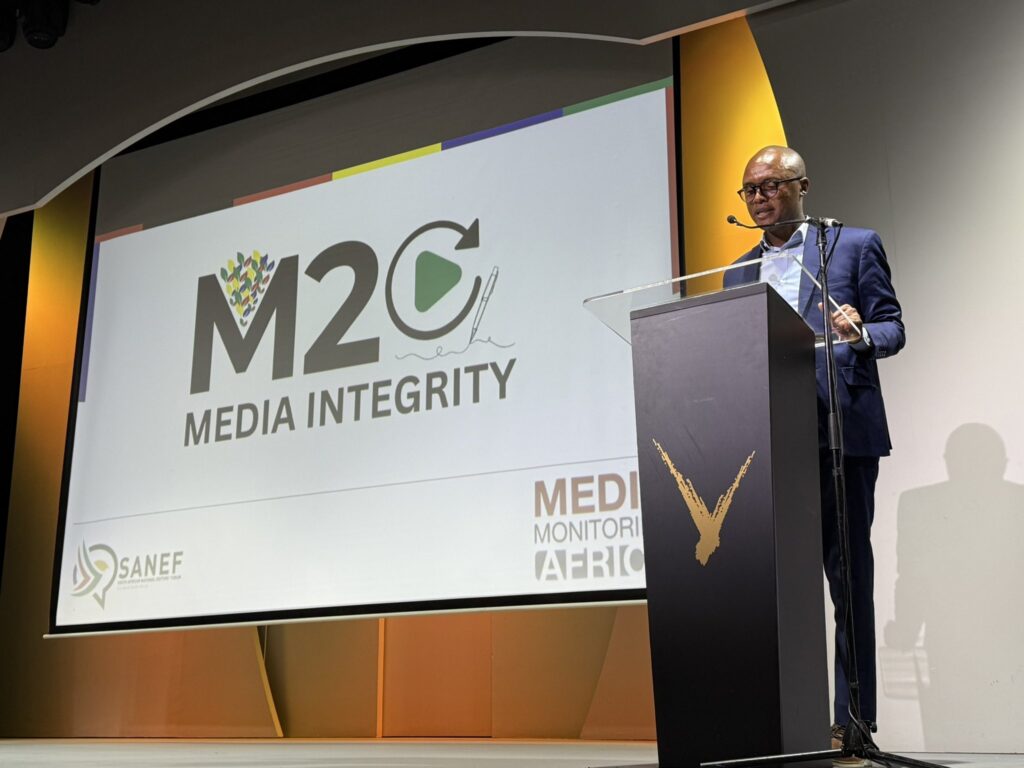
The M20 summit which will span over the course of two-days brings together journalists, academics, policymakers and members of civil society as it sets to place journalistic integrity and the role of journalism at forefront of G20.
The summit commenced from 1-2 September 2025 in Johannesburg. The event is hosted by Brand South Africa, the South African National Editors’ Forum (SANEF) and Media Monitoring Africa (MMA).
The overall aim of the summit is to highlight the challenges that affect media as well media information integrity in today’s climate.
Some of these include climate change disinformation, artificial intelligence, cyber misogyny and journalist safety.
The times are changing in the age of journalism where there is less freedom on the stories that journalists are allowed to tell, media control has caused many stories specifically pertaining to human rights to be silenced.
An M20 draft declaration has been created to combat these issues by protecting the rights of journalists, providing more media freedom, and to ensure that Artificial Intelligence does not harm the integrity of media information.
This summit is also aimed at finding ways in which journalists have more protection in the line of work, for example journalists who have lost their lives in the pursuit of sharing the stories of Palestinians who are suffering due to the conflict between Israel and Palestine.
The declaration is set to be finalised at the summit and will be presented to delegates who have the power to enforce this declaration so that M20 and G20 can have an honest correlation with one another and not be led by agenda and propaganda.
This is to ensure that journalists around the world have complete control to give a voice to the voiceless.
“It’s not a new concept. It’s a concept that originated from a desire to bring media issues to the forefront of the global agenda, specifically within the G20 framework. And this M20 is a broad alliance that has come together to promote journalism as a public good.” said Treasurer General of SANEF and Secretary General of African Editors Forum Sbu Ngalwa in his address at the summit.
“So today as we gather here at M20, the lessons continue, that information integrity matters to all of us. It is the invisible infrastructure of our democracy, the livelihood of successful economies, and the glue that strengthens social cohesion,” said Minister of Communications and Digital Technologies Solly Malatsi when he addressed the summit.
“A recent study of South Africa’s 2024 elections found that despite fears, AI driven fake content only had a limited impact with most information still coming from traditional sources. But we cannot be complacent and as was highlighted by the UN Secretary General Antonio Guterres, that threats to information integrity are proliferating and expanding with unprecedented speed more so on digital platforms, supercharged by AI technologies,” added Molatsi.
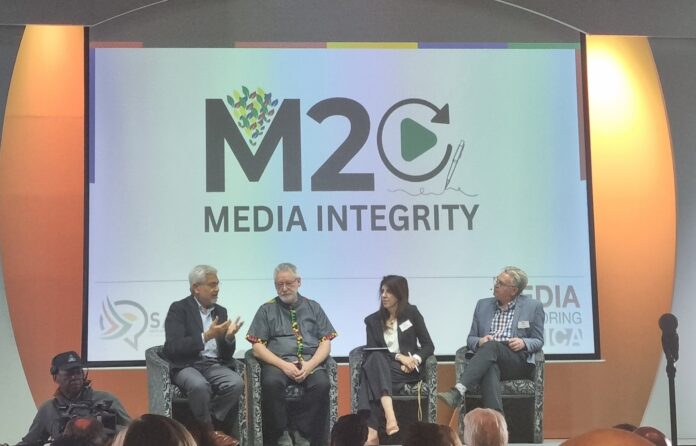
“None of the world’s problems and certainly none of India’s problems can be solved if the media is not free, if journalists are not free to do the work they are supposed to do,” said American journalist and editor Siddarth Varadarajan during the panel discussion on M20 origins and agenda.
“So I must say in the initial months where we tried to interact with government to do this within the G20 framework that didn’t really work, which meant that we decided to go and do it independently as a parallel process, what we’re doing now,” said Isak Minnaar of SANEF during the panel.
“Only journalists on the ground are being relentlessly targeted and it’s impossible for journalists from other parts of the world to enter Gaza, so you have a kind of complete information blackout which serves as a very convenient cover for the crimes that are being perpetrated there,” said Varadarajan speaking to the media silencing ongoing on the information pertaining to the Gaza conflict.
The M20 Summit will conclude today as the country gears for the upcoming G20 summit which will happen in November.