
Brian Sokutu
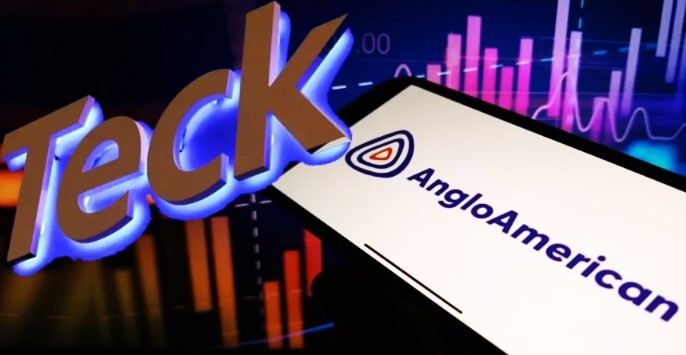
With the recent announcement of a merger between the 108-year-old South African mining giant Anglo American and Canadian Teck Resources Ltd – becoming a new US$50-billion entity Anglo Teck – experts have emerged divided on the imminent disappearance of the iconic brand and its impact on the SA economy.
- In terms of the mooted merger, expected to complete in 12 to18 months:
- Anglo Teck is expected to offer more than 70% copper exposure.
- Additional US$1.4 billion (100% basis) annual average underlying EBITDA uplift, expected from synergies between the adjacent Collahuasi and Quebrada Blanca operations from 2030 to 2049.
- Anglo American shareholders to own c.62.4% and Teck shareholders to own c.37.6% of Anglo Teck plc immediately, post completion.
- Anglo Teck to be headquartered in Canada, with Anglo executives relocating to Vancouver.
While the withering of Anglo from South African mining landscape – in terms of foreign listing and the disappearance of its local headquarters from SA – has been seen by political economist Dale McKinley as having little effect on the local economy, mining community representative Boyce Kunupi, has viewed things differently.
Kunupi, who serves on the Tlou Mogale Foundation has been among experts who have expressed concern over:
- “Overpaid and underperforming” Anglo’s leadership, having delivered a poor financial half-year 2025 and operational performance record – coupled with failed asset sales and safety problems.
- The Anglo-Teck deal being “a desperate attempt by Anglo’s leadership to distract from their own strategic and operational failures”.
- The Anglo leadership not to be trusted to create value in the multi-billion deal “when they haven’t been able to restructure their own business over the last 15 months”.
Maintaining that Anglo’s departure was “a setback for South Africa”, Kunupi said: “Anglo was built on South Africa’s gold and platinum, yet its leadership has turned its back on this country.
“The merger is less about growth and more about covering up Anglo’s poor performance at home.”
The economic impact for South Africa meant “further disinvestment – less jobs, less quality youth education, less healthcare and increasing levels of poverty”.
Added Kunupi: “Instead of reinvesting profits here, Anglo’s focus is on copper in Latin America and Canada.
“That translates further into less local development and more wealth flowing out of South Africa.”
He rubbished “untrue” reassurances by Anglo that it was not turning it back on mining communities.
Anglo CEO Duncan Wanblad has spoken of “an enduring commitment” to the country and its “national priorities” – despite the planned relocation of its headquarters to British Columbia.
Wanblad has pledged that the new company would include South Africans on its board and executive team – promising financial contributions to the South Africa’s junior mining exploration fund.
Kunupi said it should be remembered “that communities have heard these words for years while living with broken promises, unsafe operations and failed asset sales”.
“The record shows Anglo cannot be trusted to keep those commitments.
“The Anglo move leaves them more vulnerable than ever before. Communities are treated as liabilities rather than partners.
“Anglo is moving its profits abroad while families here still deal with pollution, unsafe conditions, and poor service delivery linked to mining.
“This rising uncertainty has a ripple effect and is often felt most painfully by the marginalised,” he said.
Kunupi said the mining deal exposed the SA government’s “weakness in not holding global corporations accountable”.
The government can make statements, but when companies are listed overseas and managed from abroad, communities end up paying the price for decisions taken in London or Vancouver.
“Mining has in the past been a real driver of economic development and the mining industry can still be a force for good and communities.
“We are calling for proper accountability of mismanagement at the highest levels within mining companies like Anglo and other mining entities.”
Expressing a contrasting view on the Anglo-Teck merger, political economist Dale McKinley refuted assertions that the deal augured a setback for the SA economy.
Argued McKinley: “This is no setback but another confirmation that sections of South Africa’s traditional mining are fading.
“Obviously, others that are going to pick up, because of the electrical revolution – the green minerals.
“The impact for the domestic economy is hard to say at the moment because this deal is not even way close to being done – if it does go through.
“It all depends on the commodities boom and this was mostly about copper, tech copper resources and their mines.
“If it is going to be about larger things beyond Anglo in terms of its platinum mines and other interests – there is always going to be interest in mineral extraction, as long as there is a market for them.
“It does not really make a huge interest on whether it is Anglo or not.
“If one talks of a national pride, there will be more South Africans who will not agree with that – it depends on who you talk to.
“If you look at BHP Billiton’s bid for Anglo last year, which fell through and Glencore, represent the way these are moving in terms of a secondary listing.
“South Africa is going to be part of that – whether you are talking primary or secondary listing, it is not going to make a huge difference.
“While to others it may be a pride thing, in terms of links in the global economy, we have no control over listings.
“It is not about Anglo leaving but about divesting and consolidating – not leaving the corporation exposed in terms of the unpredictability of the SA economy.”
Anglo, said McKinley, “has been divesting from South Africa quite substantially in the last many years”.
“Anglo has essentially become a more specific commodity-based corporation – as opposed to its traditional interest in South Africa.
“But it remains in many ways, still having offices here.
“It shifted its primary listing to London a long time ago,” added McKinley.
Anglo had already moved its headquarters to London in 1999, spinning off its gold mines into a separate company and maintaining only a secondary listing in Johannesburg.
While Anglo still controls several major assets in South Africa – including the diamond mines of De Beers and the country’s biggest iron ore producer, Kumba Iron Ore – the company has long preferred to chase copper projects in Latin America, a trend that will accelerate if the merger is approved.
Commenting on the Anglo debate, political analyst Sandile Swana, underscored: “Clearly, Anglo as we knew it is gone.”
“Anglo is no longer focused on precious metals – gold and platinum, not even diamond or coal for making steel.
“Copper and iron are now key minerals.
“Kumba will receive more attention but De Beers will be sold,” said Swana.
He said latest developments meant that Anglo was “no longer a major driver of exploration and development of new mines in South Africa”.
“Our own state-owned African Mining and Exploration, has neither announced any major exploration programmes nor any significant new mining projects.
“That does not augur well for jobs.
“New mining houses will have to emerge,” maintained Swana.
He said diamond-rich Botswana was also “not having it easy, because the world marketing of diamonds has somehow collapsed or has a limited future – unless it is reinvented”.
Swana said mining has been on a steep decline in South Africa, since 1980
“Lately, minerals aligned to information and communication technology, artificial intelligence, robotics and clean energy, are becoming more prominent – also creating more jobs.
“Our policies must stimulate those sectors and partner with new investors.
“Assets that Anglo disposes are then taken up by new investors –
for example, Sibanye took over Anglo Platinum.
“Serious job rationalisation had to be introduced with resulting job losses but continuing production,” said Swana.
Once the biggest gold producer in the world, South Africa now ranks 12th, behind countries like Mali and Uzbekistan, according to the World Gold Council.
As a destination for mining investment, it now ranks 68th among the 82 jurisdictions covered, according to the latest survey of investment attractiveness by the Fraser Institute.