By Lesedi Sibiya-Diplomatic Insider
The CGIAR Gender Conference had come to a close in Cape Town over a three day period in order to have critical discussions, collaboration and sharing of ideas in terms of bolstering equality across food, land and water factions.
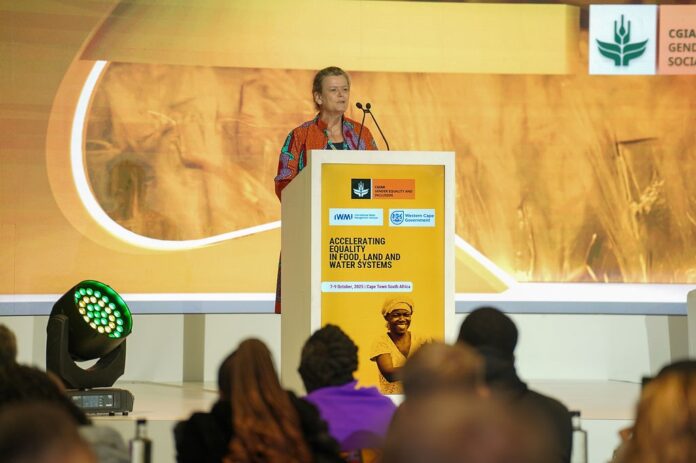
The Director of CGIAR Gender Equality and Inclusion, Dr. Nicoline de Haan, had opened up the conference with a motive to focus on implementation rather than solely focusing on dialogue, as well as reminding delegates that gender “is not a one size fits all issue”, but shaped by local and cultural realities.
She highlighted that the challenge lies in turning evidence into meaningful action that transforms lives on the ground. Speakers at the conference highlighted the need for dissolving structural constrictions that limit the participation and inclusion of women and youth in the agriculture sector as well management of natural resources.
Without clear access to finance and innovation then productivity will continue to remain stifled. The speakers also called for sustainable and equitable food systems as access is currently out of reach.
Funding was the most crucial talking point as this issue affects farmers and researchers across the board. Adv. Mikateko Joyce Maluleke who serves as the Director-General of South Africa’s Department of Women, Youth and Persons with Disabilities, has expressed that there are countless communities that still need access to land and water and are in need of constructive building blocks in order to enhance inclusive growth.
A point that was emphasised by Maluleke is to bridge the gap in education and challenging restrictive cultural norms in order to improve access to resources and finance. Food security, nutrition and climate resilience is impossible to achieve progress in, if there is a lack of women empowerment.
Across the board speakers had continued to emphasise the inclusion of women and the youth is imperative in terms of critical decision making for the inception and implementation of policies, programmes and research initiatives.
Inga Jacobs-Mata, who serves as Strategic Programme Director at the International Water Management Institute (IWMI) had shared insights into how the organisation is rethinking their internal culture and structures in order to create a model which encourages inclusion.
The IWMI has made it obligatory for organisations that are led by the youth in order to co-lead programmes.
In the upcoming year the International Year of the Woman Farmer will be celebrated and will aim to acknowledge the historic reality that women have had a lack of representation when it comes to conversations surrounding agriculture, even though women make up 41% of the agricultural work/labour force.
This celebration will aim to break down these barriers and shift the power so that there are equal opportunities and inclusion for women and the youth.