
By Mirna Fahmy
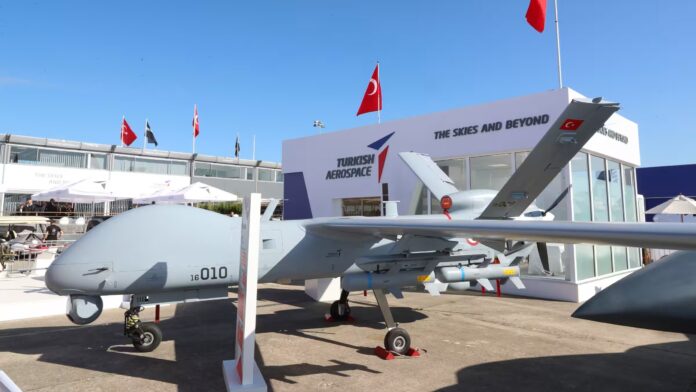
Though many Sudanese saw glimmers of hope last year and early this year, prompting some to return to their homeland, the civil war in Sudan has instead intensified, evolving into a significant global weapon battleground. This escalation is most visible in drone warfare where advanced Turkish and Chinese technologies are clashing. The Sudanese Armed Forces (SAF) rely on sophisticated Turkish drones, including the Bayraktar TB2 and the Akıncı attack drone, which have been pivotal in allowing government forces to regain territory from the paramilitary Rapid Support Forces (RSF). Conversely, the RSF, an anti-government group, is equipped with Chinese-made drones and air defense systems, notably the FH-95 kamikaze drones and corresponding surface-to-air missile systems.
This ongoing drone conflict starkly reflects the internationalization of Sudan’s civil war, with foreign powers like Türkiye and China supplying cutting-edge aerial and air-defense technology to opposing sides. Turkish drones, utilized by government forces, have executed targeted strikes that critically disrupted RSF control, successfully driving them out of key urban areas like Khartoum and eastern Sudan. Despite these setbacks, the RSF has managed to counter by shooting down multiple Turkish drones, including both Bayraktar and Akıncı models, using Chinese-supplied missile systems. Reports from the Washington Post and the United Nations indicate these confrontations have intensified since late 2024, with Chinese air defenses successfully downing at least four Turkish drones between August and October 2025. Adding further complexity, the conflict has drawn in other regional actors such as the United Arab Emirates (UAE), which UN and The Economist reports suggest is supporting the RSF.
The appearance of Turkish and Chinese drones in Sudan is a direct consequence of the conflict’s intensification and internationalization, with each foreign power backing opposing factions to gain influence and secure a strategic presence. Türkiye supports the SAF, led by General Abdel Fattah al-Burhan, supplying them with advanced drones to help regain territory. This aligns with Ankara’s broader diplomatic and humanitarian engagement, aimed at stabilizing the country and widening Türkiye’s regional influence and strategic foothold in the vital Red Sea region. The drone sales, valued at over $120 million since late 2023, have fundamentally reshaped battlefield dynamics, bolstering the SAF’s air support capabilities. However, Türkiye’s involvement has raised international scrutiny due to ongoing UN arms embargoes.
On the other side, China, reportedly via indirect transfers and with involvement from the UAE, provides the RSF with Chinese-made drones and air defense systems. This support aligns with China’s long-standing economic and diplomatic ties to Sudan, including significant interests in its energy sector, mining, infrastructure, and access to crucial Red Sea shipping lanes, which are vital for the Belt and Road Initiative. While officially maintaining a stance of neutrality and calling for dialogue, the evidence of Chinese-made drones being used by the RSF suggests a pragmatic approach. Beijing’s strategic policy focuses on safeguarding its economic interests and maintaining regional stability, while simultaneously hedging its bets by enabling multiple sides with technology, thus managing influence over the conflict’s trajectory and competing with other external actors like Türkiye.
As of 2025, the SAF, buoyed by the effectiveness of Turkish drones, has regained significant ground, including retaking Khartoum and other strategic areas, demonstrating key battlefield advances. Nonetheless, the RSF has managed to narrow the aerial gap through the proficient deployment of Chinese drones and missile systems, successfully shooting down several Turkish models. The conflict remains highly contested and fluid, with neither side achieving a clear, sweeping victory. While the government forces have shown a stronger hold on urban centers, the continued effectiveness of the RSF’s Chinese-supplied air defenses ensures the drone war—and the civil war itself—is far from over.
UAE and Sudan
The complexity of foreign involvement reached a critical point when Sudan formally accused the UAE of heavy involvement in its civil war, particularly by backing the paramilitary RSF. Sudan alleges that the UAE provided extensive support, including supplying arms, financing, training drone operators, and recruiting mercenaries. The Sudanese government claims this support facilitated RSF atrocities, including ethnic cleansing against the Massalit in West Darfur and widespread war crimes, particularly sexual violence.
These accusations culminated in Sudan filing a case against the UAE at the International Court of Justice (ICJ) in early 2025, accusing the Gulf state of “complicity in genocide” and seeking reparations and an immediate end to UAE arms supplies to the RSF. Sudan’s legal representatives stressed the urgent need for ICJ intervention to stop harm to vulnerable groups. Sudanese diplomats further accused the UAE of sponsoring mercenaries from Colombia and other African countries to fight alongside RSF forces.
The UAE, however, has categorically denied all accusations of arming or supporting armed groups, dismissing the charges as politically motivated attempts to undermine its standing. UAE representatives described their role as purely humanitarian, including providing field hospitals, and called for the dismissal of the ICJ case. Legal experts generally view the ICJ case as having limited prospects, citing the UAE’s reservation on the Genocide Convention and the ICJ’s jurisdictional limitations. The UAE again rejected any moral or legal responsibilities for the conflict, calling the claims attempts to disrupt peace efforts.
Catastrophic Humanitarian Conditions
The situation for civilians has become dire, according to reports from Al Jazeera, the United Nations, and the Sudan Doctors Network. Over 250,000 civilians are reported to be completely cut off from food and medical care in besieged cities like el-Fasher. Thousands of children are at immediate risk of death due to severe malnutrition, disease, and lack of essential supplies. Airstrikes, including those conducted by drones, have extensively damaged critical infrastructure, including hospitals, markets, power grids, and refugee camps, leading to escalating civilian casualties and widespread displacement. UN agencies have repeatedly issued urgent warnings about the catastrophic conditions, emphasizing severe shortages of humanitarian aid and the complete collapse of health services across conflict zones.
The conflict has created a massive displacement crisis, with millions of people forcibly displaced since April 2023. This includes millions internally displaced within Sudan and a substantial number who have sought refuge in neighboring countries. While some controlled border crossings have temporarily allowed limited humanitarian access, large-scale returns of Sudanese citizens remain fundamentally constrained by the ongoing violence, pervasive insecurity, and the wholesale destruction of essential infrastructure. Many civilians are still trapped in active conflict zones, lacking safe access to basic services or adequate protection.
Adding a horrific dimension to the conflict, multiple credible sources, including Amnesty International and UN agencies, have documented the widespread and systematic use of sexual violence, including rape, as a weapon of war by armed groups, most notably the RSF. This violence is employed to humiliate, control, and forcibly displace populations. Since early 2024, UNICEF has documented at least 221 incidents of rape against children, including girls and boys, with victims as young as one year old. Many survivors have been subjected to gang rapes and repeated assaults, extending the violence beyond children to women and girls across conflict zones. Amnesty International has further documented the RSF’s atrocities, including gang rapes, sexual slavery, beatings, torture, and the killings of women and girls as young as 15 across various Sudanese states. These heinous acts are being categorized as potential war crimes and crimes against humanity.
A UN agency highlighted a staggering 288% increase in demand for support for survivors, confirming that rape is being systematically used as a deliberate tactic of war by combatants on various sides. Women’s bodies have thus become battlegrounds in a brutal conflict marked by ethnic killings and mass violence. Victims face profound physical and mental trauma, yet many survivors and witnesses are too fearful or stigmatized to report abuses, meaning the true scale of the violence remains vastly undercounted. This systematic sexual violence has been perpetrated during both urban assaults and in detention or displacement settings, significantly exacerbating the humanitarian catastrophe and contributing to the sustained suffering of millions.
Compounding Crisis: Flooding and Regional Water Tensions
The already catastrophic situation in Sudan—marked by civil war, the internationalized drone conflict, and a severe humanitarian crisis—was severely compounded by major flooding in early October 2025. This flooding, linked to both the seasonal rise of the Nile River and the management of water releases from Ethiopia’s Grand Ethiopian Renaissance Dam (GERD), has further strained relief efforts and complicated life amid ongoing instability.
Ethiopia’s sudden, large-volume releases of water from the GERD after it reportedly reached full capacity caused a dramatic rise in the Nile’s water level in Sudan. The river reached approximately 16.9 meters—the second-highest level on record—which threatened flooding across 16 Sudanese states. This man-made surge, combined with heavy seasonal rainfall in Ethiopia, resulted in extensive damage to farms, homes, and vital infrastructure. Sudan’s Ministry of Agriculture and Irrigation issued warnings about the combined flood risks, and emergency units were deployed to manage water flow and protect vulnerable regions. Though floodwaters began receding by mid-October, the damage further exacerbated the humanitarian challenges already stemming from the civil war and mass displacement.
The flooding also impacted northern Egypt. The Nile Delta experienced inundation, submerging around 1,000 acres of agricultural land in Beheira and Menoufia governorates. Homes were submerged, forcing some residents to evacuate by boat. However, due to controlled discharges by Egypt’s High Aswan Dam, the rise in Nile waters led primarily to flooding of riverbank farmlands, preventing widespread urban damage.
The flooding immediately fueled the long-running diplomatic tensions over the GERD. Egypt blamed Ethiopia’s “uncontrolled unilateral operation” of the dam for the flood damage, pointedly labeling it a “man-made flood” and characterizing the issue as a major regional threat to water security for both Egypt and Sudan. Egyptian officials maintained that the GERD’s operations demonstrated a lack of regional cooperation. Ethiopia, however, firmly denied these claims, asserting that its dam operations are regulated and are critical for its national development and the broader regional economy. The October 2025 flood event thus added a critical, tangible crisis layer to the persistent and complex geopolitical dispute between the Nile Basin countries.
This complex web of internal conflict, international arms supply, and environmental disaster ensures that the suffering in Sudan is deep and multifaceted, with the immediate future offering little respite for millions caught between the violence of opposing armies and the rising waters of a contested river. Ultimately, the confluence of foreign intervention, systematic atrocities, and climate-related crises has trapped Sudan in a devastating cycle of instability, demanding a unified global response that addresses not only the military battles but also the systemic failures driving the humanitarian and geopolitical catastrophe.