
By Lesedi Sibiya-Diplomatic Insider
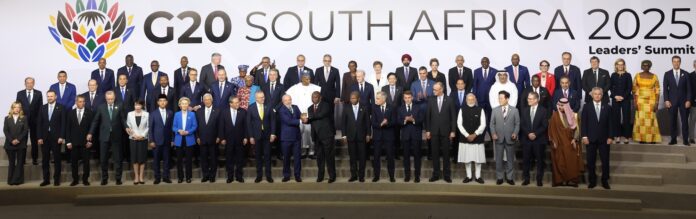
Minister of International Relations and Cooperation Ronald Lamola led a press conference in order to brief the media on the outcomes of the plenary session held by the heads of state, as well as give a brief on the leader’s declaration.
In the plenary session, the leaders addressed a variety of major global challenges as well as discussed ways in which to promote solidarity, equality, and sustainability as the key pillars of inclusive growth.
The leaders in attendance are in consensus that they should align themselves with the United Nations (UN) Charter as all states are to refrain from the threat or use of force in order to seek territorial acquisition by going against territorial integrity and sovereignty or infringe on the political independence of any state, as well as to promote countries having a friendly relationship with one another.
The declaration also stipulates that it will move to advance peace in Sudan, Democratic Republic of Congo, the occupied Palestinian territory and the Ukraine.
“We note the need for strengthened disaster resilience and response, including taking coordinated action to reduce the incidence and negative impacts of disasters, including earthquakes, extreme heat, floods, droughts and wildfires, desertification, and ensure our readiness to help each other,” the declaration reads in context to strengthening disaster resilience and response.
In the plenary sessions the heads of state also outlined debt sustainability for low income countries. The G20 Ministerial Declaration is endorsed by the heads of state by their respective finance ministers in the meeting held in October 2025 meeting.
The heads of state also outlined their support of the International Monetary Fund (IMF) and the World Bank Low-income Countries Debt Sustainability Framework (LIC-DSF), which will aim to clarify the approach on addressing debt vulnerabilities in a more effective way.
600 million Africans have no access to electricity, as the average access rate being 40% for African countries being the lowest in the globe and an estimate of 1 billion people in Africa have a lack of access to clean cooking as this is a problem the G20 aim to rectify by implementing the Just Energy Transition to ensure energy security as well as using the South African Presidency’s Voluntary Energy Security toolkit as a practical resource to strengthening national systems across the continent.
“We support the implementation of efforts to triple renewable energy capacity globally and double to global average annual rate of energy efficiency improvements globally through existing targets and respective policies, similarly support the implementation with respect to other zero and low emissions technologies.” the statement read further.
Food security was also the item on the agenda as it was highlighted that 720 million people continued to experience hunger in 2024 and 2.6 billion people were unable to afford healthy diets.
The G20 Leader’s summit will conclude on Sunday, as Minister Lamola highlighted that the relevant dignitaries will collect the G20 Presidency from the Department of International Relations and Cooperation in order for it to be handed to the United States of America, who were not in attendance at this year’s summit.