

By Mirna Fahmy
Whenever cruelty and injustice shroud, women are invariably found on the front lines, often the first to be battered by the resulting unpleasant waves. They frequently pay a price higher than men—a cost measured in sacrifices in their careers, their daily lives, their fundamental rights, or even their lives.
In the rising tide of barbarism and violence, taking action and speaking out requires an unbelievable effort to command attention and make a lasting impact. Achieving this and extending that impact across continents for sheer, vital acknowledgement is the mission of Women’s Voices Now (WVN)—a US non-profit organization based in Los Angeles (LA), California.
For nearly 16 years, WVN has been a critical platform since its foundation in 2010, gathering the voices of women from diverse backgrounds, religions, races, and languages to offer support and build a powerful collective. The Women’s Voices Now Film Festival, a core initiative, has been running since 2011. The 2026 festival would mark its 12th year not the 16th year according to WVN.
After the success of the festival, WVN’s Executive Director, Heidi Basch-Harod recalls how the organization, which was still very new, had to do some strategic planning on what came next.
However, shortly thereafter, the founder of WVN, Leslie Sacks, discovered his cancer had returned. It wasn’t clear that WVN would be able to continue. Heidi began the position of Executive Director in August of 2012 and worked with him to help figure out the direction of the organization and how it could become more sustainable. It was not a time to host another festival. Sadly, Leslie left the world in September 2013. With the commitment of support from his wife, in late 2013 , Heidi was able to restart the film festival and build the infrastructure of the organization with her support and some of the founding members of WVN. Initially, the festival was planned as a biannual one. At the suggestion of the first Program Director, it was decided to make it an annual festival to keep up momentum and visibility.
Held annually in the Spring, it serves as a global call to action: if you are a filmmaker, polish your art in a compelling way and ensure your voice sprawls across oceans.
Believing in the power of visuals and storytelling, Heidi explains her profound conviction that the documentary lens is an ultimate art form, offering a unique, unskippable window into the human condition: “a documentary film, transports you to a place and gives you no choice but to look into the actual faces of the individuals who are giving you access to their lives.” She adds, “You can see the emotions, feel the struggles and the triumphs. There is music. There is the beauty and horror of our physical world. Also, you are not asked to choose your imagination, you are told how it looks and feels unlike written words.”
Each year, the number of entries continues to shoot up, underscoring the festival’s critical relevance. The inaugural festival in 2011, themed “Women’s Voices from the Muslim World,” was born from a pivotal concern: founder Sacks witnessed an increasingly polarized world following the terrorist attacks of September 11, 2001, and sought a meaningful response. This initial event set an impressive precedent by receiving over 200 films from more than 40 countries.
While the specific submission numbers fluctuate annually, the festival’s global reach is consistently vast. The most recent cycle in 2025 saw 85 films submitted from 33 countries, following the 2024 festival (submissions in 2023) which garnered 109 films from 29 countries. Overall, the cumulative impact is immense: as of June 2024, WVN has amassed a colossal repository of 1,382 film submissions from 97 countries since its founding in 2011.
For festival 2026 WVN just hit already 100 submissions and they’re from 38 countries.
As Heidi recounts, when Sacks gathered his closest friends and family members to discuss establishing an organization that would truly make a difference, a consensus arose: promoting women’s rights would be the most impactful path. This mandate was initially derived from a global standpoint, recognizing that women in many Muslim societies faced the greatest obstacles and impediments to their human rights, particularly those outlined in the U.N. Universal Declaration of Human Rights.
Thus, the decision was made to focus initially on amplifying their voices, knowing that women in these societies had crucial stories of struggle and triumph to share. Fortuitously, the first festival coincided with the Arab Uprisings throughout the Middle East and North Africa, where the explosion of digital media in 2011 allowed the world to truly hear from the women themselves.
Reflecting on years of viewing submissions, Heidi notes that WVN films consistently reveal both the persistent challenges and the extraordinary strength of women. She observes, “What I see is the defiant pursuit of dignity, a persistent need to heal. Resourcefulness.”
Heidi emphasizes that while the films show women gaining access to places and positions that didn’t seem possible only fifty years ago, they also highlight a tragic universal truth: “The experience of violence in all of its forms is sadly a universal common thread for all women, mainly in the context of the nuclear and extended family.” Furthermore, she acknowledges a complex reality: “There are many unintended consequences of women gaining power.” Heidi expresses hope for future films that address this backlash, showing how women’s rights can be made sustainable because, as she concludes, “The work is neverending!”
The annual film festival provides a highly sought-after, professional platform for emerging women filmmakers, complete with eight cash prizes totaling up to $13,000 of different categories.
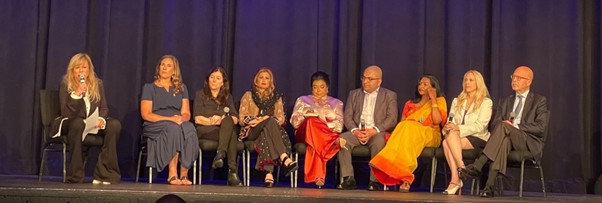
The jury members, as Heidi states, are filmmakers, journalists, academics, women’s rights leaders and practitioners. “We try to select a jury with representation from as many continents as possible, not only for deep, cross-cultural community building, but also for a diverse range of views and experiences on cinema and women’s rights work.”
The goal of this diversity, according to the director, is to foster deeper understanding through but proper facilitation of conversation around issues.
Winning the Youth Documentary prize at the 2024 film festival was Baby Blues, a powerful film directed by Sophie Lynch and Alannah McQuaid from Ireland. The documentary boldly addresses Postnatal Depression (PND)—a serious and often underrepresented issue affecting women after childbirth. The entire project, from initial research and writing to filming and final editing, took the two young filmmakers six months to complete.
The directors initially faced significant hurdles finding a participant willing to speak on camera. Lynch noted, “Most people are fine talking about it, but they won’t do it on camera, which is fair.” Facing despair and considering changing their graduation film topic, their luck shifted when they found Elena through an old article. After Lynch reached out via Facebook, Elena courageously agreed to share her PND story on film.
However, the strength of Elena’s narrative created a new challenge during post-production. The team was forced to condense a complex, powerful story into a short format. Lynch highlighted this difficulty: “We found it difficult knowing what to cut because her story was so strong and so engaging… it was hard picking between the lines and stuff.”
The effort was rewarded by the film’s positive impact, particularly among young audiences addressing previously taboo subjects. McQuaid shared the meaningful feedback they received: “I think that meant a lot having boys come up saying it to you in particular, especially young lads in their early 20s like us… That was so nice to hear because obviously we’re the future generation that we’re spreading awareness within that.”
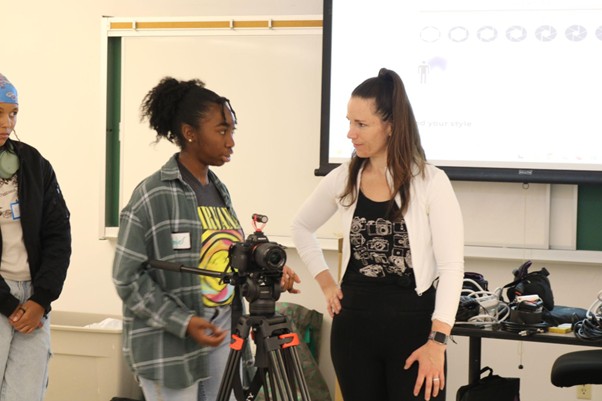
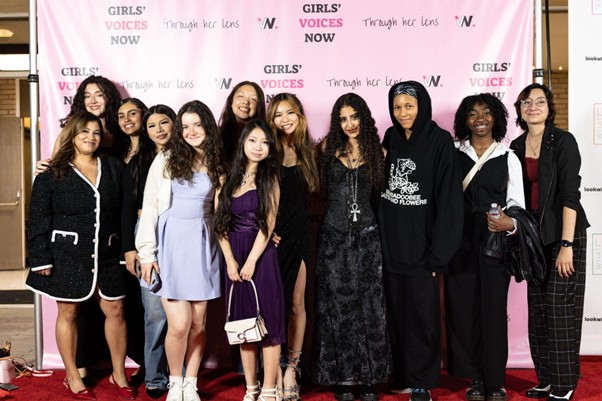
Eager to produce your own story, WVN has a special program called Girls Voices Now (GVN) for young women (ages 14-22) from under-resourced communities which opens every summer.
Taking a “whole girl” approach, Heidi points to how GVN provides a holistic investment in the minds, bodies, and souls of the participants. She explains that this is achieved by challenging their minds with information and conversation, tending to their bodies through activities like meditation and yoga, and nourishing their souls by fostering vulnerability and presence within the community, which has been aided by a no-smartphone policy. Heidi considers a key achievement to be when girls realize their commonalities with others who don’t look like them, a realization that “helps them to break down stereotypes and barriers to living a full life in connection with other people.” This holistic method, she concludes, strengthens their ability to be “impressive, authentic, non-judgemental storytellers.”
WVN’s global influence is formally recognized: since 2017, the organization has held Special Consultative Status to the United Nations Economic and Social Council (ECOSOC). This status acknowledges that WVN’s film collection is an essential human rights monitor and directly impacts several Sustainable Development Goals (SDGs) by providing unfiltered data on women’s rights worldwide.
The organization’s films have driven tangible societal changes. Notably, the 2022 Grand Prize Winner, Indebted to All Women (highlighting restrictive abortion laws in El Salvador), was used in a UN Working Group case, resulting in the release of the featured women and impacting over 60 others.
Such impact is not isolated; roughly ten WVN award-winning films have triggered significant community changes. The 2023 Grand Prize Winner, With This Breath I Fly, which powerfully documented patriarchal challenges in Afghanistan, led to an unprecedented pardon by then-President Hamid Karzai, a subsequent review of all moral crimes cases, and contributed significantly to the passing of the Elimination of Violence Against Women (EVAW) act.
In Morocco, the film Breaking Silence is now incorporated into a toolkit used by the Gender and Development Committee to facilitate crucial discussions about sexual harassment.
Demonstrating impact on the ground, Among us Women, a 2023 winner, launched a successful campaign two years after its win that trained 240 moderators across ten Ethiopian regions and culminated in the construction of an improved maternal and child care center in Megendi.
WVN distinguishes itself by prioritizing stories where women narrate their experiences of conflict, occupation, or repression in their own words, often in tension with state or mainstream narratives, rather than simply restating political talking points. This approach centers the lived experience of ordinary people facing war or political violence, often de-politicizing the frame while showing very political realities.
For example, films addressing the Israel-Palestine conflict, such as Daughters of Abraham, emphasize cross-cultural empathy and human connections by following a Palestinian-American and an Israeli-American woman committed to humanizing each other. Similarly, Women of Valor (2024 Best Human Rights Documentary winner) spotlights women’s roles and struggles within the region. WVN also recognizes peace activism, such as the efforts of Women of the Sun (Palestinian) and Women Wage Peace (Israeli), both nominated for the 2024 Nobel Peace Prize.
Similarly, several WVN films share a focused narrative style that elevates the individual’s experience above political rhetoric. For instance, Fear Us Women follows Canadian volunteer Hanna Bohman joining the Kurdish Women’s Protection Units (YPJ) fighting ISIS, foregrounding her subjective experience of war and media myth-making rather than relying on state talking points.
Looking ahead to 2026, Executive Director Heidi notes that WVN is exploring starting a podcast dedicated to understanding the unintended consequences of women’s and girls’ progress to effectively address the current moment of backlash.