

By Thobile Jiwulane
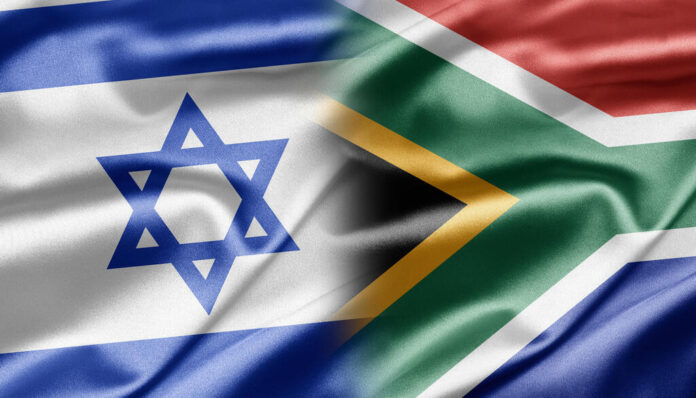
South Africa now finds itself embroiled in a serious diplomatic crisis with Israel—its long-standing adversary, triggered not by government policy but by the actions of a local traditional leader.
King Buyelekhaya Dalindyebo, monarch of the AbaThembu in the Eastern Cape, bypassed diplomatic protocol by inviting an Israeli delegation to his kingdom. This move angered Pretoria, as the king insists on exercising what he calls his “political independence.” The controversy is sharpened by Dalindyebo’s royal lineage: he is a relative of Nelson Mandela.
His decision, however, stands in stark contrast to Mandela’s legacy as a staunch advocate of the Palestinian cause and ally of Yasser Arafat. Hosting the delegation not only defied state protocol but also undermined principles Mandela championed.
Foreign relations in South Africa fall under the Department of International Relations and Cooperation (DIRCO). Any high-profile international visit, particularly one involving Israel, would ordinarily require Pretoria’s oversight. Yet Dalindyebo and Israeli envoy David Saranga proceeded without approval.
Pretoria’s anger was heightened by the fact that South Africa had already suspended diplomatic relations with Israel following its invasion of Gaza on 7 October 2023. Pretoria took a non-aligned stance, condemning both Hamas and Israel’s retaliation which it regarded as disproportionate to the Hamas actions. Both countries recalled their ambassadors but left embassies operational.
This fallout comes amid Israel’s renewed diplomatic outreach in Africa. Tel Aviv has intensified its charm offensive, with President Isaac Herzog visiting several African states and Israel strengthening ties across the continent. Israel also enjoys observer status at the African Union, though its presence has divided member states, with South Africa spearheading opposition both regionally and globally.
South Africa’s application to the International Court of Justice (ICJ) in December 2023 marked a turning point. The ICJ found a plausible case of genocide, issued provisional measures, and affirmed jurisdiction. Despite this, Israel has continued bombardments in Gaza, drawing accusations of violating international humanitarian law.
The International Criminal Court (ICC) has since indicted Prime Minister Benjamin Netanyahu and former Defence Minister Yoav Gallant, restricting their travel to Rome Statute signatories, that are obliged to arrest them and hand over to the ICC. Their situation mirrors that of Vladimir Putin, though Netanyahu continues to travel to the United States, underscoring Israel’s geopolitical shield through American backing.
South Africa’s ICJ case has drawn broad international support, with Global South nations and European states such as Ireland, Spain, and Belgium joining. Several European countries have also recognised Palestinian statehood, further isolating Israel diplomatically.
The latest controversy stems from Saranga’s grassroots engagement in South Africa. He met Dalindyebo and his advisers in Mthatha while coordinating humanitarian aid to flood-affected communities within the king’s jurisdiction, close to Mandela’s birthplace of Mvezo. An Israeli charity provided clean water, which Dalindyebo defended by claiming the government had neglected his subjects.
Israel’s involvement has also divided the Mandela family. Last year, Israel sponsored a trip for Mandela’s eSwatini-based granddaughters, Zaziwe Dlamini-Manaway and Zamaswazi Dlamini-Mandela, who visited Kibbutz Nir Oz to show sympathy for victims of the Hamas attack.
Dalindyebo’s stance is not new. On a prior visit to Israel, he denounced the Palestinian struggle, called for Hamas to be crushed, declared support for Israel, aligned himself with Donald Trump, and criticised South Africa’s ties with China and Russia. His actions provoked condemnation among traditional leaders, many of whom have called for his dethronement.
Among his critics is Mandela’s grandson, Mandla Mandela, a prominent campaigner for Palestinian rights. Mandla recently participated in the Sumud Flotilla to Gaza, which was intercepted by the Israeli military and the activists including Mandla, detained.
Dalindyebo’s actions have also angered ANC provincial structures. Premier Oscar Mabuyane condemned both the king and Israel, accusing them of undermining South Africa’s sovereign right to manage foreign affairs. He ordered an investigation into provincial officials who accepted Israeli donations without proper channels, reflecting Pretoria’s determination to reassert control.
The episode underscores the fragility of South Africa’s internal consensus on foreign policy, particularly as the ANC—now part of a ten-party coalition, must balance traditional authority autonomy with national priorities. Mabuyane’s intervention highlights tension between traditional leadership and elected authority, raising questions about how South Africa manages protocol breaches with international consequences.
Beyond domestic politics, Dalindyebo’s overtures reverberate globally. His engagement weakens Pretoria’s diplomatic posture at a time when South Africa is leading the charge against Israel at the ICJ. Analysts argue his actions complicate efforts to consolidate Global South solidarity.
The controversy also intersects with external pressures. Segments of South Africa’s right-wing have interacted with the Trump administration to isolate Pretoria, while the pro-Israel lobby in Washington has shaped U.S. policy towards it. Dalindyebo’s alignment with Israel thus resonates beyond local politics, feeding into a larger narrative of contested influence between Pretoria’s Global South alliances and Israel’s Western backers.