
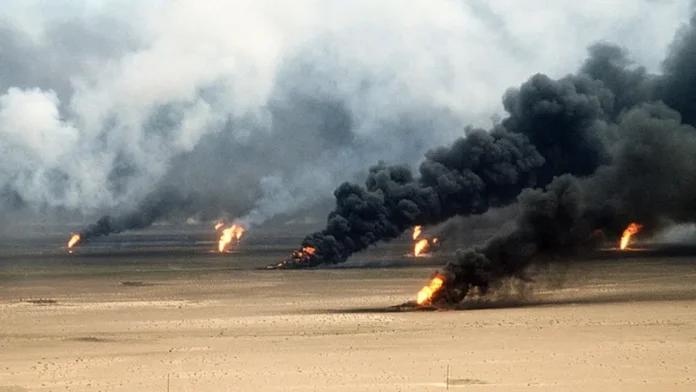
, triggering an energy shock with economic and geopolitical consequences far beyond the Middle East.)

Clarence Tshitereke
When Iran declared the closure of the Strait of Hormuz in early March following coordinated U.S.–Israeli strikes on strategic targets inside its territory, the world witnessed more than just a military flare‑up. It watched the sudden constriction of the most critical maritime artery for global oil and liquefied natural gas (LNG), triggering an energy shock with economic and geopolitical consequences far beyond the Middle East.
What has unfolded since is a stark reminder of how fragile the global energy system remains. In a world that has spoken confidently about the inevitability of the energy transition, the shutdown of Hormuz has instead revived the strategic importance of fuels many assumed were on an irreversible path to decline. Chief among them is coal, a commodity long condemned in climate debates but once again indispensable in a world scrambling for stability.
Within hours of Iran’s announcement, tanker traffic plummeted, oil prices surged, and energy markets entered a phase of rapid repricing. But contrary to instinctive assumptions, the immediate casualties were not limited to oil and LNG. The shockwaves rippled across dry‑bulk shipping routes, commodity exchanges, and power markets, reordering the global fuel hierarchy.
South Africa’s Richards Bay Coal Terminal (RBCT), the continent’s largest and a key supplier of seaborne thermal coal, suddenly became a price‑setting hub for energy‑hungry buyers in Europe and Asia.
European buyers, unable to secure LNG and facing spiking gas prices, sharply increased demand for South African coal for their gas-to-coal switch, pushing RBCT cargoes into the role of an emergency stabilizer. RBCT, long considered a workhorse of the seaborne coal market, suddenly became a strategic buffer for Europe and Asia — regions now scrambling to replace unavailable LNG. Cargoes of 6,000 kilocalories per kilogram (kcal/kg) thermal coal surged from $98.90 per ton on February 27, the eve of the U.S.–Israeli strikes on Iran, to $113.00 per ton by 10 March, a 14.3% increase in barely a week.
In the East, Japan and South Korea, two of the world’s biggest LNG importers, have already increased coal‑fired power generation due to the LNG shortage. On March 2, Australia’s Newcastle coal futures, the Asian benchmark, jumped 8.6% to $128.70 per ton, the sharpest increase in three years, driven by utilities preparing for emergency fuel‑switching. By March 11, global coal benchmarks reached $134.90 per ton, up 16.19% over the month and 32.91% year‑on‑year. Collectively, these sharp price increases reflect a tidal shift in global demand as LNG prices spiked and buyers began switching fuels with urgency.
Crucially, the upward move in RBCT prices occurred even before supply fundamentals tightened. Instead, it was triggered by freight disruptions: dry‑bulk carriers rerouting around conflict zones, escalating war‑risk premiums, and bottlenecks in key shipping lanes. Because coal is almost entirely dependent on seaborne transport, disruptions in the freight market translate directly into price inflation. In effect, the Middle East conflict has created a double squeeze: higher demand for coal coupled with higher costs of moving it. Due to improved rail performance, RBCT is projected to export more than 65 million tonnes (Mt) of coal in 2026, a recovery from a record low of 47.21 Mt in 2023 and 57.66 Mt in 2025.
If the closure of Hormuz was the initial trigger, the LNG crisis that followed intensified global demand for thermal coal. Qatar, the world’s largest LNG exporter, was forced to halt production at its flagship facility after Iranian drones struck critical infrastructure. The outage removed roughly one‑fifth of global LNG supply at precisely the moment European and Asian buyers were already struggling with volatile gas markets.
What makes this moment exceptional is not merely the resurgence of coal but the centrality of RBCT in shaping global energy prices. As LNG flows through Hormuz slow to a trickle and risk premiums soar, RBCT will become one of the few major export terminals unaffected by Gulf chokepoints, and therefore a critical benchmark for energy security.
Europe’s renewed reliance on RBCT coal marks a strategic reversal. After years of investment in renewables and gas infrastructure, European governments are discovering once again that the global energy transition is not linear. A single chokepoint in a distant region can reorder priorities more forcefully than a decade of climate diplomacy.
For Asia, the logic is even starker. Energy‑hungry economies such as India, Pakistan, and Bangladesh cannot afford to chase expensive LNG on the spot market. Their pivot to coal will be faster, sharper, and more pronounced. Coal, abundant and seaborne, becomes the only immediate alternative, and RBCT’s position at the nexus of these shifts underscores a broader truth: geography still shapes energy flows. And when a key energy artery closes, markets seek the fastest available substitute, regardless of environmental preferences.
The Hormuz crisis has shattered a dangerous illusion: that the world has already built an energy system resilient to geopolitical shocks — it has not. Renewable energy continues to scale impressively, but global supply chains remain deeply dependent on fossil fuels. LNG, once promoted as a flexible bridging fuel, is now revealed to be geographically vulnerable. Oil markets remain acutely sensitive to geopolitical risk. And coal, despite condemnation in climate policy circles, remains the most stable and easily accessible fallback option.
This is not an argument for coal. It is an argument for realism. The world cannot phase out coal without first building sustainable baseload alternatives that are shock‑resistant, not merely efficient or low‑carbon, but resilient to war, sabotage, and extreme weather. Until then, crises such as Hormuz will continue to trigger coal revivals.
If the closure of Hormuz persists, coal markets could see prices rise another 20–40% over the next year. Several factors support this trajectory. First, more vessels rerouting around conflict zones increases shipping costs for all bulk commodities. Second, LNG shortages and high prices will keep utilities reliant on coal. And third, policymakers in Asia and Europe will prioritise securing baseload power over emissions targets.
The shutdown of the Strait of Hormuz is more than a geopolitical episode. It is a warning — one the global energy system has received before but failed to internalise. Coal’s role as a reliable baseload electricity source, often dismissed in political discourse, has re‑emerged as a central pillar of grid stability. It is a reminder that ambition without resilience is fantasy. The world cannot afford that illusion again.
Unless the world invests in baseload energy resilience, not only in renewables but also in diversified supply chains, storage capacity, and infrastructure redundancy, future geopolitical shocks will continue to revive the very fuels policymakers want to abandon.
Dr Tshitereke, an honorary professor at Unisa’s Thabo Mbeki School of Public & International Affairs, is Chief of Staff at the Minerals & Petroleum Resources Ministry. He writes in his personal capacity.