
By Mirna Fahmy
It was a near certainty that Iran would show no mercy toward the Gulf states if Israel or the United States (U.S.) launched an attack. This reality drove Gulf leadership to plead with Washington to avoid the attack from their grounds, desperate to evade Iranian retaliation by any means. Though the U.S. compiled, the fallout following the events of February 28 proved far more grave for the region than for Israel itself.
Al Arabiya’s statistical analysis says 15% of Iran’s missile and drone launches have targeted Israel, with 85% aimed at Gulf states.
When subjected to American or Israeli pressure, Tehran leans into its “unity of arenas” doctrine. By blackmailing the West through the Gulf, Iran hits a target that is geographically closer, economically vital to the global market, and far less defended than Israel. As noted by Sky News Arabia and the BBC, this allows Tehran to exert influence without triggering a direct, comprehensive confrontation with superior American or Israeli military forces.
Targeting the Gulf comes down to two main reasons. First, Gulf countries are close to Iran and hold some of the world’s most important oil facilities. This makes them easy targets for causing major global economic damage without needing a large or risky military operation. For Iran, disrupting the world’s energy supply is far more effective than trying to strike a heavily defended Israeli military site.
Second, Iran sees U.S. bases in the Gulf as extensions of American power. By hitting these locations, it can target U.S. interests and personnel without the extreme risk of attacking the United States directly. This approach allows Iran to show resistance while keeping the conflict close to home, and it may also pressure Gulf countries to push the U.S. to step back from further attacks.
The friction between Iran and its neighbors is not a recent development; it is a deep-seated conflict rooted since the 1979 revolution after the toppling of the last Shah, Mohammad Reza Pahlavi (from September 16, 1941 till February 11, 1979). Ayatollah Khomeini, who initially received Western backing, eventually broke his promises to the Jimmy Carter administration. He had pledged to transition the country into a society more democratic than the Shah’s, whose final years were defined by economic instability and sharp social distortions.
At the time, American analysts operated under the belief that the clergy were “incapable of running a state.” The expectation was that the clergy would return to their mosques and leave the hard work of running the country to experts like Mehdi Bazargan, who led Iran’s first temporary government. Washington failed to imagine that a religious regime would instead seek to redraw the regional map by “exporting the revolution,” posing an immediate geopolitical threat to the newly emerging Gulf states of Qatar, the United Arab Emirates (UAE), Bahrain, and Kuwait.
In terms of Cold War calculations, America’s primary concern was blocking Soviet influence in Iran. Washington viewed the Islamic movement as a potential bulwark against communism, never anticipating it would evolve into a far more formidable enemy. To their surprise, Khomeini became another “unwanted Nasser.” Much like Egypt’s socialist president, Gamal Abdel-Nasser—who dismantled a monarchy for personal power and turned his back on the CIA and turned to Soviet aid instead—Khomeini did the same and was in fear that the west would topple him because some countries were about to host the Shah when he was kicked out by the revolution.
To counter Israel and the West, Khomeini started to label America “The Greatest Satan” in the aim of unifying the domestic front and eliminating his rivals among the liberal and leftist forces that had participated in the revolution. Exerting its influence in the region, Iran constructed a network of allies and proxies to expand its regional influence. This axis gradually took shape through the Islamic Revolutionary Guard Corps’s (IRGC) support for various armed organizations, starting in the 1980s with the establishment of Hezbollah in Lebanon.
The strategy expanded significantly following the 2003 invasion of Iraq, where Iran exploited the resulting political vacuum to support militias such as Asa’ib Ahl al-Haq and Kata’ib Hezbollah. In Yemen, Tehran provided the military and political backing necessary for the Houthis to seize control of vast territories, effectively consolidating Iranian influence in southern Arabia and threatening key maritime routes.
Further north, Iran strengthened its alliance with Bashar al-Assad’s regime in Syria, providing the military and financial support required to ensure the government’s survival. This move was critical, as Syria serves as the essential geographical link connecting Tehran to its proxies in Lebanon. Meanwhile, in Gaza, Iran supported Hamas, often utilizing Qatar as a functional intermediary. Collectively, these relationships gave rise to the “Axis of Resistance,” a political and military phenomenon that now defines Iran’s expansionist reach across the Middle East.
Now the tides have reversed. The same Arab nations that once vehemently rejected the establishment of a Jewish state in the 1940s and 1950s—using the Palestinian cause as a primary tool to threaten Israel—are now increasingly backing Israel as a counterweight to Iran.
In a shocking answer to the Arab World, Kuwaiti analyst Fahd Al-Shalimi, announced during an interview on the program “High Tension” presented by Lebanese journalist and TV presenter Tony Khalifa on Al-Mashhad channel and platform in March 2026 that “Iran is far more dangerous than Israel.”
Khalifa gave a surprising gesture towards Al-Shalimi’s answer and Al-Shalimi deliberately repeated it several times that it is Iran.
He pointed to Iran’s direct targeting of Kuwait, citing the bombing of popular cafes in the 1980s and the attacks on Kuwaiti oil tankers during the “Tanker War.” He also highlighted the internal security threat posed by Iranian-backed spy cells, such as the infamous “Abdali cell.” In a sharp military comparison, he noted that while Israeli missiles have never fallen on Kuwait, Iranian attacks are a tangible, recurring reality from a direct neighbor.
The analysis further distinguished between the two powers based on their territorial ambitions. Al-Shalimi argued that the current Likud administration in Israel is focused on re-establishing a kingdom based on the Torah—a territory of approximately 52,000 km2 mirroring the biblical Kingdom of Solomon, who is also mentioned in the Quran. In contrast, he described Iran’s ambitions as boundless and everywhere. From Africa to Lebanon and Syria, where its involvement resulted in thousands of deaths, Iran’s presence is marked by a footprint of instability and rockets that traverse the skies of nearly every regional country.
In previous and parallel statements, Al-Shalimi did not rule out the idea of ”cooperation” in its strategic or coordinating sense to confront parties such as the Houthis or to deter Iranian influence, considering that the highest priority is protecting Gulf security.
The UAE, since day one of the war after October 7, has had a public stance against Iran’s proxies, standing with Israel. The recent March 2026 attacks was described by the UAE’s International Cooperation Minister Reem Al Hashimy on ABC as unprecedented and unhinged to have Iran lash out at the very people who’ve been calling for de-escalation, who’ve been calling for this war to never actually even start. Now the UAE has frozen the money of any Iranian diplomats and kicked them out of their country.
Riyadh has been vocal about this tension for years. In a series of high-profile interviews between 2017 and 2018—with The New York Times, CBS, and The Atlantic—Crown Prince Mohammed bin Salman (MBS) repeatedly branded the Iranian Supreme Leader as “the new Hitler of the Middle East.”
MBS explained that the Kingdom had learned from Europe that appeasement was ineffective, emphasizing the need to prevent Iran from repeating what Hitler did in Europe. He added that Khamenei “makes Hitler look good” because Hitler tried to conquer Europe while the Supreme Leader seeks to conquer the world. He asserted that reaching an understanding with the Iranian regime, which is based on an extremist ideology, is futile, and that historical lessons demonstrate the necessity of confrontation.
By September 2023, however, the tone appeared to alter. In an interview with Fox News, the Crown Prince indicated that relations with Iran were progressing well, emphasizing a hope for regional stability. This shift was driven by the pragmatic priorities of Vision 2030. For Saudi Arabia’s economic transformation to succeed, the Kingdom needed to attract foreign investment and end costly conflicts, most notably the war in Yemen.
This was accompanied by the Beijing Agreement, where China stepped in as a mediator. Beijing had a vested interest in the flow of oil and the protection of its Belt and Road Initiative, and both Riyadh and Tehran trusted China as a neutral guarantor. For Saudi Arabia, this wasn’t just about peace; it was about strategic independence, demonstrating an ability to manage regional affairs outside of the American orbit.
Yet, behind this diplomatic curtain, the desire to remove the Iranian threat remained especially after June 2025. While Gulf countries publicly pressured the U.S. not to use their territory for strikes, the Washington Post reported a different story in private. According to sources cited by the Journal, MBS made several private calls to President Donald Trump prior to the February 28 strike, advocating for an American military intervention. His justification was clear: if the U.S. did not act while its military presence in the Middle East was at its 2003-level peak, Iran would only emerge from the crisis stronger and more dangerous.
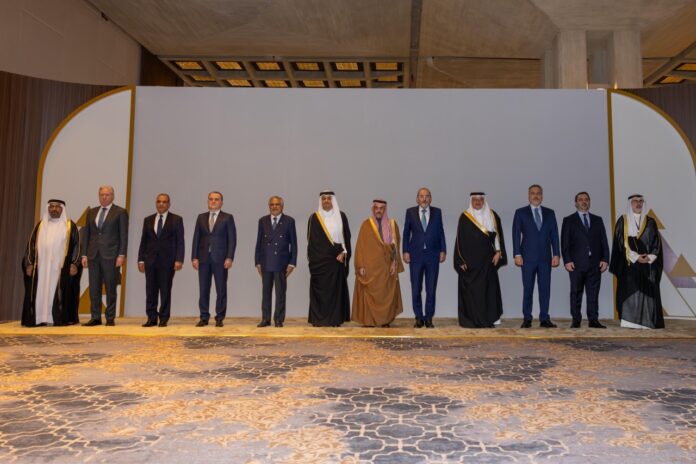
The breaking point arrived on March 21, 2026, the second day of Eid el-Fitr. Following a visit from Egyptian President Abdel Fattah Al-Sisi—who reaffirmed that Gulf security is an integral part of Egypt’s own—Saudi Arabia ordered all Iranian diplomats to leave the country within 24 hours. The two leaders declared that Iran’s repeated attacks on civilian infrastructure constituted a “dangerous escalation” dismantling the 2023 Beijing Agreement.
Egypt remains at the epicenter of every regional conflict, yet its stance during this crisis has fueled suspicion. Despite the millions of Egyptian expatriates working in the Gulf, Cairo has been accused of quietly leaning toward Iran. This perception stems from a noticeable lack of communication with Israel and an Egyptian media landscape that has regularly condemned Israeli actions while appearing to celebrate Iranian strikes—even when those strikes threatened the very Gulf nations sustaining the Egyptian economy. The delay in Cairo’s official condemnation of Iran’s aggression toward the Gulf sparked fury, leading many to question if the traditional alliance was fracturing.
By March 19, 2026, the Egyptian Foreign Minister Badr Abdelatty was forced to intervene. He warned against social media reports attempting to portray a rift in Egyptian-Gulf relations, insisting that national media would work to expose these “misleading claims.” However, the diplomatic damage control was soon overshadowed by a religious controversy that struck at the heart of Sunn-Shia tensions.
The friction reached a boiling point on the first day of Eid el-Fitr at the mosque in the New Administrative Capital. In the presence of the President, a cleric performed Al-Fatiha prayer in a manner associated with Shiite tradition rather than the Sunni practice standard in Egypt. Specifically, the invocation focused on Fatma and her sons rather than the Prophet alone.
The backlash on social media was immediate and intense. The incident ignited a wave of commentary arguing that Egyptian and Gulf religious identities should remain strictly separate, with many rejecting any notion of a “union” that compromises Sunni traditions. Speculation even turned toward the historical, with some fringe voices suggesting a symbolic return of the “Fatimid” influence to the country.
According to a report by Axios as of March 23, 2026, Egypt, alongside Türkiye and Pakistan, has been actively relaying messages between the Trump administration and Tehran to de-escalate the conflict. It is explained that Egypt is investing massive efforts these days to bring about an end to the war, among other reasons because it fears what may yet come in the future, for example, the Houthis in Yemen joining the maritime arena, which would exacerbate the economic damage it is already absorbing. Al-Sisi visited Gulf states in recent days to update the leaders there on Egypt’s mediation efforts to end the war. Cairo believes there must be an agreement. It is impossible to topple the regime in Iran by means of airstrikes. A ground invasion of Iran would constitute a catastrophe. Iran’s military capabilities have been sufficiently damaged, and this needs to be leveraged into an agreement.
The Future of the Gulf region:
As the conflict intensifies, the nature of engagement in the Middle East is gradually changing. Saudi researcher Abdulaziz Alkhamis noted on his X that war is no longer strictly a military venture; it has become a struggle over energy and the survival of entire regimes. In this landscape, the objectives are fractured: Israel seeks to dismantle Iran’s capabilities; Iran aims to drain its adversaries by choking the Strait of Hormuz; and America pursues military success without a clear political exit strategy. Ultimately, the victor will not be the one who strikes the hardest, but the one who endures the longest economically and politically.
Amidst a constant shower of rocket attacks, Gulf nations find themselves in a purely defensive posture. They are focused on protecting vital infrastructure rather than launching counterstrikes, fearing that any escalation would provoke a more violent Iranian response that smaller states simply could not survive. The burden of offensive action now rests entirely with the U.S. and Israel. Israeli intelligence, in particular, has proven to be steps ahead; the Mossad reportedly possesses such granular data on IRGC commanders that many have resorted to wearing niqabs or fleeing to Afghanistan and Türkiye to evade targeted strikes.
This atmosphere of total war has revived radical predictions regarding the map of the region. Analysts like Kuwait’s Abdullah Al-Nafisi and Egypt’s Tawfiq Okasha have warned that by 2030, small entities like Qatar, Kuwait, the UAE, and Bahrain could disappear entirely. Al-Nafisi argues that the global order is moving toward “larger blocs,” leaving geographically and demographically small states vulnerable to annexation or blackmail by neighboring powers like Iran or Iraq. His proposed solution is a “Gulf Confederation”—a unification of defense, foreign affairs, and oil portfolios—as the only way to guarantee independent survival.
Tawfiq Okasha views this through the lens of a “political earthquake.” He predicts that the collapse of the Iranian regime, or a major regional war, could trigger the fall of several Arab administrations. He specifically warns that the growing rivalry between Saudi Arabia and the UAE for regional leadership could drain smaller states if they are not brought into a unified framework. In Okasha’s view, neutrality is no longer an option; those who fail to take a clear side risk being attacked by both.
The outlook for Qatar is particularly grim in these assessments. Analysts suggest that Qatar’s role as a Western-sanctioned intermediary for groups like the Muslim Brotherhood has reached its end. Hosting the largest U.S. military base in the region now makes Qatar a primary target rather than a protected sanctuary.
Similarly, Bahrain and Kuwait face internal risks due to their demographics. With Shiite populations ranging from 20% to 70%, these countries are viewed by the IRGC as fertile ground for infiltration. The military escalation of March 2026 brought these fears to life. The IRGC claimed responsibility for targeting the Al-Udeiri base in Kuwait, reporting fires at fuel depots and the downing of four U.S. aircraft across the Gulf.
While U.S. Central Command (CENTCOM) dismissed these claims as false rumors—clarifying that the loss of three F-15E Strike Eagles in Kuwait on March 1 was an “accidental” result of Kuwaiti air defenses during active combat—the human cost remains undeniable. A confirmed Iranian drone strike on a base in Kuwait resulted in the deaths of six U.S. service members. As the dust settles on these early skirmishes, the scene is on pins and needles quietly observing who will make it through this escalating war unscathed.