

Clarence Tshitereke*
Few national economies exhibit a comparably deep structural exposure to exogenous oil‑market volatility as South Africa, where external energy‑price shocks permeate the macroeconomic system with unusual speed and amplitude. Despite decades of policy debates on energy security, the country’s dependence on imported crude and refined petroleum products means that every geopolitical tremor, from Middle Eastern conflict to shipping disruptions, reverberates instantly through domestic inflation, logistics costs, and macroeconomic stability. Recent global oil price surges have highlighted just how deep these vulnerabilities run. As SA navigates a fragile economic recovery, the stakes have rarely been higher.
South Africa’s structural vulnerability is fundamentally rooted in its overwhelming dependence on imported crude and refined petroleum, a condition that hardwires global oil price dynamics into the domestic economy with exceptional immediacy and force. This near‑total import reliance ensures that external price shocks are transmitted with minimal friction, intensifying the country’s exposure to global energy volatility. As indicated by the Department of Mineral and Petroleum Resources, “sustained increases in international oil prices, coupled with exchange rate fluctuations,” unavoidably elevate domestic fuel prices, underscoring the systemic nature of this vulnerability.
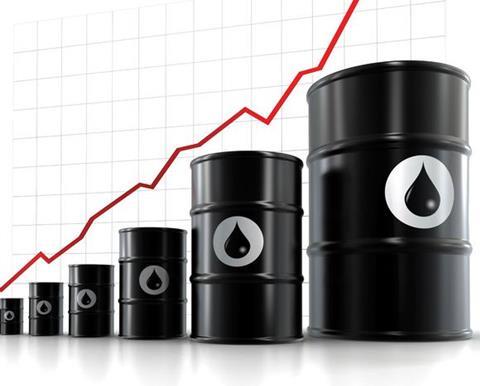
Recent geopolitical developments have sharpened this exposure. The war involving Iran, which erupted unexpectedly in late February 2026, triggered a more than 40% surge in international oil prices, driven by shipping disruptions through the Strait of Hormuz. These increases, compounded by a weakening rand, set the stage for what economists described as the largest single-month fuel price increases in SA history, threatening to derail the country’s tentative post‑pandemic recovery.
South Africa’s vulnerability is amplified by its limited strategic fuel reserves, which are below the international benchmark of 90 days. This shortfall leaves the country dangerously exposed to global supply shocks, with little buffer to stabilize markets or protect consumers in the event of sustained price spikes or disruptions.
Compounding this is the dramatic decline in domestic refining capacity. Over the past several years, SA has lost half of its refining capacity, following accidents, underinvestment, and the closure of major facilities such as the Sapref Refinery, once the country’s largest. Other key refineries, including Engen Durban and Natref, have faced intermittent challenges, leaving only a fraction of national capacity reliably operational. This degradation forces the nation to import not just crude oil but refined products, a far more expensive and volatile proposition. In effect, the combination of minimal reserves and low refining capacity has hollowed out SA’s energy sovereignty, making the country dependent on external suppliers even for finished fuel products.
While SA has enjoyed periods of currency appreciation, buoyed, for example, by record gold prices that strengthened the rand through late 2025, these gains offer only limited protection against rising oil costs. Turnleaf Analytics highlights that rebounds in global oil prices in late 2025 and early 2026 “overwhelmed the disinflationary benefits of a stronger currency,” rendering exchange-rate gains insufficient to counteract global petroleum inflation.
Because fuel costs permeate every sector, transport, manufacturing, agriculture, logistics, oil price shocks rapidly amplify domestic inflation. Road freight, responsible for much of the country’s long-distance goods movement, faces immediate cost increases as fuel prices rise. Transport companies, already operating on thin margins, must either pass these costs to consumers or absorb short-term losses at the expense of financial stability. These decisions ripple through supply chains, raising costs for food, consumer goods, and industrial inputs.
This dynamic illustrates why oil-linked inflation sits at the heart of SA’s macroeconomic vulnerability: the country’s inflation profile is structurally tied to global energy markets, leaving policymakers with few levers to soften the blow.
Just as SA began showing early signs of economic stabilization in early 2026, captured in PayInc’s rising economic activity index, the oil shock triggered by the Iran conflict darkened the outlook. Economists warned that record fuel increases could “derail the fragile economic recovery envisaged for SA in 2026,” reversing momentum that had only recently begun to solidify.
Oxford Economics Africa presents a stark warning: if Brent crude were to surge to $140 per barrel, SA’s GDP growth could decline by 0.3 percentage points, accompanied by sharp increases in inflation and production costs. Even in less extreme scenarios, where Brent stabilizes between $90 and $94 per barrel, the economy remains at risk. Rising fuel prices would erode household purchasing power and place additional pressure on businesses already struggling with higher input costs, making overall growth increasingly fragile. The net effect is an economy perpetually at the mercy of external forces.
In 2025, easing inflation allowed the South African Reserve Bank to implement rare interest rate cuts, offering relief to heavily indebted households and businesses. However, rising global oil prices now threaten to undo this progress. Oxford Economics cautions that persistent international price pressures, combined with a weaker rand amid geopolitical uncertainty could prompt monetary authorities to halt, or even reverse, the easing cycle.
This dynamic would impose a compounded constraint on households: escalating fuel and food prices would erode real incomes, while the prospect of higher borrowing costs would simultaneously tighten financial conditions. For an economy already marked by persistently high unemployment, the enduring structural distortions associated with load‑shedding, and chronically weak investment, the convergence of these pressures presents a significant threat to macroeconomic stability.
Academic research underscores the depth of these structural vulnerabilities. A 2024 study using a Markov Switching Intercepts VAR model found that SA macroeconomic indicators respond differently to oil shocks depending on economic conditions. During growth periods, oil shocks reduce real GDP growth, raise exchange rates, and elevate interest rates. During recessions, they produce temporary distortions but always negatively affect the current account. These findings reinforce what current events make painfully clear: oil price volatility is not merely a cyclical challenge, but a structural risk to SA’s economic resilience.
While SA cannot control global oil markets, it can bolster its domestic resilience. Amongst others, this will require rebuilding strategic fuel reserves; reviving refining capacity through modernisation, public-private partnerships; diversifying energy sources; stabilising the exchange rate through broader export diversification; and enhancing transparency around reserve management and energy security planning. These steps would reduce the speed and severity of global oil shocks’ transmission into the domestic economy.
South Africa stands at a precarious intersection of global energy turbulence and domestic structural weakness. With limited reserves, declining refining capacity, and heavy import dependence, it remains acutely exposed to every geopolitical flashpoint that rattles oil markets. Until structural reforms are made, oil price fluctuations will continue to threaten economic stability, undermine growth, and erode household welfare. The global energy system may be beyond SA’s influence — but building resilience is not.
*Dr Tshitereke, an honorary professor at Unisa’s Thabo Mbeki School of Public & International Affairs, is Chief of Staff at the Minerals & Petroleum Resources Ministry. He writes in his personal capacity.