
By Mirna Fahmy
The world is watching a new Iran deal take shape, and almost no one is convinced it will hold. Irina Tsukerman explains to Diplomatic Insider what drove it, what went wrong, and what comes next.
The nuclear Obama deal that the United States President Donald Trump spent years criticizing, arguing that it helped fund Iran’s proxies in Yemen, Gaza, and southern Lebanon, and using that argument in his successful return to office, is now reappearing in a new form under his own administration.
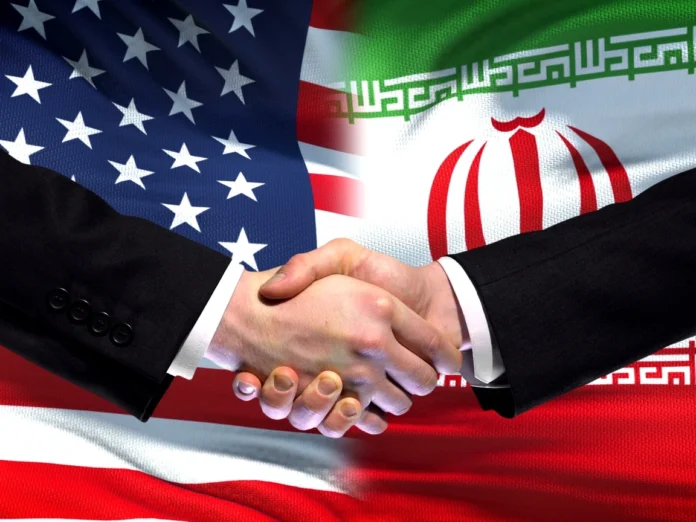
On June 17, Trump and Iranian President Masoud Pezeshkian signed remotely the memorandum of understanding (MoU) containing 14 terms to end the war, with Trump signing it during dinner with French President Emmanuel Macron at the Palace of Versailles following the G7 summit, after which Pezeshkian signed it in Tehran.
Since the biggest strike on Feb 28 that killed the Supreme Leader Ayatollah leader Ali Khamenei, Trump has been chasing a deal more than a regime change and is fixated on winning a Nobel Peace Prize despite many asking him to finish off the regime remnants when they started becoming weak. The human rights, national security attorney and analyst based in New York, Irina Tsukerman explains that Trump was never in favor of a regime change as much as he positions himself as a ‘great deal maker’ that appears ‘tougher’ and better than the Obama administration’s JCPOA to boost his political image.
“Despite Israel’s tactical success, the outcome of this war didn’t work as well because Trump expected a short blitz operation to be over in days, while Israel understood the process would be significantly longer,” Tsukerman adds. “When the immediate results Trump desired didn’t materialise, he began backing away quickly.”
A more effective approach would have required a long-term decade strategy rather than short-term pressure or hopes of rapid collapse. Tsukerman argues the focus should have been on gradually eroding the regime’s foundations through sustained economic pressure, covert operations, and undermining key institutions, steadily breeding distrust, weakening internal cohesion, and degrading counter-intelligence capabilities.
Central to this would have been infiltrating Iran’s military and security apparatus, particularly the Islamic Revolutionary Guard Corps (IRGC). Rather than banking on small ethnic opposition groups or isolated uprisings easily crushed, greater emphasis should have been placed on recruiting personnel who lacked ideological commitment to the regime or might defect for economic or personal reasons, creating the conditions for internal fragmentation when the moment came.
Instead, Israel leaned heavily on Kurdish and other regional groups, an approach Tsukerman called ‘utopian’ and ‘logically impossible.’ A plan for Kurdish groups to enter Iran was leaked, drawing what she described as “a disproportionate amount of attention from the Iranian services” and guaranteeing failure. Beyond that, many of these groups can no longer trust Trump following what happened in Syria, and their numbers were simply never sufficient to drive change alone.
Maintaining consistent pressure was essential. Tsukerman points to the US strikes on Iranian nuclear facilities in June 2025 as a missed opportunity claiming that the decision to halt further action gave Iran time to recover and rebuild. Pressure should have been sustained, keeping the regime unable to regroup.
Preparing for what came after was very crucial. Any serious regime-change effort needed a clear framework for managing the post-transition distribution of power, particularly to prevent a new faction from seizing exclusive control over nuclear and ballistic missile programmes.
In addition, Tsukerman maintains that a successful uprising would have needed organised, city-by-city support from local militias, defecting military personnel, and other internal actors, and not a reliance on spontaneous street protests to carry the momentum.
At the same time, Tsukerman underscores that both the US and Israel relied on faulty intelligence from anti-regime channels and governments in exile. “They fell for what may have been a ‘brilliantly done’ Iranian disinformation campaign that misrepresented the level of military support for regime change.”
A further breakdown in US-Israeli coordination stems from the nature of the Trump-Netanyahu relationship itself. Trump has long treated Israel as a proxy to be used when convenient rather than a sovereign ally, and his personal sense of betrayal over Netanyahu’s congratulation of Joe Biden hardened that transactional view, pushing personal grievance above shared geopolitical goals.
That’ s why Trump excluded Israel from negotiations, Tsukerman noted, when Iran made US pressure on Israel a condition for sitting at the table. Even Vice President J.D. Vance publicly attacked Israel for opposing the deal, and Israel, which had never agreed to any opening for negotiation from the start of the war, found itself sidelined. US intelligence and Pentagon reports had flagged concerns over Israeli espionage targeting American officials involved in Middle East negotiations, but Israel denied them.
Tsukerman argues Israel’s deeper problem is that it has been acting with a mixture of arrogance and sentimentality . It put all their eggs into Trump’s basket, cutting itself off from the Democratic Party and failing entirely to cultivate relationships within non-Trump Republican circles. The assumption that the Jewish billionaire Jared Kushner is married to Trump’s daughter Ivanka translated into political protection was, she says, a fundamental miscalculation.
Israel also chose to overlook Trump’s well-documented personal patterns. Tsukerman highlights: “They completely ignored Trump’s flaws and very obvious personal trajectories, believing they would somehow be exempt from treatment everyone else had received. They were not.”
She adds: “Trump has thrown his closest allies in the US under the bus. He took away security from Pompeo, from Brian Hook, and from people who were threatened by Iran because of personal disagreements with them.”
Vance’s unprecedented attack on Israeli officials threw the American Israel Public Affairs Committee (AIPAC) into the spotlight as the most scrutinised element of the US-Israel relationship. The pro-Israel lobby has worked hard to stay aligned with Trump, but Tsukerman contends its actual influence is widely misread.
Its sway over Israeli government policy is limited. Israeli leadership frequently ignores its advice. At home, a sharp rise in antisemitism has made association with pro-Israel lobbies politically uncomfortable for some politicians, even as those same figures freely engage with Qatar, Russia, and China. The notion that AIPAC/Jews control Washington, she adds, is conspiratorial nonsense because the Qataris alone wield far greater investment and influence than the Jewish lobby ever has.
There is also a significant split between established Jewish lobbying organisations and the Jewish billionaires operating inside Trump’s orbit, such as Howard Lutnick. These are not a unified bloc pursuing collective interests — they are businesspeople with individual political and economic agendas. And Trump, as ever, treats those relationships as purely transactional.
Kushner, Steve Witkoff, and Qatar were key architects of the 14-term MoU. Kushner leads Affinity Partners, a private equity firm managing about $6 billion, including roughly $2 billion from Saudi Arabia and more than $1.5 billion from Qatar and the United Arab Emirates (UAE). Through the firm’s management fees, he earns millions annually from overseeing Gulf investments.
Kushner and Witkoff also helped shape Article 6, a proposed $300 billion reconstruction fund financed largely by regional allies referring to the Gulf states. Their plan centers on commercial and real estate development in Tehran. If U.S. sanctions are lifted, investors linked to Affinity Partners and Gulf sovereign wealth funds could be well positioned to compete for major reconstruction contracts.
Saudi Foreign Minister Faisal bin Farhan said he had no details about the proposed fund and noted that Iran’s attacks on Gulf states had severely damaged trust. He said Saudi-Iran relations had been improving under the Beijing agreement, with the potential for economic cooperation, but the recent conflict had reversed that progress. According to bin Farhan, trust must be rebuilt before any economic cooperation can be considered.
“The $300 billion figure is just a symbolic number to drag Iran to the table, with no real commitment to actually paying it,” Tsukerman says. “They don’t need the Gulf States or any particular party to write checks. What’s more likely is that the $300 billion refers to unfreezing Iranian funds already sitting in Qatari, Emirati, and other regional banks, a release of existing money, not new transfers. That would essentially mirror the same arrangement Obama and Biden used previously, on a smaller scale.”
Trump attempted to bring Iran into the Abraham Accords, but Iran refused outright, as did Qatar and Saudi Arabia, which stipulated the Palestinian statehood to be established. “The Abraham Accords were flawed from the start, designed only to facilitate deals,” Tsukerman observes. “For Kushner, and certainly for Trump, the driving motivation was economic gain.”
That much was visible throughout Trump’s first term. The Al-Ula agreement was a telling example that Tsukerman had warned about before it was even finalised. She predicted Saudi Arabia would never normalise with Israel, that Gulf States would gravitate back toward Qatar where relationships were already established, that Muslim Brotherhood-linked money would re-enter the picture, the anti-terrorism coalition would break apart, and Israel would end up isolated. That is precisely what happened, step by step.
Trump also cleared out anyone who got in the way, including Secretary Pompeo, an experienced, clear-eyed on Iran, and far more effective than the inexperienced figures who replaced or surrounded him, among them Kushner, Pete Hegseth, and J.D. Vance.
Secretary of State Marco Rubio may have tried to limit the damage, but Tsukerman is blunt about his constraints: his authority is narrow, he repeats what Trump tells him regardless of his own views, and whatever he might aspire to, he is in no position to act individually.
The most surprising is that Trump was trusting Qatar to fetch him the best deal though there are many reports that clearly state Qatar is backing the Muslim Brotherhood financially and even the Pro-Palestianin protests that spanned many US universities. Tsukerman is asking serious questions about where these people’s loyalties actually lie and what they are really trying to achieve in this process because it is clearly not to help the United States.
The optics surrounding Vance’s appearance in Switzerland for the June 21 signing were hard to ignore. Iran sidelined him in favour of Qatari and Pakistani negotiators, and Tsukerman notes what went largely unremarked: those same negotiators, who supposedly enjoy Trump’s trust, made no effort to bring Vance into the room diplomatically, make him feel included, or position him as a success. They took their seat at the table and used it entirely for themselves.
The disrespect did not stop there. Iran failed to honour the 14-term MoU almost immediately including the opening of the Strait of Hormuz and the ceasefire between the US, Israel, and Iran. Iran’s chief negotiator and Parliament Speaker Mohammad Baqer Qalibaf confirmed on state television that Iran intends to impose fees on ships transiting the Strait after the 60-day exemption period. True to form, less than 24 hours after signing, Iran closed the Strait again.
Trump posted on Truth Social on June 24 that Iran told him that closing and charging fines the passage through the strait is fake news. Trump warned that if it happens to be true, then “negotiations would end, immediately!”
“This MoU lacks congressional or parliamentary support,” Tsukerman says. “It is a mirage, a psychological loss that abandoned Iranian protesters who were misled into believing the US would help bring regime change. The deal is essentially a commitment to keep talking and a 60-day ceasefire. Trump sees it as a diplomatic win to avoid looking like a massive strategic failure before elections.”
The deeper issue, she contends, is that Iran never intended to honour the agreement because it understood that the United States could not sustain the prolonged asymmetrical and guerrilla conflict that effective enforcement would entail. Keeping the Strait of Hormuz open by force, pushing out IRGC boats, and demining it would demand a prolonged, costly campaign that American forces were never trained or equipped for even if they possessed powerful weapons. The US military was readied for limited engagements against a conventional military opponent, which was never Iran’s primary mode of fighting anyway.
There are also no guarantees that Iran will stop its nuclear advancement. Iran has denied allowing inspectors back in and has reportedly reinforced sites damaged in US strikes. For Tehran, the deal is a tool to appear strong, extract concessions, and quietly pursue its security doctrine through other means, including potentially acquiring nuclear technology from Pakistan.
The MoU has drawn sharp criticism across the region. Many Emiratis see it as yet another example of Washington failing its partners unsurprisingly, given that Trump does not regard Gulf states as genuine allies in any traditional sense. Tsukerman draws a highlight on the UAE–Iran’s prime target in the attacks–– that it does not fully believe in the deal but backs it as the lesser of two evils preferring an imperfect agreement to immediate escalation and the risk of Iranian attacks. In the meantime, it is quietly hedging: diversifying supply chains away from the Strait of Hormuz, coordinating with Ukraine on anti-drone strategies, and maintaining a pragmatic partnership with Israel despite fraying trust.
Besides all of this, there is no assurance of a lasting ceasefire for Gulf states. According to Tsukerman, Iran has demonstrated a ‘perfect willingness’ to target Gulf countries in the past and perceives ‘no serious repercussions’ for doing so again. In her view, Iran treats attacks on the Gulf as a viable pressure tool whenever it wants to send a message or extract concessions, and a signed piece of paper does nothing to change that calculus.
Though Hezbollah wasn’t in the 14-term deal, it has been mentioned a lot in many reports because it has gotten weaker and it is another of indirect confrontation with Iran’s biggest proxies in Southern Lebanon. Lately, Trump expressed frustration that Israel has failed to finish Hezbollah off, criticising its tactic of destroying entire apartment buildings in response to single rockets. Netanyahu responded publicly that he would continue defending Israel against Hezbollah for as long as he remains prime minister. Around June 19 and 20, reports emerged that Netanyahu and Defense Minister Israel Katz had ordered a halt to operations in southern Lebanon, yet Israeli forces have maintained their ground positions and airstrikes have continued.
Tsukerman describes the Israel-Hezbollah conflict as a non-stop ongoing process arguing that a genuine and lasting cessation of hostilities is unlikely under current conditions. Both the Lebanese government and the Lebanese Armed Forces (LAF), she argues, have been deeply infiltrated by Hezbollah, leaving the state unable to independently challenge or disarm the group. US pressure on Israel to return captured territories to Lebanese authorities is unlikely to shift anything meaningful while Hezbollah remains the dominant force on the ground.
What would actually make a difference, in her assessment, is a serious international force capable of enforcing security arrangements and countering Hezbollah’s entrenched position. But no such effort is currently on the table.