
By Hadi Elis*
When NATO was created, it was all about the Union of Soviet Socialist Republics (USSR) and anti-Communism. Because Türkiye occupied a strategic transcontinental position between Europe and Asia and bordered the Soviet Union, it was regarded as an indispensable candidate for NATO membership.
Türkiye’s pivot to the West was cemented in the 1950s when it sent troops to fight in the Korean War to prove its strategic value and secure its NATO membership in 1952. From that point onward, NATO largely came to view regional security only through Ankara’s lens, including the Kurdish struggle that was ongoing in the 1950s and even before, deepening military cooperation and expanding Türkiye’s access to Western counterinsurgency training, intelligence sharing, and security assistance. This military cooperation strengthened Türkiye’s capacity to confront Kurdish armed movements for so long till the struggle against Türkiye officially started on August 15, 1984 by the formation of the Kurdistan Worker’s Party famously known as PKK.
Whatever these collective efforts ultimately achieved, they did not extinguish the Kurdish armed struggle. Instead, they transformed it into a TEST CASE through which Türkiye, within the broader framework of NATO cooperation, developed, tested, and refined military, paramilitary, intelligence, and counterintelligence strategies. As the conflict assumed increasingly transnational and cross-border dimensions, it became a basis for the evolution of wider counterterrorism and counterinsurgency doctrines, with operational experiences informing military education, training curricula, and security policy.
When Kurdish armed struggle had grown to the point that NATO and Türkiye collectively couldn’t handle, then the counter-policy shifted to the illegal abduction of Abdullah Öcalan, the leader of PKK.
Because PKK was waging an armed struggle against a NATO member, Türkiye and based on non-international armed conflict laws under International Humanitarian Laws, that wasn’t acceptable by the NATO states. The PKK was subsequently designated as a terrorist organization by Türkiye and many of its NATO allies, including the United States, the United Kingdom, Canada, and the European Union.
These designations placed the Kurdish movement in a difficult position to pursue peace negotiations. The terrorism label constrained the group’s ability to engage in political and diplomatic activities, participate in international conferences, and seek broader international recognition, while contributing to the delegitimization and criminalization of the Kurdish armed struggle.
According to British think tank institutes such as Royal United Services Institute (RUSI) and International Institute for Strategic Studies (IISS), there was hope that his abduction would bring an end to armed struggle immediately. Britain was not behind Öcalan’s capture. Rather, it was the CIA of the United States of America (USA) and Israel’s Mossad that played a fundamental role in his capture in February 1999. Though a ceasefire was maintained for several years, the PKK was forced to return to armed struggle in 2004.
Israel’s assistance in capturing Öcalan enhanced the relationships of both nations and developed a close relationship throughout the years in trade, diplomacy, military and intelligence areas more than before though Türkiye was the first Muslim-majority country to establish diplomatic relations with Israel back in March 1949.
Besides NATO members, Israel didn’t hesitate to call the PKK a “terrorist” one as well on September 13, 2017 by Israel’s Prime Minister Benjamin Netanyahu. Netanyahu publicly challenged Türkiye to return the favor by designating Hamas as a terrorist organization because Türkiye actively harbors and supports Hamas. At the same time, Netanyahu didn’t cast aside the efforts of the Kurds and said that they have the right to have their independence.
However, NATO’s involvement in Afghanistan after 9/11 and later in the Iraq War pushed NATO and the USA, specifically, to collaborate with the Kurds of Iraq and Syria and not the ones in Türkiye.
Since Iraq and Syria were called anti-western dictatorships, the local Kurds were the ground force fighting territorial extremism with the USA and NATO, and everything was going well. But the moment they asked Türkiye to work alongside them, Türkiye refused and fought against them up to occupying Kurdish lands in Iraq and Syria.
During the Syrian Civil War, the Kurds in Syria gained widespread international sympathy and solidarity across the West. To counter this favorable atmosphere, Türkiye sought a strategy to curb Western support—an opportunity that arose when Sweden and Finland applied for NATO membership on May 18 2022, following Russia’s invasion of Ukraine. As two of the most welcoming nations for Kurdish diaspora activism, they were pressured by Ankara to restrict those activities as a condition for entering the alliance.
Thus, those who had once been sympathetic to the Kurds became more supportive of Türkiye due to its NATO membership.
When the Syrian Civil War ended, a new distinctive organization from ISIS and al Qaeda called Hayat Tahrir al-Sham (HTS) emerged spearheaded by Abu Mohamed al-Julani who later rebranded himself as Ahmed Al-Sharaa becoming the interim President of Syria after Bashar al-Assad and his family––the core part of the Baath Party––fled to Moscow.
The UK is viewed as the primer supporter behind al-Sharaa due to one of the most debatable lectures by the former U.S. Ambassador to Syria Robert Ford that was delivered at the World Affairs Council in Baltimore. Ambassador Ford stated that he was invited by a British research organization to contribute to a process aimed at moving al-Sharaa from “the world of terrorism to mainstream politics.”
What affirmed this stance is also Former MI6 chief Sir Richard Dearlove who suggested that Western intelligence agencies like the U.S. and UK likely engaged in a parallel communication and “grooming” process with Ahmed al-Sharaa long before he assumed power in Syria.
In reference to Dearlove’s suggestions, the statement “al-Qaeda is on our side” is unforgettable. It originates from a 2012 internal email written by Jake Sullivan (then-Director of Policy Planning in the State Department and later National Security Advisor under Joe Biden) to then-Secretary of State Hillary Clinton regarding the conflict in Syria. The remark referred to the fact that al-Qaeda-linked extremist groups (such as Jabhat al-Nusra) were fighting on the same side as the broader anti-regime opposition that the US was also supporting, attempting to overthrow Al-Assad.
The likely British organization that facilitated Ambassador Ford’s meetings with Ahmed al-Sharaa is Inter Mediate and not the famous M16 one. It was founded in 2011 by Jonathan Powell, who famously served as the Chief of Staff to former British Prime Minister Tony Blair and later as the UK’s National Security Advisor. The group focuses on political transition and local governance initiatives. Around 2023, they organized academic and research delegations to Idlib to review local administrative models. It was under this specific mediation umbrella aimed at steering al-Sharaa away from fundamentalist militancy and toward mainstream politics that Ambassador Ford was brought in.
Türkiye was also leveraging Al-sharaa position even in advance to al-Sharaa’s rapid rise. Just four days after the collapse, Turkish intelligence chief İbrahim Kalın made his first high-security visit to Damascus to meet with al-Sharaa. At this point, al-Sharaa was leading the new administration but had not yet officially assumed the title of President.
When it came time to negotiate the position of the Kurds despite earlier assurances given to encourage their partnership with the US and NATO against ISIS and al-Qaeda—those talks later proved to be in vain. The UK prioritized its alliance with Türkiye and threw its support behind Al-Sharaa’s interim authority in Syria. Also, the UK firmly supports the territorial integrity of Iraq and Syria. It opposes the creation of an independent Kurdish state to avoid regional chaos.
This isn’t the first time the UK had disappointed Kurdish aspirations. The UK, which was historically known as Britain, used chemical weapons against the Kurds in Iraq in the early 1920s to suppress Kurdish uprisings as Britain administered Mandatory Iraq.
Decades later, when Iraqi President Saddam Hussein launched the Anfal campaign against the Kurds including the 1988 Halabja chemical attack, which killed over 5,000 Kurdish civilians, the UK government, along with other Western allies, like Ronald Reagan administration in the U.S. maintained diplomatic relations with Baghdad and did not immediately impose meaningful punitive measures. At the time, Iraq was widely viewed by Western governments as a strategic counterweight to Iran. In 2017, the same scenario played out whereas over 92% of Iraqi Kurds voted overwhelmingly in favor of independence holding a historic referendum to establish the Kurdistan Regional Government. The UK government officially opposed the referendum. And when the Iraqi central government used military force to retake Kirkuk and punish the Kurds, Britain and its international allies such as the U.S. refused to intervene or recognize Kurdish self-determination.
The U.S. did the same thing over and over like around 7-9 times especially during the times of regional conflicts. It was fair enough to watch the U.S president Donald Trump meet with Al-Sharaa several times and many US investments deals were poured into Syria after years of depleted war. He even said his famous statement about Al-Sharaa during Al-Sharaa’s visit to the White House in February 2026: “The President of Syria, who I essentially put there, is doing a phenomenal job.” Trump described al-Sharaa as a “rough guy” rather than a “choirboy,” arguing that a tough leader was necessary to stabilize Syria.
Territories that had been administered by the Syrian Democratic Forces (SDF) were gradually transferred to the authority of the new Syrian government under al-Sharaa in January 2026. The SDF came under sheer pressure to integrate into Syria’s new national army and state institutions—entities they had previously fought against during the civil war.
For many Syrian Kurds, promises made by Western members of the anti-ISIS coalition during the war appeared to give way to strategic calculations once the conflict subsided. Whether viewed as political realism or betrayal, many Kurds have interpreted these developments as another chapter in a long history of abandoned alliances.
It is now clearer than ever that the enduring resonance of the Kurdish proverb, “No friends but the mountains,” remains undiminished. Although centuries old, it has never faded and is continuing to capture a widely shared sense of isolation, repeated betrayal, and the struggle for survival. It reflects the belief that, as powerful states pursue shifting geopolitical interests, the mountains remain the Kurds’ only constant refuge.
Then, in June 2025 Israel attacked the Ayatollah regime, with NATO members, including the USA, supporting Israel. The Iranian Kurds eventually became a central topic, until the U.S. President Trump unexpectedly remarked that the USA had supplied weapons to the Kurds, but that they had somehow been lost in the “Bermuda Triangle,” which he claimed was located somewhere in the Strait of Hormuz.
Later, it was discovered that the USA and Israel had intended to support the Kurds in fighting against Ayatollah’s regime. But Türkiye had an insider within the Trump administration who disclosed the plan to President Recep Tayyip Erdoğan. Erdoğan then called President Trump and said: “if you arm and train the Kurds, Türkiye will attack Israel in retaliation.”
President Erdogan stated that Türkiye is firmly opposed to the creation of KURDISTAN REGIONAL GOVERNMENT IN IRAN, while it was still fighting to prevent the emergence of a second Kurdish autonomous region in Syria, following U.S. involvement in the creation of the Kurdistan Regional Government in Iraq. Türkiye suspected the same will be repeated in Iran.
President Trump responded, “I will send Kurds under the bus soon, no worries, and let me visit you in Ankara soon.”
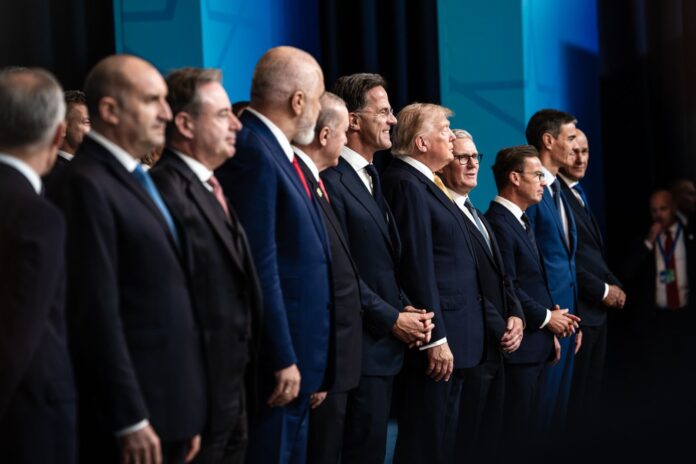
The NATO summit then was held in Ankara in July 2026 where Syria’s President Al-Sharaa was surprisingly invited to attend discussing almost all regional wars and collaborations dismissing any topic related to the Kurds, neither in Syria nor in Türkiye.
The summit ended but the most talked-about story was all about the gift President Erdogan had given to the presidents and the Prime Ministers: A Hand Gun.
While many experts are still deciphering what it means culturally, politically and diplomatically, no one wants to discuss it militarily!! It’s a Hand Gun!
One another NATO summit comes and goes, and NATO is still anti-Kurdish.
*The views expressed in this article are those of the author and do not necessarily reflect the views of Diplomatic Insider, its editors, or its publisher.