By Lesedi Sibiya-Diplomatic Insider
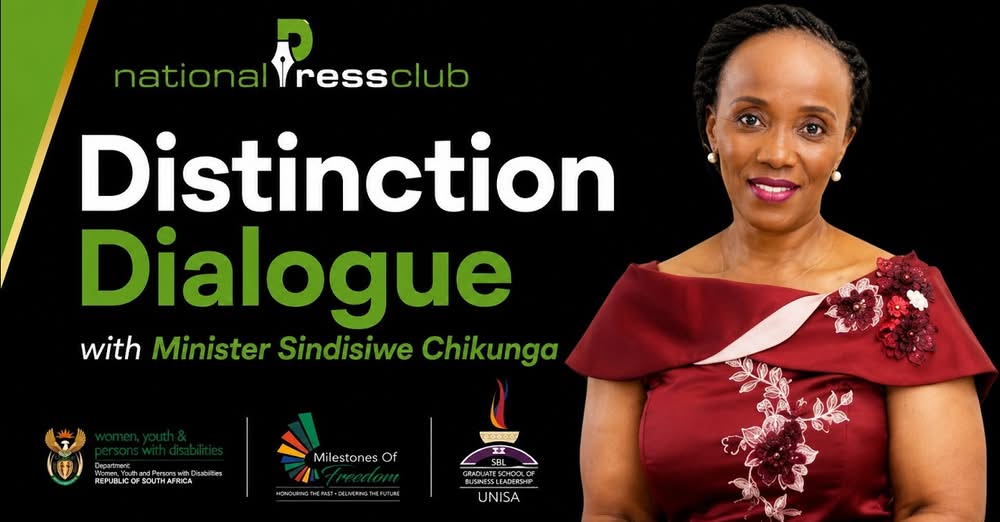
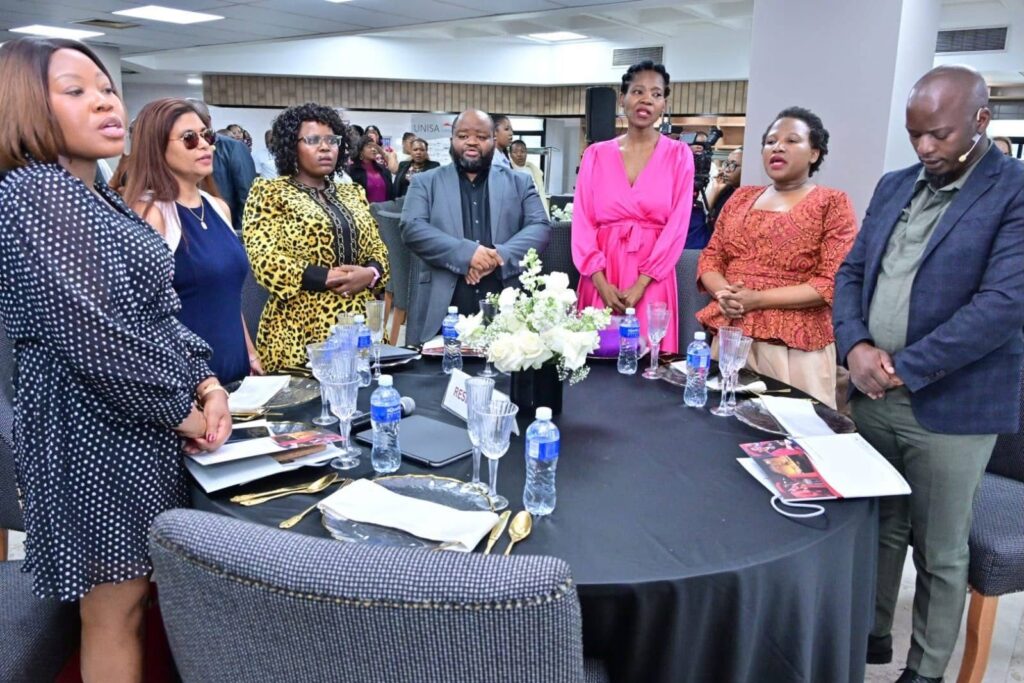
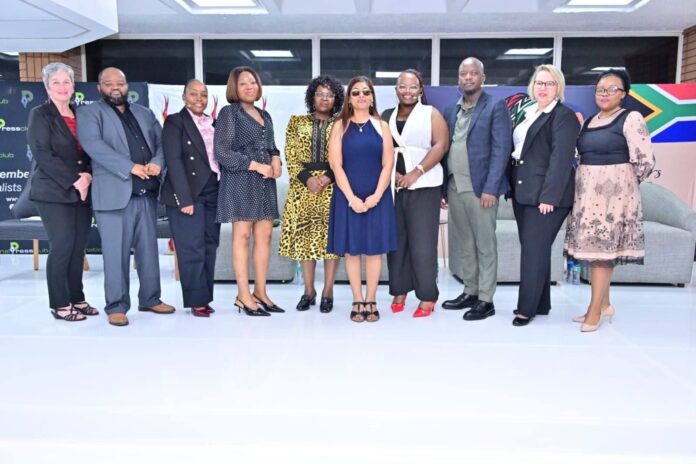
Minister in the Presidency for Women, Youth, and Persons with disabilities, Sindiswe Chikunga, led a Women’s Month Distinction Dialogue with the National Press Club, in order to commemorate the 70th anniversary of the 1956 Women’s March.
The dialogue which was held in tandem with the University of South Africa’s school of Business and Leadership, brought together several representatives from government, members of civil society, business, academia and many other key stakeholders.
The dialogue was held under the guided theme, “Empowered women, empower nations”, as the dialogue engaged with the journey of South African women throughout history since the historic march of 1956 and also discussed making a path that represents gender equality, women’s leadership, economic empowerment and social inclusion.
The Department of Women, Youth and Persons with Disabilities, had gone on to emphasise that the legacy of the women of 1956 should not only be commemorated but also implementing the ideals that these women stood for to improve the lives of young women and girls, specifically the ones who suffer from extreme poverty, gender-based violence, discrimination, unemployment, and exclusion.
Although the minister was not physically present at the dialogue she had engaged with the audience remotely as she guided her address on the various issues that are still hindering the growth of women in South Africa in today’s current climate.
“Lillian Ngoyi and the women who marched to the Union Buildings predicted that such inequality would be the root of the evils that would later be present in South African society in 2026,” said Chikunga in her address.
“Had we listened and had studied the women’s charter carefully we would have heard the following caution, they said ‘These are evils that need not exist, they exist because the society in which we live is divided into poor and rich, into non-european to european, they exist because there are privileges for the few and discrimination and hardship for the many’” said Minister Chikunga when quoting the women’s charter.
She continued to discuss the importance of the women’s charter and the impact that it could have on the women of South Africa in today’s context.
“We have appointed the National Council on Gender-based violence and femicide, these give practical expression to the national strategic plan on gender-based violence and femicide, our own five year review of that plan found that the absence of a multi-sectoral accountability body was undermining delivery and oversight across every pillar, that gap is now closed,” said the Minister as she spoke in depth about the National Council on Gender-Based violence and femicide.
She explained that the council exists to hold every department and every sector to what it promised and explained further that the government has moved the public procurement act from signature to regulation and stated that this brings them one step closer to legislating the 40% of government procurement which will go to women owned businesses.
Chairperson of the National Press Club, Antoinette Slabbert had addressed the proceedings and had done her own reflection of the power of the women of 1956 currently hold, she also started her address be recognising that because she grew up in the era of apartheid, that she had a different perspective on the world from her black counterparts due to the privilege she received.
“Those women of 1956 did not do that in vain, we cannot allow a situation in which they sacrificed so much, they risked so much and now we drop the ball, not as media, not as modern women but I hope tonight we can really crystalise what needs to be done and we can take it to heart and the doing can start,” said Slabbert.
The department also expressed that even though the event is to commemorate the women of 1956, that it is also aimed at reaffirming the contributions of women in today’s context.
“The event will provide an opportunity to recognise the historic contribution of South African women and reaffirm the responsibility of the present generation to ensure that the sacrifices and courage of the women of 1956 continue to shape the future of the nation,” said the department.