
By Thobile Jiwulane
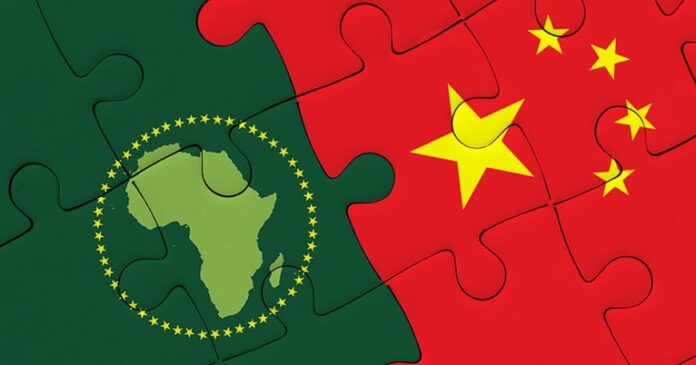
China’s story of rapid economic growth and trading resilience should serve as a valuable lesson for Africa as a whole, if the continent is to emerge from its current developmental and economic quagmire.
Being Africa’s largest trading partner and the second-largest economy in the world tells a story of China’s resilient and highly productive capacity. Underpinning this has been an unparalleled capacity building and dedication to improving outputs in various aspects of production through a dedicated workforce and leadership that is committed to growing the country’s economy.
This is the spirit that each African country should adopt as the continent aims to boost intra-African trade through initiatives like the African Continental Free Trade Area and existing bilateral trade agreements. China’s growth story should inspire the continent, especially since China is a willing partner in both trade and capacity-building efforts that Africa desperately needs. Beginning with how China has evolved into its current global economic powerhouse is a crucial initial point.
For Africa, it should start with each individual country pinpointing key areas that contribute to China’s growth and understanding how it has achieved overall prosperity, then actively implementing these strategies. It goes without saying that for any country to grow, it must first invest in human capital, then develop physical capital, and adopt advanced technological innovations, all while ensuring infrastructure development. These efforts should be underpinned by a strong foundation of robust business activities, which is the lifeblood of economic growth for any nation.
There are already some examples in Africa where countries have begun modestly and positioned themselves for economic growth by following this approach. One such country is Rwanda, which has managed to expand its economy significantly through a combination of factors similar to China’s approach, including achieving political stability, economic reforms, strategic investments, and a focus on key sectors like agriculture and services. Rwanda did not stop there but also embraced technological advancements and embarked on public-private partnerships to drive development that put it on an economic growth trajectory. This is becoming a template that guarantees economic growth. If Rwanda can emerge from a deadly civil war and genocide, nothing could prevent other countries in Africa from achieving this miracle.
Interestingly, an International Monetary Fund study that examined why China’s economy performed so well investigated the link to its sources of growth. The study found that central to China’s phenomenal growth, in addition to capital accumulation, such as assets and the number of workers in each industry, a sustained increase in productivity was the driving force behind the economic boom.
The study also established that during 1979-94 productivity gains accounted for more than 42 percent of China’s growth and by the early 1990s had overtaken capital as the most significant source of that growth. This marks a departure from the traditional view of development in which capital investment takes the lead. This jump in productivity originated in the economic reforms that began in 1978.
Africa has the potential to accomplish this goal through platforms such as the Forum on China-Africa Cooperation (FOCAC). Founded in 2000, this initiative aims to promote dialogue and collaboration between China and African countries, serving as an essential tool for enhancing political, economic, and cultural connections with an emphasis on mutual development and benefit. Contrary to common misconceptions that suggest African nations have a passive role in Chinese-African relations, this platform is designed to ensure that African perspectives are included, with FOCAC’s agenda influenced by shared interests and priorities. Frequent high-level discussions offer a venue for African leaders to voice their development objectives, allowing China to align its support with these goals.
Since its establishment, FOCAC has played a crucial role in shaping the trade and investment dynamics between China and Africa. Trade levels have risen, with China becoming Africa’s top trading partner in sectors such as infrastructure, energy, telecommunications, and manufacturing, which supports Africa’s socio-economic growth.
Against this backdrop and amidst trade tariffs imposed by US President Donald Trump on almost all countries, including China and African countries, Beijing made another move to strengthen its relationship with Africa. As a measure to sustain the trade between China and Africa, President Xi Jinping announced a generous move that would see all the 53 African countries enjoying zero-tariff trade with China.
Explaining the Sino-African co-operation in his remarks during the “China-South Africa Youth Exchange Night” held in Pretoria on Monday last week, Chinese Ambassador to South Africa Wu Peng reiterated Xi’s message that China is ready to negotiate and sign agreements and sign the agreements on economic partnership for shared development with African countries. Wu said this entails the implementation of zero-tariff treatment for 100 per cent of tariff lines on goods from all 53 African countries with diplomatic ties to China. “These measures will create new and important opportunities for China-South Africa and broader China-Africa economic and trade cooperation. And it means more chances for young people, like you, to take part, to lead, to make changes,” Wu said.
Speaking specifically about co-operation between China and South Africa, the Ambassador said the two countries had established a comprehensive strategic partnership for a new era.“China has been South Africa’s biggest trading partner for 16 years. South Africa is also China’s largest partner in Africa. Over 200 Chinese companies are active here – investing, hiring, building,” Wu said.
Wu listed trade Cooperation as one of four C’s along with Connection (for youth skills training), Capacity (building of capacity including on technological advancement), and Culture exchange and understanding. Using the four C’s, the Ambassador articulated how the cooperation had begun to devolve, filtering down to the level of youth skills training and education, as well as the opening of business and trade opportunities for South African youth in China.
Wu cited the example of Michael Mayalo, a young South African man who studied at China’s Peking University and subsequently wrote a book about his eye-opening experience in the country. Mayalo has begun to influence other South African youth to pursue studying and business opportunities in China, thereby developing themselves and their country’s economy.
With trade and other areas of co-operation set-up as mentioned above, the China-Africa co-operation is set to deepen even more, especially with people-to-people contacts as envisaged by Ambassador Wu. This is one of the insights and implications envisaged by FOCAC which, beyond economic cooperation, emphasizes cultural exchanges and people-to-people interactions.
This is based on the understanding that educational scholarships, cultural exchange programs, and youth initiatives foster greater understanding and mutual respect between Chinese and African societies. By promoting cultural diversity and intercultural dialogue, FOCAC aims to forge lasting bonds between the peoples of China and Africa. The envoy summed up the China-Africa co-operation with an old Chinese saying: “A bosom friend afar brings a distant land near.”