
By Lesedi Sibiya-Diplomatic Insider
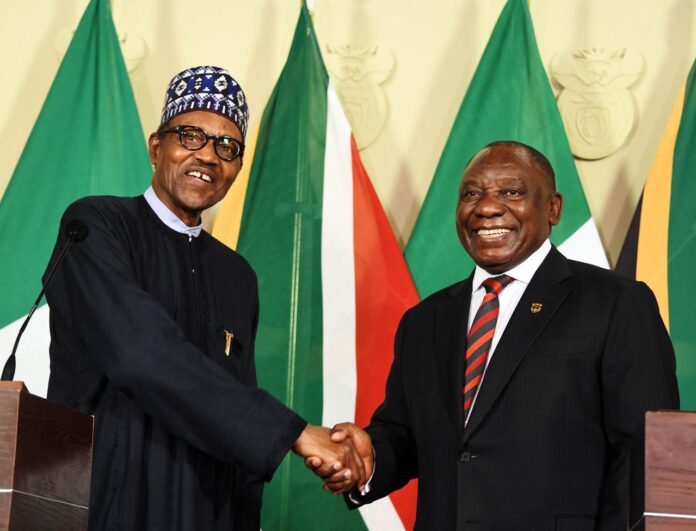
Muhammadu Buhari, former Nigerian President, died on Sunday 13 July 2025 due to an illness that has not yet been disclosed to the public.
“As South Africa, we stand with the nation of Nigeria in your mourning…President Buhari led Nigeria as a patriot and a champion not only of the best attributes of his nation during his leadership, but of the future that awaited his great country.” said Ramaphosa in his statement to the people of Nigeria.
Buhari had governed Nigeria as a military ruler in 1980 to which he later sought to become democrat and served as President of Nigeria for two terms in 2015-2023. In 1983 Buhari had taken power of Nigeria by way of a military coup, he had led an authoritarian regime for 20 months before fellow soldiers had driven him out of power. In 2015 he became the first opposing candidate to win a presidential election in Nigeria after four attempts.
The current President of Nigeria Bolu Tinubu has described Buhari as “a patriot, a soldier, a statesman…to the very core.” Many citizens across Nigeria feel that Buhari had left the nation divided between Muslims in the North and Christians in the South of Nigeria.
Afolabi Adekaiyaoja, a abuja-based political scientist has made mention of the severity of this division; “The uneven response to Buhari’s death, with muted disillusionment in some quarters and sadness in others, is a reflection of how difficult it is to unite a country and his inability to do so after decades in the public eye.”
Buhari had promised to put an end to the extremist killings and to rid the country of corruption in one of Africa’s largest economies and oil producers. However this promise was not able to be fulfilled as corruption became more widespread and the killings continued in his eight year reign as president which caused many citizens to lose faith in their appointed leader.
Citizens of Nigeria had also accused him of being authoritarian, due to protestors being killed as they were protesting police brutality as well as his decision to restrict access to social media because youth were using it as a tool to air out their grievances pertaining to economic and security problems.
A moment of brightness came in the wake of Buhari’s presidency when dozens of abducted Chibok schoolgirls had made a safe return to civil society as they were kidnapped by the extremist Boko Haram. Despite the safe return of the Chibok schoolgirls, there were still people who were abducted by Boko Haram who remain missing as this was seen as a reflection of the government’s failed attempts at ensuring the safety of its citizens.
However South Africa has cited Buhari’s presidency as beneficial; “President Buhari’s leadership brought our two nations closer together and as we did so, this partnership contributed to Africa’s collective growth and development.” said President Cyril Ramaphosa