
By Lesedi Sibiya-Diplomatic Insider
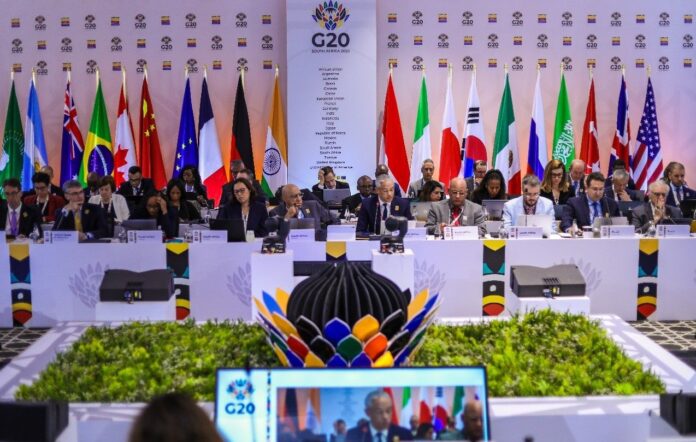
The G20 finance track meeting took place in Zimbali Resort in Durban, KwaZulu-Natal on Monday, in order to come to a concrete consensus on the direction of the financial track, this gathering will be held over a two day period.
“We are very pleased with collaborative spirit shown during the virtual discussions we had last week, and we believe that we are able to achieve agreement in most of the areas…We believe that those engagements have set a very strong foundation for our discussions.” said Duncan Pieterse the director of South Africa’s National Treasury.
South Africa has expressed its full confidence that it can get finance ministers and central bank governors from the members of G20 to agree on a communique which will be the first time this is done since South Africa assumed its presidency of the G20 without the help of the United States and other members.
The previous meetings of the G20 have failed to reach a consensus as delegates couldn’t come to an agreement regarding climate financing and a range of other issues.
“The multilateral system is being tested, and our collective ability to respond will shape the pace of our recovery, but also the prospects for inclusive and sustainable development.” said Duncan Pieterse.
The Deputy Governor of the South African Reserve Bank Dr Rashad Cassim has made mention that the World Trade Organization was the global institution that worked to create fairness in terms of the global trade system, but has noted that the G20 aims create a broader mandate than that of the world trade system.
“So, the challenge we’re going to face in this meeting is really having a conversation around the table to kind of assess what exactly is the source of imbalances in the global economy,” said Dr Cassim.
Dr Cassim has also made mention that the G20 thrives under an economic crisis; “It worked particularly well during the Great Financial Crisis. It worked very well during the COVID 19 pandemic, where countries collectively could agree on regulations, on resources and transfer of resources to developing countries.” Dr Cassim added.
Duncan Pieterse has noted that the International Monetary Fund and the World Bank will update the meeting of the Global Sovereign Debt Roundtable (GSDR) today [Tuesday].
“This discussion is geared towards promoting information exchange between GSDR and G20 to enhance the effectiveness of both roles while respecting the distinct roles.” said Pieterse
“Significant progress has been made on the GDSR work, including the publication of the GSDR playbook on sovereign debt restructurings during the Spring meetings in April, and another important milestone that was achieved was the publication of the G20 note on the steps of debt restructuring under the common framework.” Pieterse added