By Lesedi Sibiya – Diplomatic Insider
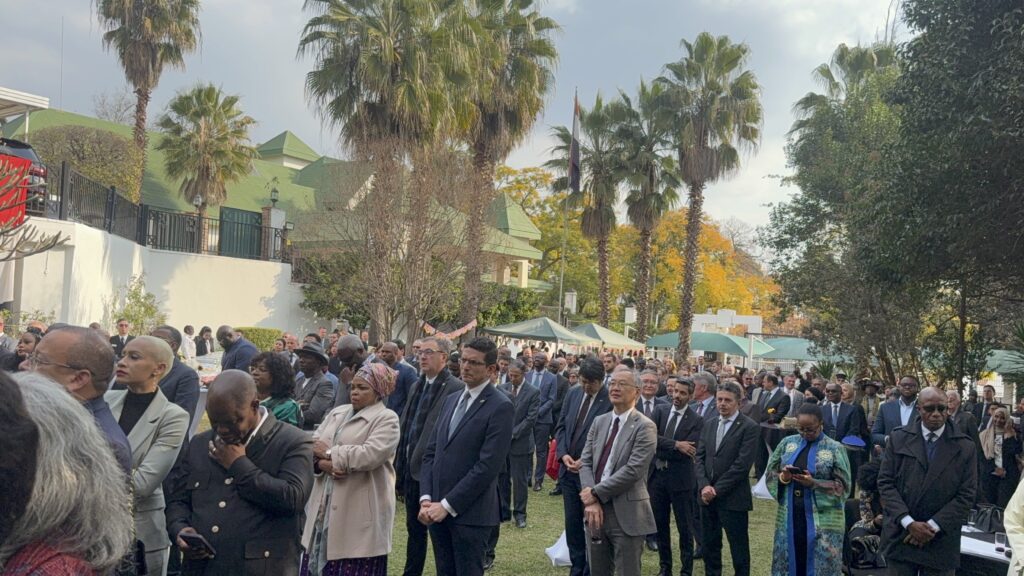
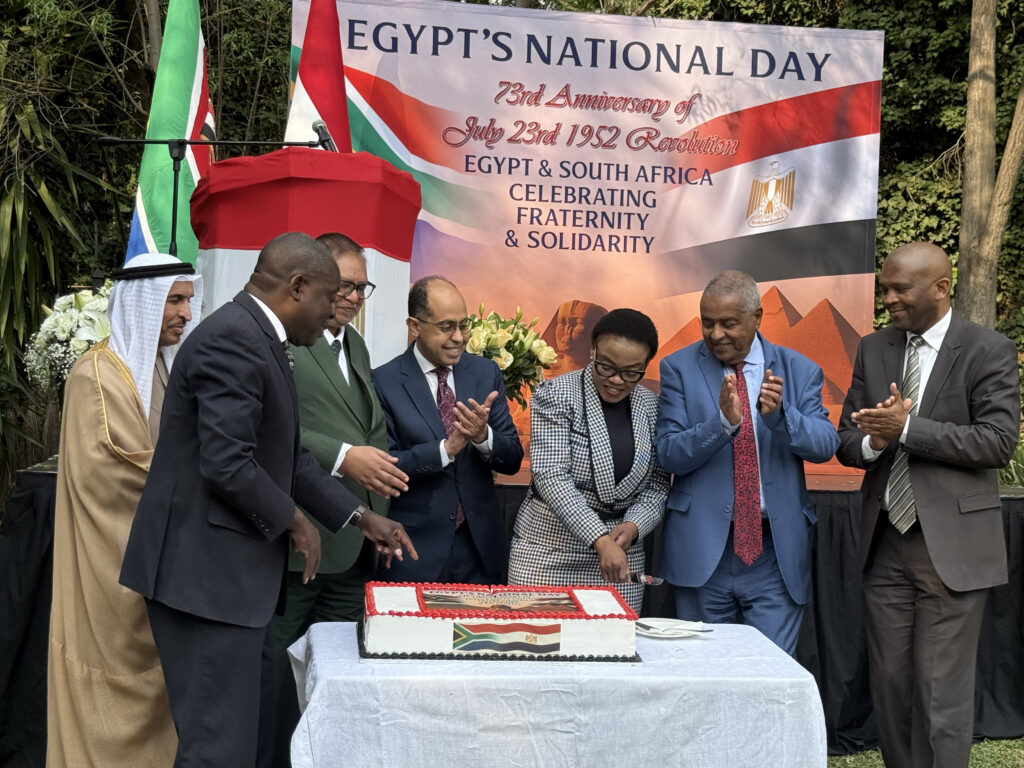
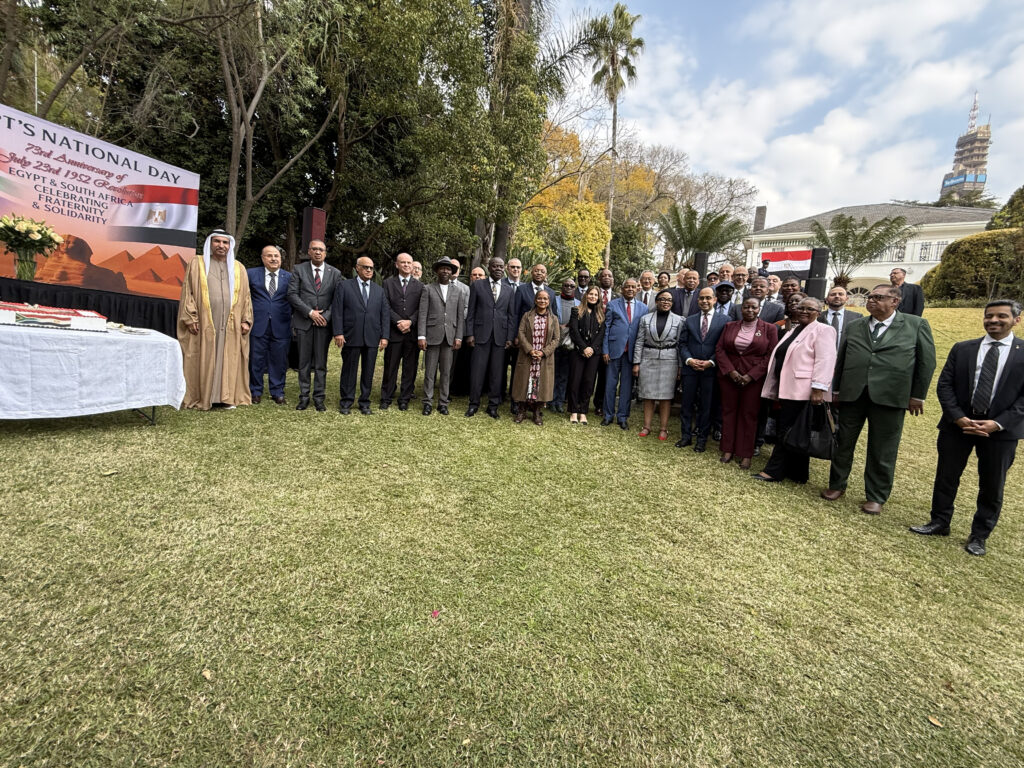
The Egyptian National Day commemorates 73 years since the Egyptian Revolution, which guided Egypt towards independence. The Egyptian Embassy of South Africa hosted a celebration to honour this occasion at Egypt House in Muckleneuk, Pretoria, today.
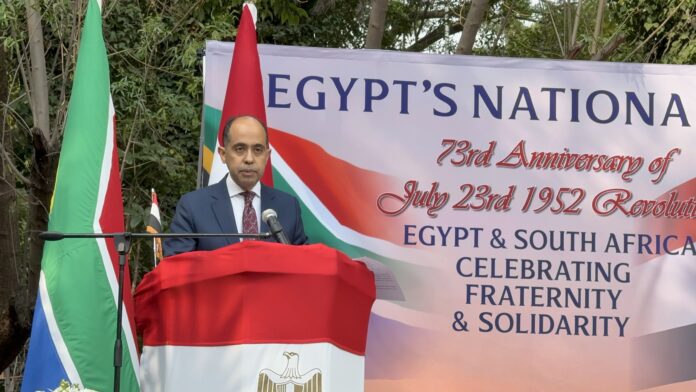
The Egyptian Ambassador to South Africa, H.E. Mr Ahmad Sharief, led the celebrations and also took the time to use the platform to speak against the atrocities of Israel’s war on Palestine and bravely took a stand to condemn Israel for their unjust occupation of Palestine.
“Egypt has condemned these egregious violations of humanitarian law, including before the International Court of Justice, legal memoranda submitted by Egypt detailing Israel’s obstruction of aid, collective punishment, targeting of civilians, and demographic manipulation… calling for accountability under international law,” said Ambassador Sharief during his address.
The ambassador also emphasised that the two nations, South Africa and Egypt, must stand side by side to achieve true economic development.
“Egypt and South Africa stand today shoulder to shoulder in a new struggle for economic liberation, sustainable development, and continental integration. As two pivotal African nations, we are committed to building a strategic partnership that serves our aspirations for our continent and the Global South… Our collaboration spans infrastructure, energy, and industry. A joint consortium is building a 1 billion railway in Gabon, and joint solar projects are underway in South Africa,” said Ambassador Sharief.
The Deputy Minister of Public Service and Administration of South Africa, Ms Pinky Kekana, was also in attendance at the celebration in Pretoria and gave an address at the event in which she expressed the longstanding relations between South Africa and Egypt.
“Our two countries therefore acknowledge that it is important to further translate the existing good political relations into concrete trade and investment ties between South Africa and Egypt. This came in the aftermath of the 10th Joint Commission for Cooperation held in Pretoria in April 2024 at Ministerial level, which has confirmed that both countries will continue to work hard to broaden our bilateral engagements. Both delegations agreed to put more emphasis on expanding cooperation in various other sectors, including defence, security and law enforcement, energy, mining, petrochemicals, infrastructure and industrial development, pharmaceuticals, information and communication technology, science and research, agriculture, as well as in the services,” said Deputy Minister Kekana in her address.
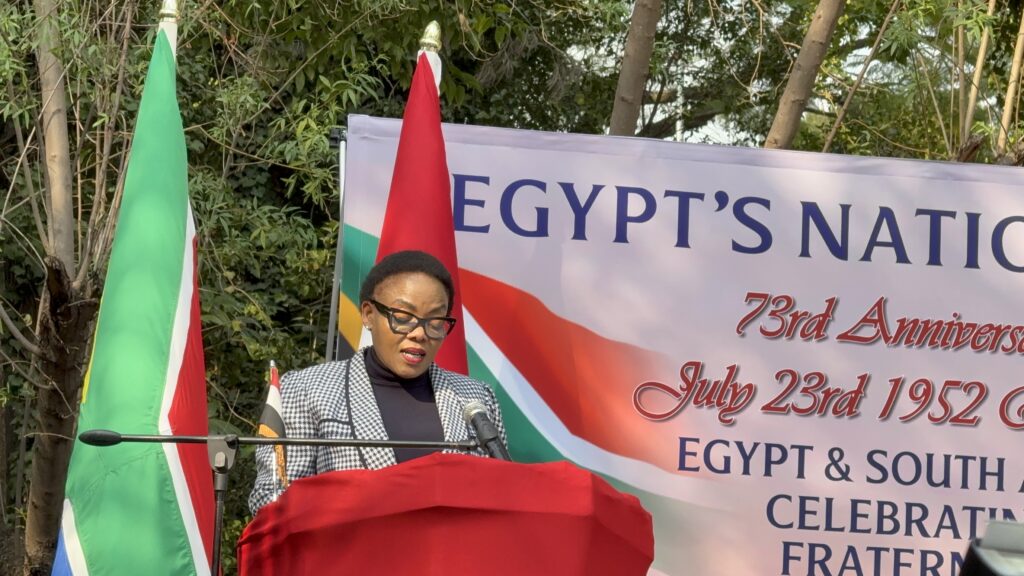
Ambassador Sharief closed his address by reaffirming that South Africa and Egypt continue to share common goals in fighting for freedom and human rights: “Though Egypt and South Africa lie at opposites of our dear continent, we are brought together by one spirit—the spirit of liberation, dignity, and Ubuntu.”
On July 23, 1952, King Farouk had been overthrown, leading the monarch to leave the country the following day. This led to the country finding a collective direction towards democratic governance. The Revolutionary Command Council (RCC) assumed governance.
The Egyptian Revolution of 1952 not only marked a turning point in Egypt’s path to independence but also served as a source of inspiration for several African nations pursuing decolonization. It contributed to the emergence of international alliances among newly independent states aimed at fostering cooperation and development in the post-colonial era.