
By Lesedi Sibiya-Diplomatic Insider
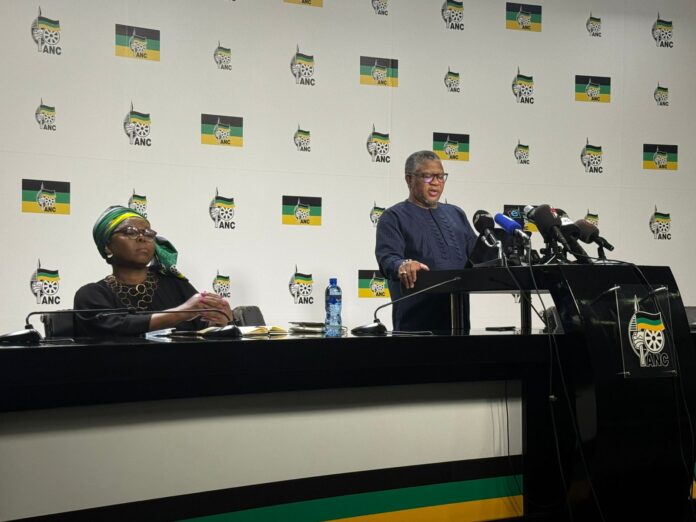
A year has gone by since the inception of the Government of National Unity (GNU) and it has been quite an adjustment period. With disagreements in terms of policies being at the focal point of the GNU’s potential dysfunction, President Cyril Ramaphosa maintains that the GNU is what the country needs. However the African National Congress (ANC) is attempting to look for support outside of the parties that are in the coalition government . The meeting took place over the span of four days from 1-4 August 2025 in Germiston.
This year saw the beckoning of a budget crisis which has made parliament feel uneasy, the National Executive Committee (NEC), which is the ANC’s highest decision making body, have opted to seek help from other parties in an attempt to stabilise governance and initiate key reform strategies.
Failure to pass the national budget earlier this year which was given three times in the space of 5 months was the first sign of cracks within the GNU and had the public question if this coalition government has what it takes to collectively look out for the best interests of South Africa.
“The budget process has taught us many lessons, including being able to build tactical and issue-based voting alliances with other parties. We welcome the cooperation on the budget, including with parties that are not part of the government of national unity.” said President Ramaphosa in his address at the meeting.
The budget managed to get passed with support from parties such as ActionSA and Build One South Africa, which Ramaphosa has described as “a real demonstration of acting in the interests of the people of South Africa.”
“We are grateful to all those parties that cooperated with us to have the budget passed. The overall picture is that despite all the noise through the GNU we have been able to safeguard the core progressive policy agenda of the National Democratic Revolution which is the core pillar of ANC policy.” added Ramaphosa.
The GNU have also faced issues on coming to agreements regarding land expropriation without compensation as well as the Basic Education Laws Amendments Act, which had both instances be opposed by the Democratic Alliance (DA) as they are also the second largest party in the GNU.
The NECs agreement to allow support from parties outside GNU will ensure that these parties play a role in furthering national stability and unity, as well as focus on three priorities such as; driving inclusive growth and job creation, reducing poverty and tackling high cost of living and building a capable developmental state.
“We have extensively discussed how we proceed with respect to the Government of National Unity, given our analysis and practical experience of the past 12 months. Accordingly, the National Executive Committee considered a number of options about how to strengthen the GNU and improve its effectiveness and stability to give full and proper effect to the statement of intent that was signed by the parties that are party to the GNU, as well as the three strategic priorities of the seventh administration.” said Ramaphosa.
Despite the challenges that come with the GNU, Ramaphosa as well as the NEC have agreed that establishing it was the right thing to do.