
By Lesedi Sibiya-Diplomatic Insider
South Africa sees itself staring down a barrel of economic ruin, and gone are the days where we constantly shift the blame onto the grueling trauma of apartheid.
Although, in today’s climate that is still a worthy argument to make for the current economic inadequacies that the country faces, it isn’t however the full cause towards the country’s economic demise.
You could name a few reasons for the lack of growth South Africa faces with the most notable ones being; poor governance, negligence of infrastructure, lack of energy resources and all of these reasons are bound by one common thread: Corruption.
Although the country seems hopeless in its pursuit to remedy the situation and place itself back on course, there may be certain untapped sectors that have the potential to guide South Africa to the economic promise land, one sector in particular I feel could get the job done is tourism.
What many of us fail to remember or at the very least benefit from is the rich nature of South Africa’s history, especially pre-colonialism.
It is very sad when you realise that the majority of the globe only recognise South Africa by their resilience towards struggle. South Africa is constantly seen as a country that champions human rights, and as much as this is a noble character trait to possess, it does not fully identify who we are.
What makes South Africa a unique country in Africa and in the world is the richness in diversity. There are so many cultures rolled up into one eco-system like South Africa, due to the fact that the country has 11 official languages, all the cultures of those languages have a unique story to tell. This does not just go for South Africa alone but for the entire continent at large.
As Africans the biggest part of histories that are told are from the lens of fighting for liberation, especially when you consider the leaders that actively fought to end the struggle, leaders like Kwame Nkrumah, Steve Bantu Biko, Haile Selassie, Patrice Lumumba, Winnie Mandela and so on. But there is so much to tell about Africa other than our resilience towards struggle, our cultural diversity is almost infinite.
The problem with Africa and why it is so difficult for this country to thrive is because we constantly allow the Western civilization to come onto African soil and take its resources for their own gain, and use those very resources such as minerals, to advance their own development in a way more “advanced” state than Africa.
Another problem in Africa is the complacency of its leaders, in which they firmly believe that in order for Africa to achieve economic stability, it has to look outward, which if anything is doing more harm to Africa than actually strengthening it.
Africa loves to look everywhere but itself for guidance. Hence Africa has a duty to actually present to the rest of the globe its undeniable potential especially when it takes back ownership of its resources and stories.
I had the gracious opportunity of attending the Tourism Investment Forum Africa (TIFA) which is spearheaded by advisory firm, Millvest. TIFA, which was established in 2023, seeks to bring investors, entrepreneurs, government officials together to discuss the endless opportunities and benefits that tourism has to offer in order to bring secondary or rural areas as strong economic contributors.
When you consider South Africa in particular it’s very easy to market tourist destinations to the “big three” cities notably, Cape Town, Durban and Johannesburg. However what this notion does is, it narrows the full scale of what you could experience in South Africa and also excludes secondary or rural cities to reap the economic benefits that tourism in this country could offer.
This is a problem that TIFA aimed to solve this year by bringing it to the city of uMhlatuze, Kwa-Zulu Natal instead of Durban which would ordinarily be considered the obvious choice in regards to tourism.
This move by TIFA opened up a new market for investors to take a look at so many other areas in South Africa that make this country beautiful.
I caught up with Jacqui Taylor, CEO and Founder at Agritourism Africa, a company that specialises in Rural tourism, to give her account of TIFA and what she gathered from the event.
“From my perspective and agritourism perspective, it’s all about getting people out of what are called the main cities into secondary and rural cities and towns, and why we try to do that is to create opportunities for local suppliers of services or products and give them the opportunity to economically benefit,” said Taylor.
Another beneficial aspect of TIFA is that it unites African countries to invest with each other instead of constantly looking externally, in this way it makes it more seamless for African countries to take ownership of their identity.
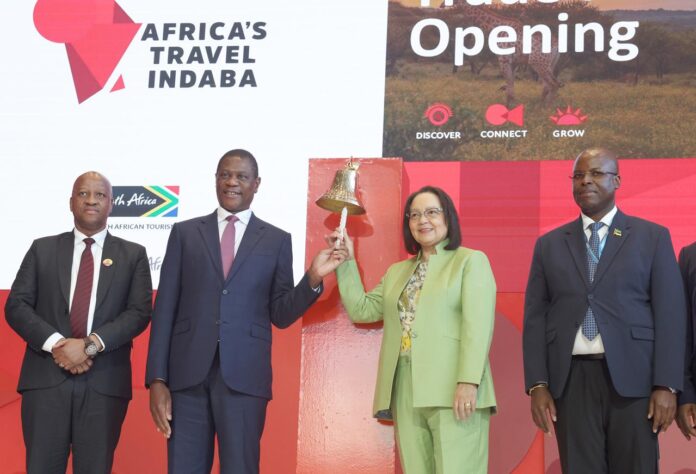
With tourism month underway in South Africa, the sector is experiencing strain with Minister of Tourism, Patricia De Lille, dissolving the South African Tourism Board, due to an irregular board meeting that was held on 1 August. However the board denies this claim and expresses this as political overreach by Minister De Lille.
“There was a resolution, and the resolution was that the board appointed me as a representative. The Minister is quite confused, she does not understand the difference between a meeting of the board, a special meeting of the board and a round robin resolution. You take a round robin resolution with a meeting,” said former Board member Lawson Naidoo.
An air of corruption is said to be looming in this regard, however only time will tell if this crippling plague of corruption has consumed this beloved sector from growing South Africa’s potential.
In conclusion there is so much to consider in regards to tourism, which in many ways not only helps the economic stability of Africa but also reminds Africans of the beauty of our plains, our cultures and our indigenous languages.
I hope someday we can look towards ourselves as Africans to lift each other up from the clutches of western hands and utilize our resources efficiently for the collective good of this continent. We must remember that at the end of it all the genesis of human came from Africa which is a beautiful story to tell in itself, even if South Africa are not brave enough to tell it just yet.