

By Mirna Fahmy
In the world of beauty and self-care, well-groomed nails are a hallmark of personal style. For many, a perfect manicure is a way to express themselves, with endless options in color, shape, and design to keep up with the latest trends. However, the desire for a long-lasting manicure—one that can endure for weeks without chipping—has led to the rise of gel polish. This technique hardens and shines nails, offering a glossy, durable finish that has captivated countless enthusiasts. Yet, this popular beauty tool has a darker side: a growing link to health concerns, including the risk of cancer.
On September 1, 2025, the European Union (EU) banned a key chemical ingredient found in many gel-nail polishes, trimethylbenzoyl diphenylphosphine oxide (TPO), over health concerns. This chemical acts as a photoinitiator, helping gel polish harden quickly under UV or LED light, giving gel nails their durable, glossy finish.
The ban was implemented because TPO has been categorized as a reproductive toxicant. The primary basis for the European Union’s ban of TPO in cosmetic products, was specifically, a study in 2020 on rats that investigated the effects of high-level exposure to TPO.
The main institutions involved in the findings include the European Chemicals Agency, the EU Scientific Committee on Consumer Safety (SCCS), and national authorities such as the Swedish Chemicals Agency.
The findings showed that male rats experienced a reduced sperm count and testicular changes, while female rats had irregular estrous cycles, indicating infertility. The rats in the study received oral doses thousands of times higher than what humans would typically encounter through cosmetic use.
2020 studies aren’t the first study to suspect TPO. In 2012, TPO was initially classified as a category 2 reproductive toxicant, meaning it was only suspected of being harmful but lacked conclusive evidence.
A 2014 safety assessment by SCCS found TPO safe for use at concentrations up to 5% in nail products for professional use, so its use was allowed under strict limits. Some brands used even lower concentrations, such as 0.99% and 0.29%.
Now, TPO is labeled as carcinogenic, mutagenic–– capable of causing cancer––or toxic to reproduction (CMR category 1B substance) by EU regulators. Thus, gel nail polishes containing TPO are no longer allowed to be sold or used in the EU. Salons must dispose of existing stock with TPO safely and switch to TPO-free alternatives.
The ban affects both professional and home-use products. The US and UK have not yet banned TPO; the UK may follow suit in 2026.
When did TPO start to be used?
TPO started being widely used in gel nail polishes with the advent of UV and LED curing technology in the 2010s. It acts as a photoinitiator, meaning it initiates the chemical reaction that hardens or cures the gel polish when exposed to UV or LED light.
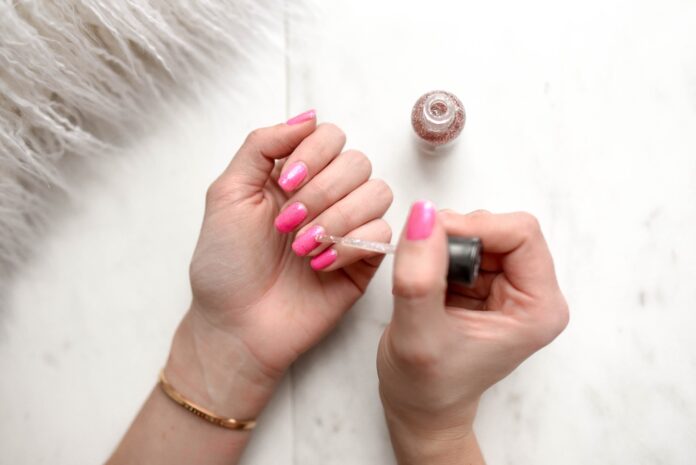
After applying a gel manicure, a thin layer of gel polish containing TPO is brushed onto the nails. The nails are then placed under a UV or LED lamp, which activates the TPO, starting a polymerization reaction that solidifies the gel into a hard, glossy coating. This curing process usually takes from 30 seconds to 2 minutes per layer, depending on the lamp and product used. Multiple coats may be applied and cured in this way for desired thickness and color intensity.
TPO-free alternatives
There is TPO-L (ethyl (2,4,6-trimethylbenzoyl) phenylphosphinate). It is a safer photoinitiator that performs similarly to TPO but is not classified as a reproductive toxicant. It is used by brands like Manucurist.
Phenylbis(2,4,6-trimethylbenzoyl)phosphine oxide (BAPO), Ivocerin (dibenzoyl germanium derivatives), and Camphorquinone are safer alternatives photoinitiator that works under UV and LED light with efficient curing properties.
Past fatal cosmetics:
Many cosmetics throughout history have contained dangerous and toxic ingredients that caused severe health problems, including lead, mercury, and arsenic. Even in the 20th century, products containing asbestos-contaminated talc and formaldehyde-releasing ingredients caused serious health issues.
Heavy metals were excessively used in the past. One of them is Lead–heavily used by ancient Romans and Egyptians, and later European nobles like Queen Elizabeth I, who used lead-based creams like Venetian ceruse to achieve a pale complexion. Long-term use led to lead poisoning, which caused skin damage, hair loss, muscle paralysis, and even death. Kohl, a common eye cosmetic in many cultures––known as eye-liner nowadays– has also been found to contain dangerously high levels of lead. Kohl is often seen on Egyptian statues and drawings of ancient Egyptians.
Mercury––another poisonous metal––was used in skin-lightening creams for centuries, and it was valued for its ability to suppress melanin production. However, mercury is toxic and can cause kidney damage, neurological disorders, skin rashes, and reproductive harm when absorbed through the skin.
In the Victorian era, some women ingested “arsenic complexion wafers” or used arsenic-laced cosmetics to achieve a pale, “delicate” appearance. These products poisoned users and caused symptoms like vomiting, diarrhea, and abdominal pain.
Also, in the past, some women used drops of Deadly nightshade (belladonna)––poisonous plant–– in their eyes to dilate their pupils, which was considered fashionable in Renaissance Italy. While it produced the desired effect, prolonged use could cause visual distortion, blindness, and death.
Toxic substances from the modern era:
The EU’s ban on TPO is far from an isolated incident. The history of modern cosmetics is marked by a long-standing and evolving struggle with toxic ingredients, even as science and technology have advanced.
One of the most high-profile examples involves talcum powder, where contamination with asbestos during the mining process led to the substance appearing in cosmetic products. Manufacturers, including Johnson & Johnson, faced thousands of lawsuits alleging they were aware of the contamination but did not warn the public, resulting in cases of mesothelioma and ovarian cancer.
Similarly, hair products have come under scrutiny; certain hair dyes have been linked to cancer, while heated treatments known as “Brazilian blowouts” were found to release formaldehyde, a known human carcinogen.
Moreover, more pervasive chemicals have been a concern for years. Parabens and phthalates, commonly used as preservatives and fragrance enhancers, are considered endocrine disruptors that interfere with hormone function. These chemicals have been linked to a host of health issues, from fertility and developmental problems to certain cancers, leading the EU to significantly restrict their use in recent years.
This pattern of danger also includes other formaldehyde-releasing preservatives, which, as known human carcinogens, have been linked to cancer and severe skin irritation.
Cosmetics can increase the death rate
Throughout history, the quest for beauty has often come at a deadly cost. Cosmetics, particularly in Europe and the United States from the 16th to the 19th centuries, were notoriously filled with toxic substances like heavy metals and poisons. While it is impossible to calculate the total impact on mortality rates, individual deaths from these products were widely documented.
In 16th-century Europe, the pursuit of pale, aristocratic skin led to the use of Venetian ceruse, a popular lead-based makeup. This poisonous concoction is often cited as a contributing factor in the death of Queen Elizabeth I. A more definitive case is that of Maria Coventry, a London socialite who died from lead poisoning at the age of 27 in 1760, in a well-publicized case grimly known as “death by vanity.” The deadly trend continued into the 19th century, where a pale complexion remained fashionable across the U.S. and Europe. This led to arsenic-based beauty products, including wafers, pills, and lotions, that were deceptively marketed as a safe way to improve the complexion. These products were eventually removed from the market after reports of women dying from their use, though the exact number of deaths remains unknown.
Even with the advent of modern cosmetic regulations, dangerous products continued to cause injury and death well into the 20th century and beyond. In the 1930s, an eyelash dye called Lash Lure, based on a toxic aniline dye, caused blindness in 16 people and one death before it was finally banned. During the same period, the depilatory cream Koremlu contained thallium acetate, a rat poison, which led to hair loss and paralysis in users. More recently, the issue of asbestos-contaminated talc in some products has led to thousands of lawsuits linking these cosmetics to cases of mesothelioma and ovarian cancer.
The recent 2025 ban on TPO in the EU is the latest chapter in this history, but it marks a significant shift. This is a proactive, precautionary measure taken without any reported human deaths or health complications. While TPO is classified as a potential reproductive toxicant, there is no evidence to suggest that its adverse effects would significantly impact the already low fertility rate that the EU has been facing, making the ban a preventive step rather than a response to a documented crisis.