
By Lesedi Sibiya-Diplomatic Insider
The combat against the corruption found within the justice system has commenced in the form of the Madlanga Commission, a commission established by President Cyril Ramaphosa.
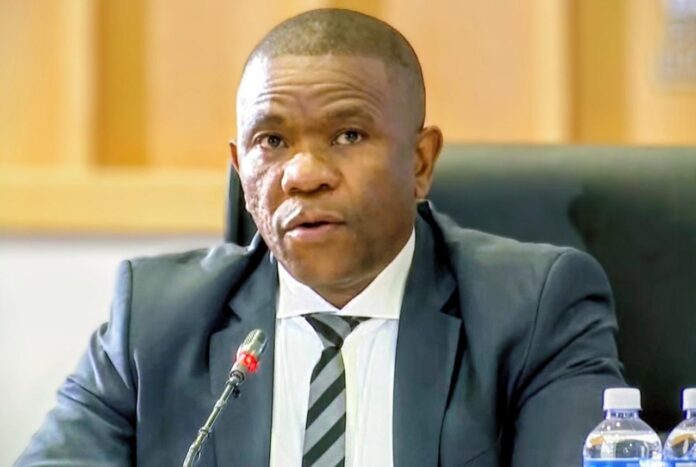
The KwaZulu-Natal Police Commissioner Nhlanhla Mkhwanazi was the first witness to testify in the commission due to his initial bravery of speaking out against suspended Minister of Police Senzo Mchunu.
The next witness expected to testify is National Commissioner of Police, General Fannie Masemola today.
National Police Commissioner Fannie Masemola is expected to answer questions relating to Mkhwanazi’s claims of undue influence to disband the task team that was assigned to investigate political killings.
The Spokesperson of the Commission Jeremy Michaels expressed that members of the public who wish to attend the proceedings will need to carry a valid identity document in order to attend the commission.
“We would also like to remind those members of the public who want to attend the hearing that they should bring along a valid identity document or driver’s license and that no weapons will be permitted on the commission’s premises, the Brigitte Mabandla Justice College in Pretoria.”
Mkhwanazi has spent three days in Tshwane, in order to account and detail the allegations of corruption with the South African Police Services (SAPS) which include senior officers as well as the Johannesburg and Ekhuruleni metropolitan police departments, the National Prosecuting Authority, and related institutions such as the independent Directorate against Corruption.
The witnesses who will step forth in the commission include; National Police Commissioner Fannie Masemola, members of the disbanded task force, detectives who were involved in the investigations surrounding the political killings, as well as prosecutors.
“We confirm that the National Commissioner of Police, General Fannie Masemola, will testify before the commission of inquiry tomorrow” , said spokesperson Jeremy Michaels.
“Individuals and institutional representatives implicated by Lt-Gen Mkhwanazi statements and evidence-including, for instance the suspended Minister of Police-will be invited or, if necessary, compelled to appear before the commission and provide testimony,” explained members of the legal team.
The next phase of the commission will proceed to test the evidence and will also assess rebuttals to the allegations presented further.
Meanwhile former South African President and leader of uMkhonto weSizwe (MK) Party Jacob Zuma and delegates have had their court bid to stop the commission denied, stating that the investigation of alleged criminal activity within the judiciary done through commission is unconstitutional.
They have stated their reasoning for this as it oversteps the bounds laid for the judicial entities such as the Magistrate Commission and the Judicial Service Commission (JSC).
Zuma and the MK Party believe that this commission is a waste of the tax payer money as the government has laid out R148 million to be spent over the course of six months. President Ramaphosa has expressed that this commission will aim to work alongside these judicial entities instead of going above them.