
By Lesedi Sibiya-Diplomatic Insider
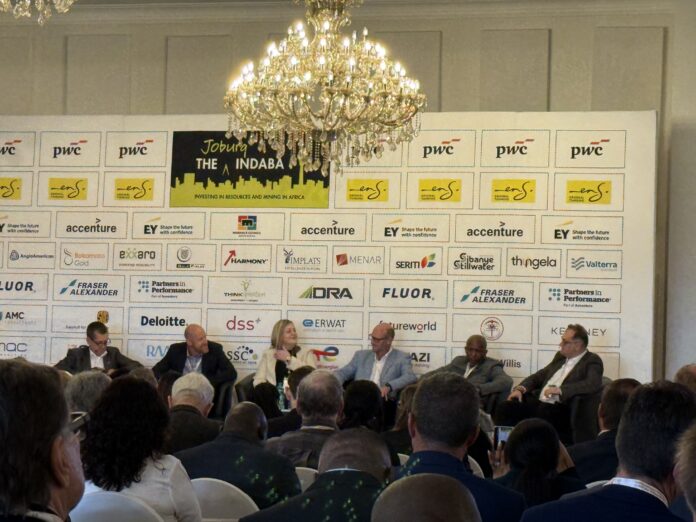
One of the sessions held on day one of the Joburg Indaba 2025 discussed how geopolitical shifts have had an effect on South Africa’s mining sector. The panel was chaired by Wickus Botha who serves as Energy and Natural Resources Market Segment Leader for Northam Platinum.
Richard Stewart, CEO of Sibanye-Stillwater, explained in the panel discussion that there is a lack of understanding with regards to the short-term fundamentals within the Platinum Group Metals (PGM) market.
“We don’t quite understand what’s driving the short-term fundamentals in the PGMs market, it’s likely being driven by investor sentiment. We’re cautiously optimistic about the medium term (2-10 years). Beyond that, what comes next is the critical question” said Stewart during his presentation.
Stewart also outlined that South Africa could benefit from positioning themselves within Western supply chains, particularly in regards to critical minerals.
“We have to beneficiate if we want to participate in these supply chains. This will remain our strategy going forward,” said Stewart.
Nico Muller who serves as CEO of Implats also emphasised the involvement of Western supply chains with Implats’ company portfolio.
“The Western Limbs is a fundamental part of our asset base and will continue to be critical to our future,” said Muller, highlighting that Implats will not shy away from any range of market developments.
Lullu Krugel, who serves as the Chief Economist and Sustainability Leader at PwC and outlined three major global trends that are currently shaping mining today such as; tensions between governments that are seeking more control over companies and resources, the industry’s role regarding South Africa’s security over their place in the globe and mining’s contribution to national security and supply stability.
Menar’s Managing Director, Vuslat Bayoglu, emphasized China’s crucial reliance on Africa, more than Africa needing to benefit from them, in regard to mineral resources, and expressed that South Africa needs to remember that it has a significant place within the markets. “China needs us more than we need China. The US and China need our chrome, manganese and PGMs. We have the human capital and the mineral resources. We need to recognise that we are a valuable country to the rest of the world,” said Bayoglu.