
By Thobile Jiwulane
The British Parliament’s decision to deny accreditation to Declassified UK has reignited a pressing question: Does press freedom still hold weight in the West?
Declassified UK is a fiercely independent investigative journalism outlet that has consistently challenged the British government’s narratives. Known for its uncompromising reporting on foreign policy, military affairs, and intelligence operations, the outlet has faced repeated attempts at censorship.
The UK’s approach contradicts the West’s stance of championing media freedom. Some media outlets, with or without government influence, have shown bias in reporting developments in Gaza. Western mainstream media often sided with Ukraine, ignoring atrocities committed by Ukrainian forces in the Donbass region, including bombardments of Russian-speaking areas that contributed to the conflict.
While the Russian invasion of Ukraine in early 2022 was rightly condemned, some Western media outlets downplayed Russia’s grievances. Little attention was given to Moscow’s concerns over NATO’s eastward expansion, and coverage often lacked context regarding the events of 2014—another factor cited by Russia in its justification for the conflict.
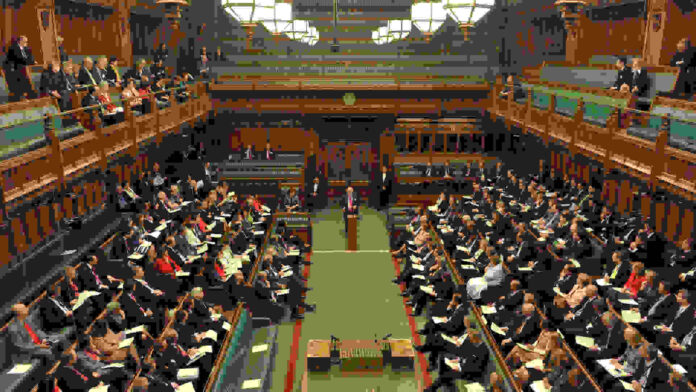
In the midst of this biased reporting, Declassified UK stands out as a genuinely independent outlet, committed to reporting without fear or favour. Its investigations into UK-Israel collaboration in Gaza have drawn the ire of authorities, leading to increasing isolation. The latest setback came when Parliament denied Declassified press accreditation—effectively barring its journalists from Westminster, the symbolic heart of British democracy. This exclusion contrasts sharply with the treatment of other media organisations, which continue to enjoy full access.
Critics argue that this move undermines democratic transparency and signals a troubling shift toward selective media gatekeeping. By sidelining independent voices, institutions risk eroding public trust and weakening the foundations of democratic accountability. In a time when Western governments often champion press freedom abroad, such actions raise uncomfortable questions about their commitment to those same principles at home.
In its initial refusal to grant press access to Declassified UK, Parliament cited “limitations within the Parliamentary estate.” However, a Freedom of Information request later revealed that the rejection was linked to Declassified’s reporting—specifically, a story investigating alleged pro-Israel bias by a parliamentary standards commissioner. This decision has been widely criticised, including by British politicians, as a form of institutional censorship.
Declassified UK argued that the decision undermines democratic accountability and sets a troubling precedent by excluding independent media from political spaces. In response, the outlet launched a petition calling for equal access for independent journalists and greater transparency in accreditation processes. Co-director Laura Pidcock underscored the severity of the issue, noting that Declassified was denied access three times in September alone. “These decisions are outrageous, and in any free or fair society, this would not have happened,” she stated.
She explained that the first occasion was a major arms fair, the Defence and Security Equipment International (DSEI) trade show, in early September. “We have attended and reported from there twice before in 2021 and 2023 under Conservative governments, but this time our registration was refused. We were given no reason,” Pidcock said.
On the second occasion, they received confirmation from the Labour Party that they had been refused entry to their annual conference held in Liverpool from 28 September to 1 October 2025. The refusal was for a second year in a row, again with no clear reason provided.
Pidcock denounced what she described as an “egregious restriction” on press access to Parliament, following the rejection of Declassified UK’s application for a Parliamentary media pass. Documents obtained through the Freedom of Information Act revealed troubling justifications for the refusal—including an internal email stating that “they [Declassified UK] are not specifically a politics organisation, as their main focus is around foreign affairs.”
“These decisions beg the questions—What is it they want to stop us investigating and therefore knowing, and why is our presence unwelcome? We cannot stand for this. This isn’t just a concern for us at Declassified and our ability to access the spaces we need to investigate and report unhindered. This is a worry for anyone who cares about freedom of the press to hold powerful people to account in our so-called democracy,” Pidcock said.
The harassment faced by Declassified underscores the impact of their investigative work. Despite systemic barriers imposed by British authorities, the outlet has vowed to “continue with rigour and determination,” reaffirming its commitment to holding the powerful to account.
Declassified, funded primarily through public donations and a small number of grants, conducts in-depth reporting that includes interviewing whistleblowers, examining declassified documents, uncovering information buried in bureaucracy, and scrutinizing covert activities of the UK government around the world. Despite its public interest mission, the organization faces persistent harassment from British authorities—ranging from threats to being denied access to key events such as parliamentary sessions and major conferences.
Recent revelations uncovered that Elbit Systems, Israel’s largest weapons manufacturer, lobbied the UK Home Office to pursue a retrial after criminal charges against two co-founders of Palestine Action were dismissed. Following this lobbying effort, the Crown Prosecution Service ordered a retrial, now scheduled for 2027.
Elbit Systems reportedly lobbied British authorities to take decisive action against protests targeting Israeli companies operating in the UK. Declassified uncovered the extent of official involvement in facilitating these efforts. Their reporting also revealed that, over several decades, the UK not only sought to undermine Iran’s government but also covertly supplied chemical weapons and conducted surveillance on Iranian opposition activists.
Declassified UK revealed that the British government disregarded its own surveillance footage when evaluating Israel’s compliance with international law. The outlet also exposed Britain’s covert role in supporting the Gaza war, including conducting surveillance flights over the Strip and sharing intelligence with Israel. A Declassified reporter based in Gaza recounted how eyewitnesses to an Israeli massacre on 8 June 2024 believed British intelligence contributed to the attack on Nuseirat.
In a political assessment of the situation and to justify its work, Declassified said: “With the world being rapidly reshaped before us, it can be easy to feel overwhelmed and powerless. But we mustn’t allow the brutality of the political and economic system to grind us into ambivalence. An unaccountable system is, after all, what maintains political orthodoxies. It is why at Declassified we ask the vital questions to politicians to expose their decisions and we will keep doing so until we get answers.”
From a South African perspective, the censorship faced by Declassified UK echoes the oppressive media restrictions imposed during the apartheid era by the now-defunct National Party government. Under white minority rule, any reporting deemed “undesirable” by the regime was swiftly censored.
Journalists who challenged the state narrative were often banned, harassed, or imprisoned. Coverage of police brutality was tightly controlled under draconian state of emergency regulations and regular laws, and even quoting a banned or jailed Black political leader such as Nelson Mandela was strictly prohibited. Surveillance of journalists and police raids on newsrooms were routine tactics used to silence dissent.
Thankfully, that chapter has closed. In today’s democratic South Africa, freedom of speech and freedom of association are enshrined in the Constitution, forming the bedrock of a society committed to transparency, accountability, and human rights.
While media freedom is often championed in the West—from which South Africa’s democracy drew inspiration—recent incidents, such as the exclusion of Declassified UK from parliamentary access, suggest a troubling drift toward censorship. Independent journalists and alternative media outlets, particularly podcasters, have faced increasing barriers in the West, especially in the US, with many being deplatformed or blocked from broadcasting on platforms like YouTube.
Western governments and academic discourse frequently criticize nations like Russia, China, and Iran for suppressing dissent and restricting press freedom. Yet, these same critics often overlook similar patterns emerging within their own borders, raising uncomfortable questions about double standards and the true state of media liberty in democratic societies.