
By Lesedi Sibiya-Diplomatic Insider
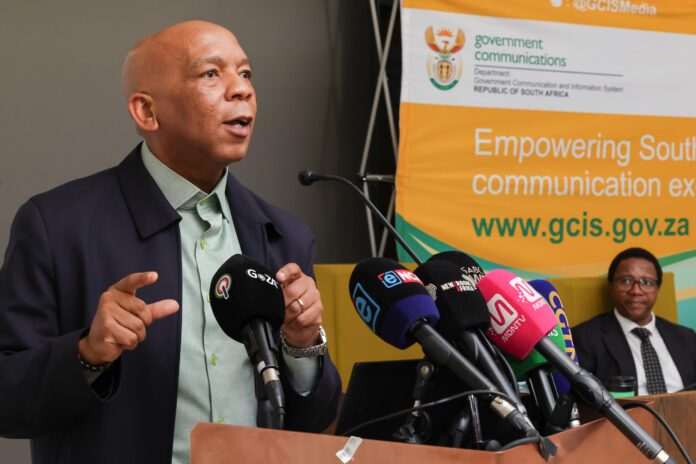
Minister of Electricity and Energy, Dr Kgosientsho Ramokgopa, announced the Integrated Resources Plan (IRP) 2025, which will aim to definitively resolve South Africa’s energy crisis as well as boost economic growth.
The overly ambitious IRP will see a government investment of R2.2 trillion which amounts to 30% of South Africa’s Gross Domestic Product (GDP) outlined in a comprehensive energy transformation strategy.
“As a result of the lights being off, the South African economy has not been able to grow, as they say in economics. Electricity has been a structural constraint to the South African economy” said Ramokgopa during his media briefing.
Ramokgopa placed emphasis on how the constant power shortages have hindered economic development and has even contributed to the unemployment crisis in South Africa. “Now that we have turned the corner on load shedding, we are addressing the future.
Energy now ceases to be a crisis; energy and electricity are going to be a catalyst for growth” added Ramokgopa. The IRP will also aim to address ongoing electricity supply issues as well as promote economic growth, enhance job creation and reach a target of 3% GDP growth by 2030.
“There is no economy that grows if the lights are off. There are no industries that will decide to locate South Africa if we can’t guarantee them available electricity that is of good quality and that is affordable.” said Ramokgopa.
The plan also welcomes a drastic shift in South Africa’s energy mix, with cleaner energy resources such as hydro, nuclear, wind and solar which is expected to surpass coal for the first time in South Africa’s history.
The South African government aims to add 105,000 megawatts of new generation capacity by 2039 which would require building to be two and half times its current size. Currently South Africa has 58 % of its installed capacity coming from coal, with 10 % coming from grid connected solar PV, 8% from wind and 3 % from nuclear resources.
Ramokgopa also highlighted the lack of a skills pipeline and an almost completely non-existent construction industry, but still emphasised the government’s full commitment to this energy transfer stating that economic growth is a key imperative.
“This is not just an electricity programme, but a response to an economic question” said Ramokgopa.
“We’re talking about growth, industrialisation, new skills, and resuscitating collapsed industries” added Ramokgopa.
The Minister had also expressed that Eskom has made significant improvements, with energy availability rising from 48% which was during peak load shedding to a now 70% increase, which will provide a strong basis for a successful energy transformation.