
By Mirna Fahmy-Diplomatic Insider
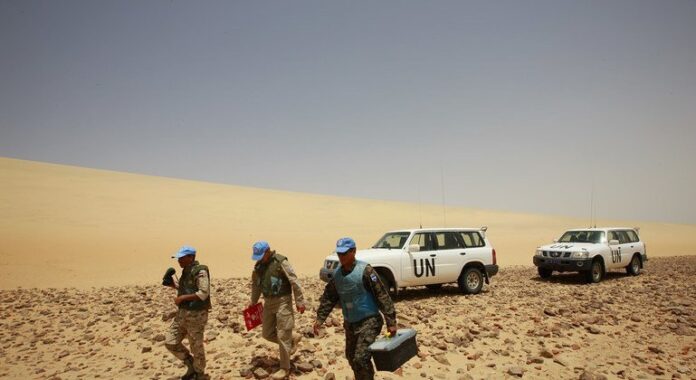
The current situation in Western Sahara remains tense and largely static, marked by low-intensity hostilities between Moroccan forces and the Polisario Front. Although the United Nations Security Council has once again renewed the mandate of the UN Mission for the Referendum in Western Sahara (MINURSO), the peace process remains frozen. The Council’s most recent action has also lent strong backing to Morocco’s autonomy plan, which proposes granting limited self-rule to Western Sahara under Moroccan sovereignty. The Polisario Front, however, continues to reject this proposal, maintaining its demand for a self-determination referendum in line with earlier UN and African Union settlement frameworks.
Negotiations have remained stalled since the collapse of the ceasefire in 2020. Morocco controls the majority of the territory–approximately 80% –– which it refers to as its “Southern Provinces,” while the Polisario administers roughly 20 percent as the Sahrawi Arab Democratic Republic (SADR) and manages refugee camps, mainly in Tindouf, Algeria.
The divide is deep: Western powers such as the United States (US), France, and the United Kingdom (UK), and also more than 40% of the African continent support Morocco’s autonomy plan, while Algeria firmly backs the Polisario. Meanwhile, humanitarian conditions for Sahrawi refugees remain a growing concern, and the threat of renewed hostilities persists.
The Polisario Front, short for the “Popular Front for the Liberation of Saguia el-Hamra and Río de Oro,” represents the Sahrawi people, who live in the Western Sahara. Recognized by the United Nations since 1979, the movement seeks full independence from Moroccan control and the establishment of the Sahrawi Arab Democratic Republic. While some Polisario leaders hold diverse personal nationalities—such as Brahim Ghali, who has been described as Sahrawi-Spanish—the movement’s identity is rooted in the Sahrawi liberation struggle and the goal of statehood in the disputed territory.
In a landmark development, the United Nations Security Council adopted Resolution 2797 (2025) on 31 October, signaling what many observers have called the most decisive shift in decades on the Western Sahara question. The resolution, which extends MINURSO’s mandate until October 2026, endorses the Moroccan Autonomy Proposal as the foundation for achieving a “just, lasting, and mutually acceptable” political solution. It reaffirmed the Council’s support for UN Secretary-General António Guterres and his Personal Envoy, Staffan de Mistura, in leading a renewed negotiation process between Morocco, the Frente Polisario, Algeria, and Mauritania. For the first time, the Council described Morocco’s autonomy plan as a “most feasible” framework for resolving the dispute, reflecting growing international momentum behind the initiative. The resolution further highlighted broad support among UN member states, including major powers such as the United States, France, Spain, and the European Union (EU), and urged all parties to engage in talks without preconditions and to seize what it called an “unprecedented opportunity” for peace.
Moments after the vote in New York, King Mohammed VI delivered a nationally televised address hailing the resolution as a “pivotal moment” in Morocco’s modern history. Declaring that “there is a before October 31, 2025, and an after,” the Monarch said the Kingdom was turning the page on five decades of dispute and embarking on a new era of unity “from Tangier to Lagouira.” The King emphasized that two-thirds of UN member states now back the Autonomy Initiative as the only credible framework for resolving the conflict and noted the increasing recognition of Morocco’s economic sovereignty over the Sahara by global powers, including the US, Britain, Russia, and Spain. He announced plans to present an updated and detailed version of the Autonomy Plan to the UN as the exclusive basis for future negotiations, framing it as a solution “with no winners or losers.” Extending a message of reconciliation, King Mohammed VI called on Sahrawi populations in the Tindouf camps in southern Algeria to “seize this historic opportunity” to return and contribute to their homeland’s development. In a notable diplomatic gesture, he also invited Algerian President Abdelmadjid Tebboune to launch a “sincere, brotherly dialogue” aimed at restoring relations—an initiative that coincides with reported U.S. mediation efforts, led by Special Envoy Steve Witkoff under the US President Donald Trump, to broker a peace agreement between Morocco and Algeria.
Algeria increases its military spending.
According to the Federal Ministry of Economics and Environmental Protection, Algeria topped the list of African countries buying armaments from Germany in 2024, with a figure of 559 million euros. This increase is due to the rise in Algerian military spending, which the government justified by the need to protect itself from ‘unprecedented regional threats’.
Algeria’s support for the Polisario Front is fundamentally rooted in a decades-long geopolitical rivalry with Morocco, which predates the Western Sahara conflict itself. The primary source of this deep mistrust is the 1963 Sand War, a border conflict that arose from disagreements over territories inherited from the French colonial era, specifically Morocco’s claims to parts of the Tindouf and Béchar provinces in Algeria. This historical feud is widely cited as the enduring background to the current tensions . Analysts suggest that Algeria’s actions are driven by a strategy to achieve regional hegemony in the Maghreb. By preventing Morocco from fully integrating Western Sahara, Algeria effectively uses the Polisario Front as a means of weakening its rival’s political goals and maintaining its own power-politics position in North Africa. This strategy also directly impacts Morocco’s ability to establish land routes to Sub-Saharan Africa, a key factor in the intense geopolitical competition between the two nations.
The conflict over Western Sahara began during the decolonization period after Spain colonized the territory in 1884. Under pressure from Morocco, the United Nations included the territory on the list of non-self-governing territories in 1963. Moroccan anti-colonial movements, such as the Army of Liberation, conducted military actions against Spanish and French forces in the late 1950s in the region (the Ifni War), which Morocco points to as evidence of its historical claim to the territory. The Polisario Front was formally constituted on May 10, 1973, by Sahrawi students and others, many of whom had studied in Moroccan universities, with the immediate goal of launching an armed struggle against Spanish occupation. Early in its existence, the Polisario only garnered faint notices of support from Libya and Mauritania before gaining Algeria’s major backing later in the decade.
The final stage of decolonization and the start of the war occurred in 1975. Spain was preparing to withdraw, but Morocco responded to the situation by organizing the “Green March” on November 6, 1975. This was a mass demonstration of approximately 350,000 unarmed Moroccan civilians who crossed the border to assert Morocco’s claim to the territory. This action followed an advisory opinion from the International Court of Justice (ICJ) that did not support Morocco’s sovereignty claims and affirmed the Sahrawi people’s right to self-determination. The Green March was therefore widely viewed as an attempt to bypass the ICJ ruling. Following the March, the Madrid Accords were signed, leading to a de facto division of the territory between Morocco and Mauritania. The Polisario Front, which was strongly backed by Algeria and Libya, rejected the accords and immediately launched a guerrilla war against Moroccan and Mauritanian forces, marking the beginning of the Western Sahara War.
This war lasted for 16 years until a UN-brokered ceasefire in 1991, with Morocco controlling roughly 80% of the territory and Polisario around 20%. Since then, efforts for a referendum on self-determination have stalled, and the conflict remains unresolved, with ongoing diplomatic deadlock and periodic flare-ups. The dispute has now lasted for about 50 years and remains one of Africa’s longest-running territorial conflicts.
The desert is rich.
Western Sahara is rich in natural resources, notably some of the world’s highest quality phosphate reserves, whereas the entire region of Morocco and Western Sahara combined holds the vast majority of the world’s phosphate rock reserves, typically cited as around 70% to 72% of the global total. The phosphate ore extracted from Bou Craa is consistently described as being of “exceptionally high quality,” which makes it a highly valuable commodity for fertilizer producers.
There are also extensive fishing banks, and potential offshore oil (mainly bituminous shale which is expensive to extract) and gas deposits. Moreover, there are renewable energy resources, such as solar and wind power, along the coast. Major economic activities in the territory currently controlled by Morocco include phosphate mining and fishing, with significant infrastructure projects in water management, ports, and renewable energy attracting foreign investment.
However, these resources and activities are a source of tension because they are exploited mainly under Moroccan control who invested since 1976 a staggering amount of 5 billion dollars in infrastructure to develop the region. It is worth noting that the Sahrawi population living in the Morocco controlled Sahara is 950.000 in comparison with less than 120.000 (90.000 considering the number provided by the UN Food Program for humanitarian aid) in the Tindouf camps under Algeria and Polisario rule.
The international community’s growing support for Morocco’s sovereignty over Western Sahara is influenced significantly by geopolitical and economic interests. Since the U.S. recognized Moroccan sovereignty in 2020, largely as part of a deal tied to Morocco normalizing relations with Israel, other countries like France, the UK, and Spain have followed with varying degrees of support or pragmatic acceptance of Moroccan autonomy plans. The backing relates to several strategic areas including energy security, investment opportunities in mining and infrastructure, counter-terrorism cooperation, migration management, and regional stability.
Morocco’s formal autonomy proposal aims to grant local governance while keeping Moroccan control over natural resources, foreign policy, and security, which reassures external partners about protecting investments and strategic interests. The anticipation of economic growth in sectors like renewable energy, fisheries, mining, and even tourism in Western Sahara also attracts foreign investors supportive of Moroccan sovereignty.
How is humanitarianism?
The humanitarian and social situation in the Tindouf refugee camps, home to over 170,000 Sahrawi refugees in Algeria, is deteriorating significantly. The United Nations Secretary-General António Guterres’ 2025 report highlights critical issues such as food shortages, lack of gas, inadequate education, water scarcity, poor sanitation, and high malnutrition rates, with malnutrition reaching 13%, stunting over 30%, and widespread anemia among children and women. These hardships are compounded by underfunding; the UN’s Humanitarian Response Plan faces a $103.9 million funding gap this year, making aid delivery unreliable.
This worsening humanitarian crisis is directly linked to the political stalemate and the associated regional disputes over the refugee population’s status and aid. The UN has called for urgent international action to ensure sustainable aid and the registration of refugees, as reflected in Resolution 2797, which expresses concern about underfunding and inadequate humanitarian support.
Since the ceasefire’s collapse in 2020, Western Sahara has seen ceasefire violations and low-intensity clashes, increasing insecurity for civilians on both sides of the berm and worsening humanitarian conditions. Families remain divided across the heavily mined berm, unable to reunite physically, relying on limited communication methods, further deepening social suffering.
On the diplomatic front, the African Union (AU) continues its foundational recognition of the Sahrawi Arab Democratic Republic (SADR), a stance cemented even after Morocco’s return to the AU in 2017, which was strategically aimed at defending its sovereignty claims from within African multilateral institutions. The AU consistently urges renewed dialogue for a peaceful political solution that respects Sahrawi self-determination. Meanwhile, the United Nations Security Council is increasingly backing the Moroccan Autonomy Plan—which proposes self-governance under Moroccan sovereignty—as the most feasible basis for future negotiations, marking a significant shift in the global diplomatic framework for resolving the long-standing dispute.
Economically and environmentally, Western Sahara’s natural resources are a major point of contention. The European Court of Justice (ECJ) has delivered landmark rulings, most recently in October 2024, invalidating certain EU-Morocco trade agreements that included the territory. The core legal basis for these annulments is the lack of consent from the Sahrawi people, which the ECJ affirmed as the fundamental principle for resource exploitation in a Non-Self-Governing Territory.
Despite these rulings, the EU and Morocco provisionally applied a new agreement in October 2025 to ensure the continuation of trade. This new arrangement maintains the preferential tariffs for products from Western Sahara but introduces technical adjustments regarding origin labeling (e.g., indicating the region of production, such as Dakhla or Laayoune). This compromise aims to comply with the legal requirement of distinct labeling while ensuring the territory’s economic activities remain tied to the EU-Morocco trade framework.
On the other side, Polisario remains active diplomatically through its SADR embassies worldwide and legal appeals to continental and European courts, striving to gain international support and challenge the legality of foreign agreements involving Western Sahara. This engagement keeps the Sahrawi cause on the global stage despite the stalemate on the ground.