
By Mirna Fahmy
Prowling across continents had become a competition among Europeans following the fall of both the Roman Empire—which once extended into Central Asia—and the Byzantine Empire. The lust remained constant: securing as many natural resources as possible and controlling the trade routes connecting the Far East to the West.
Competing to colonize territories with strategic geolocations and rich resources, the United Kingdom, France, Italy, Spain, Russia, and Portugal brought many nations under their rule. Wars, internal conflicts, and foreign interventions never extinguished the flames stirring within the intestines of these colonized nations.
As an alternative to costly wars, the United States utilized land purchases in the early 19th century to expand its borders, beginning after the original 13 states ceded western claims to the federal government to settle ownership disputes between the Appalachian Mountains and the Mississippi River. The first major acquisition was the Louisiana Purchase in 1803; bought from France for $15 million, it effectively doubled the size of the nation.
Driven by the philosophy of Manifest Destiny and the need to secure agricultural trade and vital shipping routes like the Mississippi River, the U.S. favored purchasing territory from European powers. This series of acquisitions concluded with the purchase of Alaska from Russia in 1867 for $7.2 million, a move that solidified the nation’s continental reach.
The U.S. sought Alaska vehemently to expand its Pacific presence, secure valuable natural resources—initially fur and fish, and later gold—and prevent Great Britain from acquiring the territory. Championed by Secretary of State William Seward, the acquisition fit perfectly into the 19th-century vision of American expansionism.
Previously, under the Russian Empire—which first reached Alaska in 1732 via explorers and traders (promyshlenniki)—the land functioned as a colony focused on the fur trade. By 1784, permanent settlements were established, managed by the Russian-American Company until the sale to the U.S.
At the time, the Russian Empire did not view the sale with regret; rather, it was a strategic, calculated decision to abandon a costly, hard-to-defend territory. Following the Crimean War, which drained the imperial treasury, and a decline in the fur trade’s profitability, the Tsar’s government saw the sale as a necessary way to secure funds, block British seizure, and strengthen ties with the U.S.
However, the discovery of gold in the 1890s and massive oil reserves decades later transformed the perception of the sale from a smart move into a historic blunder. During the Soviet era and into the present day, Russian nationalists have characterized the deal as a terrible mistake.
Today, Alaska holds vast natural resources, including significant oil and gas reserves and 49 of the 50 designated critical minerals—such as graphite, cobalt, lithium, and zinc—vital for U.S. energy and defense. As Arctic ice melts, Alaska offers new, shorter shipping routes, such as the Northwest Passage, connecting Asia and Europe and enhancing U.S. geoeconomic dominance and strategic positioning.
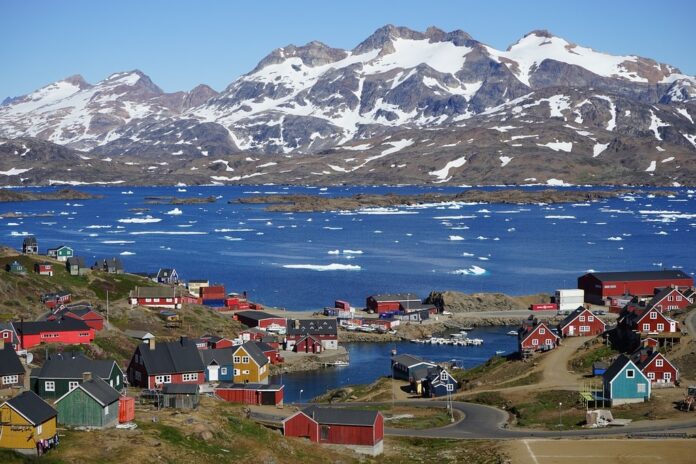
Similar to Alaska, Greenland has become a focal point of 21st-century geopolitics. In 2025 and 2026, under President Donald Trump, the discourse surrounding the island has intensified as the U.S. looks to secure vital natural resources and new trade routes. This renewed interest has sparked colliding friction with Europe, as the U.S. explores the possibility of acquiring Greenland from Denmark. Denmark has maintained a colonial presence on the island for over 300 years, dating back to missionary Hans Egede’s 1721 expedition. While Greenland became an integral part of Denmark in 1953, it has enjoyed autonomous self-governing status since 1979, complicating any potential “real estate” transaction.
From a standpoint of national security and global competition, the U.S. administration has characterized the acquisition as an absolute necessity. The argument posits that Danish control is insufficient to prevent adversaries like Russia and China from gaining a foothold in the Arctic—a region the administration claims is increasingly crowded with foreign vessels. Strategically, Greenland is essential for monitoring the GIUK gap, the maritime chokepoint between Greenland, Iceland, and the UK used to track naval movements. Furthermore, the island’s northern position is central to the proposed “Golden Dome” missile defense system, intended to monitor and intercept ballistic or hypersonic threats before they reach the mainland.
Economically, the island is a treasure trove of critical minerals, containing the largest deposits of rare-earth elements outside of China. These minerals are the backbone of high-tech defense systems, smartphones, and electric vehicle batteries; thus, securing Greenland is viewed as a definitive way to end U.S. dependence on Chinese supply chains. Additionally, as climate change melts polar ice, the Northern Sea Route and Northwest Passage are becoming viable commercial corridors. These routes offer significantly shorter shipping paths between Europe and Asia, and the U.S. views control of Greenland as essential for maintaining dominance over these emerging trade lanes.
The administration’s focus on resource extraction and strategic positioning is underscored by its shift in environmental policy. By withdrawing from the Paris Climate Agreement for a second time, the U.S. has prioritized national development plans and resource dominance over the agreement’s goal of limiting global temperature rises to 1.5 degrees Celsius. Ultimately, this pursuit is viewed through the lens of a territorial legacy. Likening the potential acquisition to a “large real estate deal,” the administration sees Greenland as a way to expand U.S. territory, framing it as a modern successor to historic expansions like the Louisiana Purchase or the acquisition of Alaska.
The Greenlandic and Danish prime ministers have firmly rejected any prospect of a U.S. takeover, asserting that Danish troops would defend the island in the event of an attack. Denmark signaled its intent to invoke Article 5 of the NATO charter if its sovereignty is violated, a move supported by EU Defense Commissioner Andrius Kubilius, who stated that EU members would be legally required to assist. By mid-January 2026, local reports indicated that Denmark had already begun boosting its military presence. Maj. Gen. Søren Andersen, Denmark’s top commander in the Arctic, confirmed the arrival of roughly 200 soldiers in Nuuk and Kangerlussuaq for the “Arctic Endurance” exercises. While Andersen maintains these deployments respond to Russian threats rather than American pressure, several European nations—including Germany, Sweden, Norway, France, and the UK—have joined a reconnaissance group in Greenland at Denmark’s request. For the Danish Defense Ministry, this is a natural continuation of the increased presence and exercise activity that they initiated in 2025.
Despite this European solidarity, NATO chief Mark Rutte issued a blunt warning to the European Parliament: Europe cannot defend itself without the United States. Dismissing calls for continental military independence as a “dream,” Rutte argued that EU countries would need to double defense spending to 10% of GDP and invest “billions and billions” in nuclear capabilities to stand alone. This tension was momentarily eased when President Trump withdrew his threat of 10–25% tariffs on European allies following talks with Rutte, yet the President’s core stance remains unchanged. He insists the U.S. must own Greenland to prevent Russian and Chinese encroachment, famously asserting, “You defend ownership, you don’t defend leases,” implying that current access to Pituffik Space Base is no longer sufficient.
While the U.S. administration considers offering direct payments to Greenlanders to encourage a shift in allegiance, the local population remains fiercely opposed. Residents of Nuuk have expressed total defiance, with some stating that no amount of money could convince them to relinquish their land. Nevertheless, the White House continues to highlight the “Polar Silk Road” ambitions of China and Russia’s expanding icebreaker fleet as existential threats. Despite Trump’s claims that the region is “covered with Russian and Chinese ships,” Western intelligence officials and several U.S. senators have noted a lack of evidence for any imminent seizure by America’s rivals.
Intriguingly, the Kremlin has adopted a dual-tracked response. President Vladimir Putin publicly claimed that the dispute is “of no concern” to Russia, yet both he and Foreign Minister Sergey Lavrov have signaled subtle support for Trump’s rhetoric by labeling Danish control a “vestige of the colonial past.” In a move designed to poke at Western wounds, Putin even suggested a purchase price of $200–$250 million, mockingly indexed to the 1867 Alaska Purchase. While Russian state media praises Trump’s “breakthrough” and mocks European “stubbornness,” some Russian officials, like Dmitry Rogozin, warn that a U.S. “Golden Dome” missile shield in Greenland would irrevocably shatter the global nuclear balance.
The Trump administration’s 2025–2026 push to decouple from China is rooted in a fundamental reassessment of economic security, specifically targeting Beijing’s dominance over critical mineral supply chains. By pursuing a “friend-shoring” strategy which has extended from Biden’s era, the U.S. aims to insulate itself from dependence on Chinese rare earth metals—a vulnerability laid bare after China imposed aggressive export restrictions. Within this “America First” framework, the current administration wields tariffs and semiconductor export controls not merely as punitive measures, but as high-stakes leverage to extract trade concessions and ensure U.S. technological superiority in AI. The FBI even views China as a significant counterintelligence and economic espionage threat.
While this hawkish stance on China reflects a rare bipartisan consensus, the Trump administration in 2026 has transitioned from the blunt tariff wars of his first term toward a more transactional “confrontation-and-negotiation” model, as noted by The New York Times.
This overarching drive for resource independence and geopolitical leverage has directly influenced recent U.S. actions in the Western Hemisphere and the Middle East.
Following the January 2026 military intervention in Venezuela to secure the world’s largest oil reserves that used to use a shadow fleet to sell oil to China, the administration has increasingly turned its focus toward Iran that has been doing the same thing and it has one of the highest oil reserves and natural resources. The country is currently engulfed in the “Winter 2026” protests—flaming roars of domestic unrest that have seen thousands detained and the regime’s economic stability falter.
In early February 2025, Trump issued a National Security Presidential Memorandum (NSPM-2) outlining a campaign of so-called “maximum pressure” on Tehran with the express objective to drive Iran’s export of oil to zero, including exports of Iranian crude to China. That’s because about 80 percent of Iran’s oil exports, averaging close to 1.5 million barrels per day so far in 2025, have gone to China.
Amidst this chaos, international attention has gravitated toward Reza Pahlavi, the son of the former Shah. While Pahlavi has pledged to return to lead a democratic transition, President Trump has maintained a calculated distance, questioning Pahlavi’s domestic viability while simultaneously warning the Iranian regime that the U.S. is “locked and loaded” to protect
protesters.
Now, whenever the U.S. makes a move approaching nations, China is always at the center of the mention. The tension between the two is growing, leaving the rest of the world watching and wondering what the coming days will bring.