
Turkmen Terzi
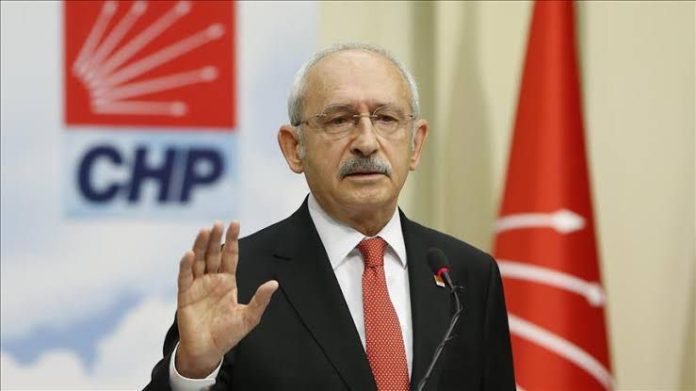
Most polls indicate that the candidate of the main opposition alliance, Kemal Kılıçdaroğlu has a slight lead over Turkish President Recep Tayyip Erdoğan in the presidential election to be held on May 14th.
Kılıçdaroğlu who is the leader of Turkey’s main opposition Republican People’s Party (CHP), a social democratic political party that is also the oldest party in Turkey, founded by Mustafa Kemal Atatürk, will pursue a Western-oriented foreign policy as well as work on normalizing Turkey’s relationship with President Bashar al-Assad’s government and reducing tensions with Greece.
The Founder of the modern Turkish Republic, Kemal Atatürk who won many Ottoman wars and led the Turkish War of Independence, pronounced a “peace at home, peace in the world” policy as a principle of his Turkish revolution. Except for an operation in Cyprus in 1974, Turkish leaders did not get involved in any cross-border military operations up until Erdoğan’s Syria onslaught.
During his rule in the early 2000s, Erdoğan prevented coup attempts, and he backed the police and judiciary in the Ergenekon and Sledgehammer cases wherein many top figures of Turkey’s military establishment, such as the ex-army chief İlker Başbuğ, who were interfering in Turkish politics, were jailed during high-profile trials that took place between 2008 and 2016. Erdoğan proved successful in reducing the possibility of military interference in politics, but his political rule was shaken by the Gezi Park protests which began as a peaceful environmentalist sit-in to protect Istanbul’s Gezi Park in May 2013, before turning into country-wide protests demanding basic rights and freedom.
A few months later, four of Erdoğan’s ministers resigned following the 17-25 December 2016 Corruption and Bribery Operation which included Erdoğan’s inner circle and family members. Thanks to his ruling Justice and Development Party’s (AKP) majority in parliament, Erdoğan successfully managed to cover up the corruption cases and senior military commanders who were jailed as part of the Ergenekon and Sledgehammer Trials were released by the politically motivated Turkish courts.
Erdoğan later formed a kind of power-sharing coalition with these controversial military figures. And following the mysterious 15 July 2016 Coup attempt, Erdoğan consolidated his power over the military since he purged more than half of the Turkish generals and thousands of high-ranking military officials. Until the coup attempt, Kemalist Turkish generals were a dominant power in the Turkish army.
But most of them were dismissed in the post-coup purges. World media reported that Turkey has lost some of its brightest and best generals as an estimated 400 Turkish military envoys to NATO were dismissed following the coup attempt.
Erdoğan forced newly appointed generals to enter Syria and he broadened Turkey’s military footprint in Somalia and Qatar. Moreover, Erdoğan ordered the Turkish army to fight against Khalifa Haftar’s forces in Libya and supported Azerbaijan against Armenia in the Nagorno-Karabakh war.
Erdoğan has been busy at work promoting the Turkish defence industry and especially his son-in-law Selçuk Bayraktar’s TB 2 combat drone business. Bayraktar drones played a crucial role in Azerbaycan’s fight against Armenia in the disputed Nagorno-Karabakh region in 2020, Bayraktar drones were used to defend Libya’s Tripoli against Haftar forces in 2019.
The Ukraine army currently uses TB 2 drones against Russian forces and it has been reported that the Ethiopian army has been using Bayraktars in Tigray since 2021. The Erdoğan government has increased its military operations into Northern Iraq targeting Kurdish forces along its Syrian borders and supporting rebels against Assad in Syria.
If the AKP win the May 14th Presidential and Parliamentary election, Erdoğan will continue to pursue an offensive foreign policy and continue to promote the Turkish defense sector mainly in the Middle East and North Africa (MENA) region and Sub-Saharan Africa. But if Kılıçdaroğlu becomes the president and the CHP enters parliament as a ruling party, Turkey will very quickly return to its ‘factory setting’ by reestablishing Atatürk’s peace policy. Kılıçdaroğlu’s main priority in foreign policy will be normalizing Turkey’s relations with NATO members and the EU. Kılıçdaroğlu will push for Turkey’s EU membership and lift Turkey’s veto for Sweden’s NATO membership.
The CHP leader has always been calling for peace with the Syrian leader Bashar-al Assad and promising to organize for the safe return of millions of Syrian refugees in Turkey back to their country.
Kılıçdaroğlu’s chief foreign policy advisor Ünal Çeviköz told Politico last March that the new CHP government would seek to repair Turkey’s tarnished record on human rights and implement the ruling by the European Court of Human Rights which is calling for the release of two of Erdoğan’s best-known opponents; pro-Kurdish Peoples’ Democratic Party former co-leader Selahattin Demirtaş and human rights defender Osman Kavala.
It is expected that the CHP rule can unfreeze Turkey’s European Union accession talks which have been at a standstill since 2018 due to the Erdoğan government’s antidemocratic rule. CHP rule will keep relations with Russia and Turkey heavily dependent on Russian energy but Ankara will reduce defense relations with Moscow and might join Western sanctions against Russia.
As AKP’s ties with the West increasingly deteriorated, Erdoğan expressed a willingness to join the Shanghai Cooperation Organization and BRICS which are led by Russia and China. The CHP is likely to refrain from joining blocs led by these countries. Ankara, at present, maintains business ties predominantly with Middle Eastern countries such as Saudi Arabia, the UAE, Qatar, Egypt and Qatar.
CHP will keep business ties with these Muslim countries states butKılıçdaroğlu will abstain from meddling in the local politics of these Arab countries. But CHP will not have a heyday with Turkey’s uneasy neighbors Greece and Armenia due to the Greco-Turkish dispute in the Aegean Sea and Armenian claims of genocide committed by Ottoman Turks. However, Turkey will continue cross-border operations in Northern Iraq to eliminate the Kurdistan Worker’s Party (PKK) threat.
The PKK is listed as a terrorist organization internationally by many countries, including the members of the European Union and United States. The CHP will be sensitive about the security of Balkan states such as Kosovo and Bosnia and will closely monitor the Muslim populations in this region because of common history and ethnic ties.
The CHP will not continue to pursue Erdoğan’s offensive foreign policy in especially the MENA region and will not allocate a budget to mobilize Muslim minorities in many parts of the world to establish a soft power for Turkey.
The CHP will also have no interest in supporting Islamist political groups in Muslim countries as AKP that backed the Muslim Brotherhood in Egypt, Sudan, Libya, Tunisia and many other Islamic countries. The CHP rule will also not support the use of advanced Russian S-400 air defense missile systems.
Turkey is likely to in future, should the CHP come into power pursue a more defensive foreign policy in the region as well as try to normalize relations with its neighboring countries.