

By Mirna Fahmy
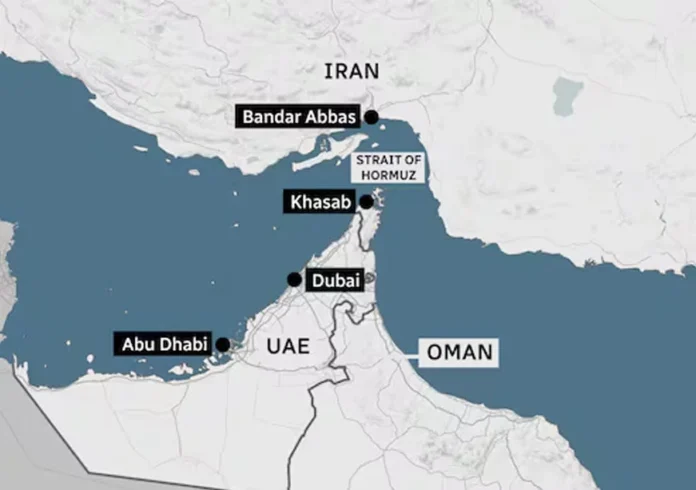
Following the joint US-Israel attacks on Iran on Feb 26, Brent crude started to rise over 10%. By March 9, 2026, prices crossed $100-$119 per barrel, reaching their highest levels since 2022, driven by fears of disruptions in the Strait of Hormuz.
But US President Donald Trump’s comforting words that the oil prices will back down started to see an effect to below $90 on early March 10, 2026, settling at $83.45 – $86.59 per barrel. The drop in prices came after Trump told CBS News that the war with Iran was “very complete, pretty much” and ahead of schedule.
He suggested the conflict could end “very soon,” which immediately reduced the “risk premium” investors had priced in during the initial surge to $120. Trump signaled the U.S. might ease oil sanctions on certain countries like Venezuela and Russia to stabilize global markets. The U.S. Treasury Department has issued a temporary 30-day waiver to lift certain sanctions on Russian oil starting from March 12, 2026, till April 11, 2026.
The earth-shattering news didn’t last 24 hours. Brent crude surged again past $100 a barrel, a rise of over 35% on March 11.
The second surge has kicked off, as Iran began deploying naval mines in the Strait of Hormuz using small boats, according to the US Central Command (CENTCOM). In response, the US military destroyed 17 Iranian minelayers near the strait to prevent them from further blocking the waterway.
The Pentagon has confirmed that the U.S. Navy is not yet ready to escort oil tankers through the strait due to the high risk from Iranian mines, drones, and anti-ship missiles.
The head of CENTCOM stated their focus remains on destroying Iran’s offensive capabilities, including missile and drone manufacturing sites, rather than maintaining a permanent presence inside the narrowest points of the strait.
Iranian officials, including the new Supreme Leader Mojtaba Khamenei, have vowed that the strait will remain closed and “not one liter of oil” will be exported from the Gulf while the war continues.
How is the path of crude oil being disturbed globally?
The Persian Gulf has become a maritime combat zone as of March 12, 2026. The Iranian forces (IRGC) have hit multiple trade ships in the Gulf and Strait of Hormuz, claiming they ignored warnings amidst rising regional conflict.
The affected vessels include a Thai-flagged cargo ship (Mayuree Naree), a U.S.-owned/Marshall Islands-flagged tanker (Safesea Vishnu), Greek-owned/Maltese-flagged tanker (Zefyros), and a Chinese-owned/Liberia-flagged vessel.
The Strait, which carries about 20% of the world’s daily oil supply, saw tanker traffic collapse by 80–90% due to mines and military action.
Because the Gulf countries were drawn to this war unwillingly by Iran, which targeted them and their oil infrastructure in its retaliation, their oil exports have collapsed by an estimated 90% as tanker traffic through the Strait of Hormuz has come to a near-total standstill—roughly a third of their total output—as onshore storage reaches its limits.
The Gulf states are now facing critical disruptions as they rely on oil and gas for 30% to 90% of government revenue.
In Qatar, Iranian drone strikes hit the massive Ras Laffan LNG facility, the world’s largest, forcing a production pause that may take weeks to repair.
Saudi Aramco was forced to pause a refinery due to a fire from intercepted drone debris affecting production by 2 million to 2.5 million bpd. .
Kuwait, Iraq and Bahrain declared force majeure, cutting production as storage tanks filled up due to the inability to ship oil through the Strait. Iraq saw the biggest drop-out by 2.9 million bpd (a 70% drop) as it lacks alternative export routes.
The output of both the UAE and Kuwait has been cut by approximately 500,000 bpd.
As a result of all of these, the producers have collectively slashed production by as much as 6.7 million barrels per day (bpd)—roughly a third of their total output—as onshore storage reaches its limits and 6% of the global supply.
By now approximately 15 million barrels of crude and 4 million barrels of refined products that normally pass through the Strait daily are currently blocked.
Heavily relying on the region, Asian economies have become the most vulnerable as they receive over 80% of the energy passing through the Strait of Hormuz.
Half of India’s crude imports come from the Gulf. The war has triggered a severe fuel crisis and “panic buying,” forcing the government to set refueling limits.
Japan also relies on the region for 95% of its oil. South Korea’s KOSPI stock index suffered its biggest crash since 2008 following the outbreak. Both nations have significant strategic reserves (over 200 days) but face skyrocketing insurance and freight costs.
Egypt, in the hub of the surrounding wars, has faced Liquified gas supply cuts from Israel as both nations signed that Israel has the right to stop lending any gas during the intense time of wars. This triggered the government to make use of the war situations like all the previous ones and raise the petroleum price of about 14% to 17% in the country on March 10.
Though it has been expected that China—roughly 90% of Iran’s exports—would be greatly adversely affected, CNBC reported that Iran has shipped at least 11.7 million barrels of crude oil to China since February 28, 2026, often using “dark” tankers to evade detection. What incites that is the naval “cat and mouse” situation.
The scene becomes only high-intensity, short-duration engagements when the U.S. aircraft and warships strike Iranian vessels when they attempt to lay mines or launch attacks, while Iranian forces use the coastline to launch drones and missiles at passing targets.
Most tankers transiting the Strait of Hormuz now turn off their Automatic Identification System (AIS) transponders to avoid being detected by standard satellite monitoring.
To prevent being attacked by the IRGC (which has threatened all other traffic), many vessels now broadcast messages like “CHINESE VSL AND CREW” or “CHINA OWNER” on their radio systems. Iran generally allows these ships to pass while targeting others.
To further hide the oil’s origin, shadow tankers often meet other vessels in the open ocean (frequently near Malaysia) to transfer cargo before it reaches final Chinese ports.
Iran has begun using the Jask oil terminal on the Gulf of Oman, which allows some tankers to load oil outside the Strait of Hormuz, entirely bypassing the most dangerous chokepoint.
Knowing exactly how much oil is moving, the U.S. and its allies use TankerTrackers.com, which uses advanced satellite imagery to see “dark” ships.
At the peak of this intensity, the U.S. has so far avoided seizing Chinese-bound tankers, as this carries the risk of direct escalation with Beijing.
Prices hike!
The war has triggered a “massive jolt” to global markets, driving up prices for energy, transportation, and essential industrial commodities, even though crude oil prices dropped below $90 per barrel on March 9.
European Dutch TTF prices spiked by 75% as major supplies from Qatar were severed. Consequently, electricity and heating bills are rising again across Europe—following massive blizzards—and Asia due to a heavy reliance on imported Middle Eastern gas. Jet fuel prices nearly doubled, surging over $1,500 per tonne and threatening to make flights significantly more expensive.
In the shipping sector, air freight costs from Asia to Europe rose by 45%, while maritime insurance for traversing the region became prohibitive, virtually halting traffic through the Strait of Hormuz.
Furthermore, prices for urea and ammonia soared because the Gulf produces 20%–30% of global fertilizer exports, threatening future crop yields. Grocery prices are also climbing in India, Pakistan, and the Middle East as transport costs rise. Finally, industrial goods like helium, plastics, and precious metals have all seen significant, disruptive price increases.
Can Venezuela’s oil suffice?
After the capture of President Nicolás Maduro on January 3, 2026, the Trump administration seized control of Venezuela’s oil exports. The U.S. is currently marketing approximately 30 to 50 million barrels of “sanctioned oil” that was already in storage.
Despite having the world’s largest reserves, Venezuela’s current production is only about 1 million barrels per day (bpd) due to years of mismanagement.
Approximately 13 to 20 million bpd of oil (plus 20% of global LNG) normally pass through the Strait of Hormuz. Venezuela’s total output is less than 10% of that volume. It is estimated it would take tens of billions of dollars and up to a decade to restore Venezuela’s production to levels that could significantly impact global supply. The route itself would take very long to transfer from the far west to the far east, unlike the Gulf, which is located in the middle of the continents. Though the Suez Canal should suffice for the prolonged route, the Houthis’ constant attacks and their lock on the Bab-el-Mandab Strait endanger the journey.
Also, Venezuelan oil is “heavy” and requires specialized refineries, making it a poor immediate substitute for the “light” crude typically exported from the Persian Gulf.
Finding another route?
Acting as a temporary alternative, but not as much as Hormuz, Saudi Arabia has pivoted to its Red Sea coast to bypass the blocked Strait of Hormuz since the conflict began on February 28, 2026.
The kingdom’s most critical “insurance policy” is the 750-mile East-West Pipeline, which connects eastern oil fields directly to the Red Sea.
Saudi Aramco has pushed this pipeline from a pre-war average of 2 million barrels per day (bpd) toward its full emergency capacity of 7 million bpd.
Approximately 5 million bpd of this capacity is intended for global export, with the remaining 2 million supplying domestic refineries on the west coast.
As a result of this pipeline shift, the Red Sea port of Yanbu has overnight become Saudi Arabia’s busiest export terminal.
Export loadings at Yanbu tripled in early March, jumping from 786,000 bpd in February to an average of 2.2 – 2.5 million bpd by March 10.
As of March 12, a flotilla of roughly 27–30 supertankers is reportedly racing toward Yanbu.
Though the pipeline is showing a glimmer of hope, there are concerns about whether Yanbu’s loading terminals can sustainably handle the massive surge in traffic. Ships leaving Yanbu for Asia must still pass through the Bab el-Mandeb Strait near Yemen, where Iran-backed Houthi militants have previously attacked shipping. Shippers are charging record premiums for Red Sea voyages; some daily tanker rates have surged to $460,000 per day, more than double the pre-war average.
When will the war end?
Trump’s messages are in very complete contrast with statements from Defense Secretary Pete Hegseth, who remarked around the same time that the conflict is “only just the beginning.” It even contradicts his initial estimations when the war began that it might take up to four weeks to finish.
The four-week timeline aligns with what senior officials told public broadcaster KAN News on March 2: that Israel is physically and strategically prepared for the war to last through the Passover holiday, which would begin at sundown on Wednesday, April 1, and end at nightfall on Thursday, April 9.
Upon posting on X on Feb 27: “The coming weeks will shape the coming decades in the Middle East,” the former Israeli Defense Minister Yoav Gallant wrote in his Substack articles how wars rearrange the balance of power.
Gallant frames this struggle as a generational turning point. He argues that dismantling Iran’s “Ring of Fire”—the network of Hamas, Hezbollah, and Houthi proxies—is the only path to regional stability. For Gallant, the goal isn’t just a military win, but a “New Middle East” where a liberated Iranian population can reclaim their country from a crippled regime.
That regime is currently reeling. Though Mojtaba Khamenei has been appointed as the new Supreme Leader, he didn’t show up on Iran’s TV on March 12 to say his threatening speech. This has triggered speculations to rise that he had been severely injured, killed or even there might be a secret leader, but the trying to survive regime cannot name him as he will get killed by Israel since it is hijacking every spot of Iran.
Seizing on this vacuum, Israeli Foreign Minister Gideon Sa’ar has been blunt: the Iranian people cannot topple the “mullah regime” alone. He argues that external strikes on the IRGC are intended to “break the bones” of the state’s security apparatus, finally preventing the violent suppression of dissent. He also amplified messages from Prime Minister Netanyahu, telling Iranians that the regime is in an “unprecedented phase of weakness” ensuring that “liberated” Iran can restore their ancient bond of friendship.
On March 11, 2026, multiple IRGC and Basij checkpoints across Districts 1, 14, 15, and 16 came under attack by fighters from the Mojahedin-e-Khalq (MEK) who attempted to infiltrate the Motahari Complex where it houses the Supreme Leader’s headquarters, the Guardian Council, and the Assembly of Experts, according to reports from IranWire and Iran International.
The strikes coincided with deepening fractures between the regular army (Artesh) and the IRGC, as supply shortages and the deaths of lower-level officers strained the military’s internal cohesion.
Iranian state media attributed these as terrorist operations to a combination of Israeli drone strikes and “monarchist opposition groups”. This clash is tweaking to open many analyses on what might come next inside Iran, in terms of regime change to finally draw the last moment of this war.