
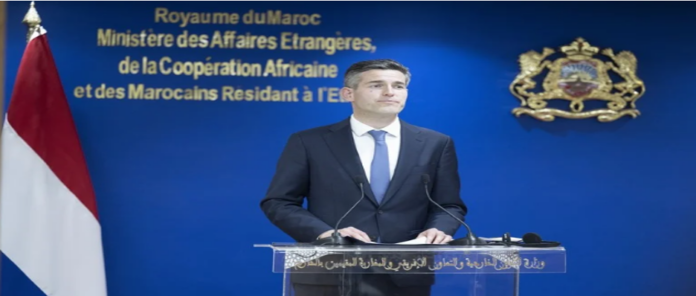
Netherlands reaffirmed, on Tuesday 7th April 2026 in Rabat, its support for Morocco’s autonomy plan in the Sahara, describing it as the most realistic solution to the long-standing dispute over the kingdom’s southern provinces. The statement came from Dutch Foreign Minister Tom Berendsen during a joint press conference with his Moroccan counterpart, Nasser Bourita. Berendsen welcomed Morocco’s willingness to update the 2007 autonomy plan, highlighting the details it could include under Moroccan sovereignty.
The Minister also praised Morocco as a reliable partner and a strong advocate for international peace and stability. He cited close cooperation between the two countries across trade, investment, energy transition, security, migration, and human rights.
Berendsen highlighted growing opportunities for Dutch companies in Morocco, particularly in water technology and horticulture, facilitated by the country’s favorable investment climate. He noted that both countries agreed on the importance of economic engagement with other African nations. “Morocco’s unique location makes it a gateway to North and West Africa and an attractive launchpad for Dutch private sector initiatives,” he said.
On migration, Berendsen said it remains a priority, noting the strong partnership developed between the two countries in this area.
Addressing global geopolitical tensions, the Dutch minister underscored Morocco’s key role in promoting stability and development in the Sahel. He added that the countries agreed on the need to reduce escalation in the Middle East, citing the closure of the Strait of Hormuz as “a catastrophic situation that must end soon.”
Berendsen also expressed concern over developments in Gaza and the West Bank, emphasizing the importance of maintaining commitment to a two-state solution. He lauded the personal involvement of King Mohammed VI, in his capacity as President of the Committee of Al-Quds, in supporting this process.
The Minister concluded by affirming that Morocco and the Netherlands remain committed to international law and the multilateral system and will continue to collaborate within the United Nations framework, as they have in past successful initiatives.