By Lesedi Sibiya-Diplomatic Insider
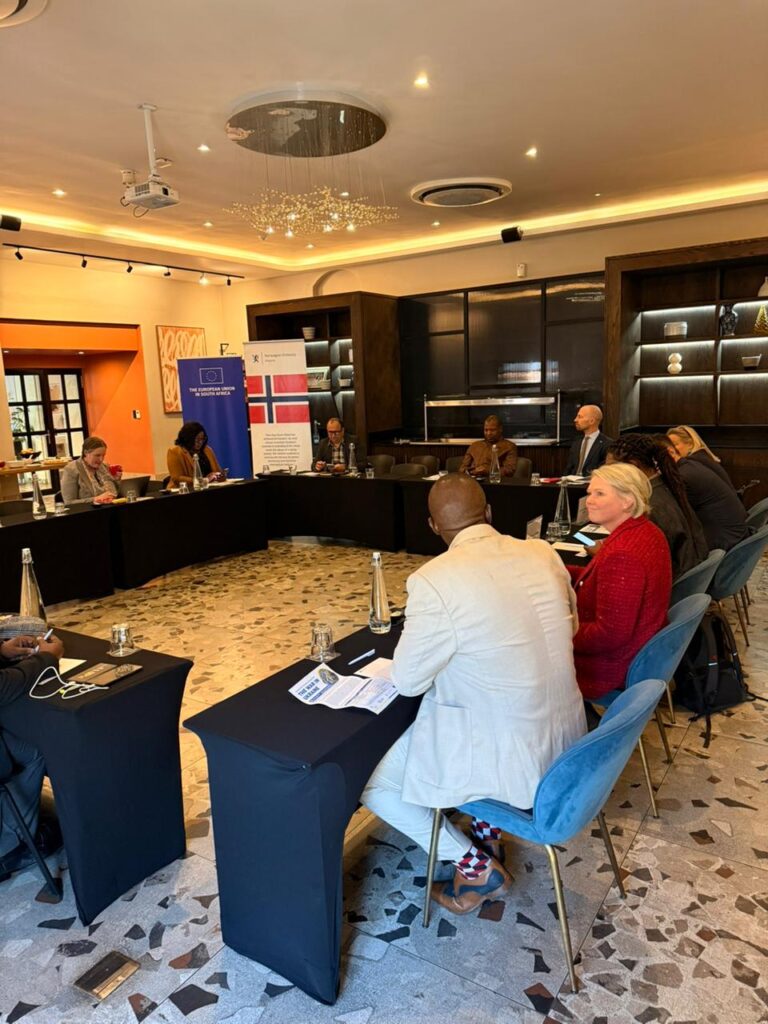
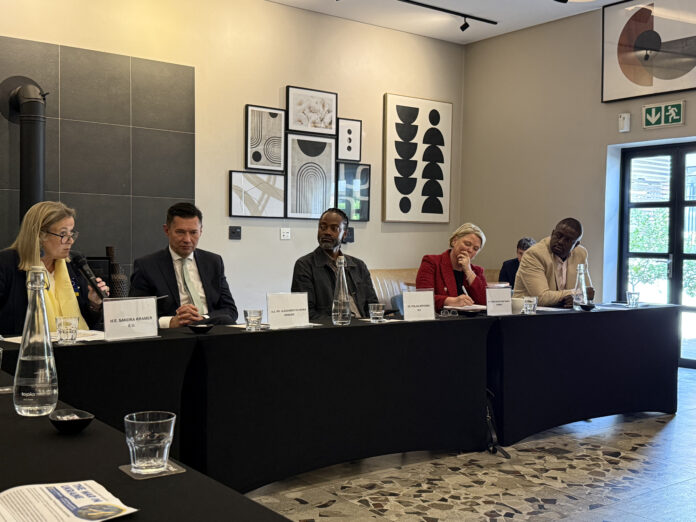
The South African National Editors’ Forum (SANEF) hosted the embassies of Ukraine and Norway, as well as the delegation of the European Union (EU), in order to engage in discussions on global peace and security regarding the war between Russia and Ukraine.
The war between Ukraine and Russia has entered its fifth year, as tensions seem to be rapidly growing between the two nations with no end in sight. This programme aimed to investigate the role that both African and European countries can play in order to ensure a comprehensive, just, and lasting peace between the two nations. At the core of the conflict is the concern for vulnerable civilians and finding ways to ensure the safe return of Ukraine’s deported children. Another issue investigated at this forum was finding ways to combat Africans being manipulated and tricked into fighting in the war for Russia against Ukraine. The session brought together various diplomats, analysts, media stakeholders, and students for informed dialogue.
“Many developing countries, including South Africa, wanted the global focus to return to the Sustainable Development Goals; instead, enormous resources were redirected towards defence spending and war efforts,” said Dr Philani Mthembu, who serves as the Executive Director of the Institute for Global Dialogue at the University of South Africa. Mthembu also warned that ongoing conflicts in Ukraine, the Middle East, and some parts of Africa are compounding global development challenges, as well as undermining progress towards ending extreme poverty by 2030.
Norwegian Ambassador Anne Beathe Kristiansen Condemns Russian Actions as a “True War Crime”
In a stark assessment of the Ukraine conflict, the Norwegian Ambassador to South Africa delivered a blistering indictment of Russia’s conduct, calling it a “true war crime” worthy of International Criminal Court (ICC) prosecution. Speaking during a high-level diplomatic session, she highlighted the ICC’s warrant for Russian President Vladimir Putin—a move she described as a critical legal precedent in holding leaders accountable for wartime atrocities.
“The scale is staggering: 20,000 documented cases of civilian displacement and child abductions,” the Ambassador stated, her voice laced with urgency. “Ukraine is naturally outraged. This isn’t just a political dispute—it’s a crime. The ICC warrant against Putin is not symbolic; it’s a necessary step toward justice.”
The Ambassador further underscored the human toll, noting that recent drone strikes in Ukraine killed 14 civilians, including a 90-year-old boy. She criticized Western media for failing to amplify such tragedies, adding: “CNN didn’t mention it. Al Jazeera didn’t mention it. This silence erases the reality of war for ordinary people.”
“This is where it’s stuck,” the Ambassador said, emphasizing the human cost of bureaucratic infighting. “These aren’t just names on a document; they’re children torn from their families. South Africa’s involvement was vital—it would have been nearly impossible for them to refuse support. But Russia’s refusal to accept the agreed framework has paralyzed progress.”
A South African official later confirmed the impasse, stating: “We’ve been clear: the African Peace Initiative demands transparency. If Russia insists on altering the list unilaterally, we cannot facilitate the return of these children.”
“This isn’t about military support,” the speaker stressed. “It’s about saving lives. The civilian toll is catastrophic, and we must prioritize those who cannot fight.”
A growing consensus among diplomats is that middle powers—like South Africa, Brazil, and India—must redefine their role in global conflicts. “Europe must stop seeing itself as an extension of the U.S.,” argued Sandra Kramer, the European Union’s Ambassador to South Africa. “We need to lead initiatives independent of Western alliances, especially on issues like Ukraine.”
This shift was exemplified in the child repatriation talks, where South Africa leveraged its “African Peace Initiative” to broker dialogue between warring parties. “Middle powers hold the ground on principles,” the EU Ambassador Kramer continued. “When the U.S. and EU are divided, it’s the non-aligned nations that can push for solutions.”
As the conflict enters its third year, the world faces a stark choice: uphold international law or succumb to geopolitical expediency. The ICC’s warrant against Putin signals a potential turning point, but without enforcement mechanisms, it risks becoming a hollow gesture. Meanwhile, the stalled child repatriation process highlights how humanitarian efforts remain hostage to geopolitical rivalries.
For Ukraine, the human cost is undeniable. “They’ve been bombarded daily for four years,” the Norwegian Ambassador said. “Especially in the last three months. You cannot imagine the level of emotion. We were always friends with Russia—and this is the reality.”
As global powers jockey for influence, one truth remains unchanging: the lives of Ukrainian children.