
By Diplomatic Insider
Zimbabwe has used the commemoration of its 46th Independence Anniversary to project itself as a committed contributor to global peace and a credible candidate for a non-permanent seat on the United Nations Security Council for the 2027–2028 term.
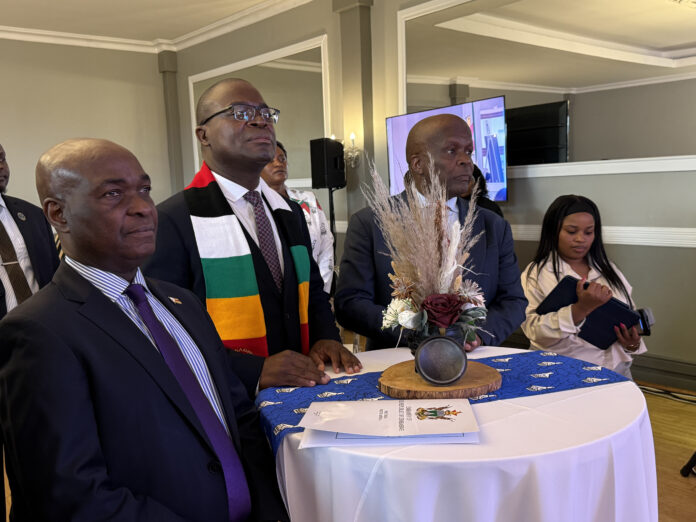
In a keynote address delivered in Pretoria, Minister of Foreign Affairs and International Trade, Amon Murwira, shifted focus from ceremonial reflection to a broader articulation of Zimbabwe’s role in international peacebuilding and its vision for global governance.
A track record rooted in peace
Murwira underscored that Zimbabwe’s independence was not only the culmination of a liberation struggle but also the beginning of a sustained commitment to peace and international cooperation. He argued that the country’s foreign policy—guided by its constitution—places peaceful coexistence and respect for international law at its core.
This commitment, he said, is not rhetorical. Zimbabwe has actively participated in peacekeeping missions across Africa and beyond, including deployments in Angola, Somalia, Liberia, South Sudan, and Timor-Leste. These contributions, he noted, reflect a long-standing willingness to support stability in conflict-affected regions.
“Zimbabwe does not merely speak of peace; we have lived it,” Murwira said, positioning the country as an experienced and reliable partner in multilateral peace efforts.
A principled bid for global responsibility
Zimbabwe’s campaign for a seat on the Security Council was presented as a natural extension of this record. According to Murwira, the country’s candidacy is grounded in principles of sovereign equality, diplomacy, and the peaceful resolution of disputes—values embedded in both its constitution and the UN Charter.
By seeking a seat, Zimbabwe aims to amplify the voice of developing nations and contribute to a more balanced and representative international system. The minister emphasized that Zimbabwe would advocate for dialogue over confrontation and for multilateral solutions to global challenges.
The bid also aligns with broader continental aspirations for stronger African representation within key decision-making bodies of the United Nations.
Diplomacy guided by inclusivity
Murwira highlighted Zimbabwe’s foreign policy doctrine—articulated by President Emmerson Mnangagwa—as one of engagement across all regions. The approach, often summarized as “a friend to all and an enemy to none,” reflects an effort to build partnerships spanning Africa, Asia, Europe, the Middle East, and the Americas.
This inclusive diplomacy, he argued, positions Zimbabwe as a bridge-builder capable of fostering consensus in an increasingly fragmented global environment.
Regional strength, global vision
The minister also pointed to Zimbabwe’s close relationship with South Africa as an example of how regional solidarity can underpin global engagement. Rooted in shared liberation histories, the partnership continues to shape collaborative approaches to peace, development, and diplomacy.
Murwira suggested that such regional cohesion strengthens Zimbabwe’s case on the global stage, demonstrating its ability to work constructively within multilateral frameworks.
Toward a more equitable world order
As Zimbabwe advances its Security Council campaign, its message is clear: its history, constitutional principles, and practical contributions to peacekeeping position it as a credible advocate for stability and justice.
The Pretoria address ultimately framed Zimbabwe not just as a beneficiary of international peace, but as an active contributor—seeking a larger role in shaping the global agenda through the United Nations Security Council.