
*By Mirna Fahmy
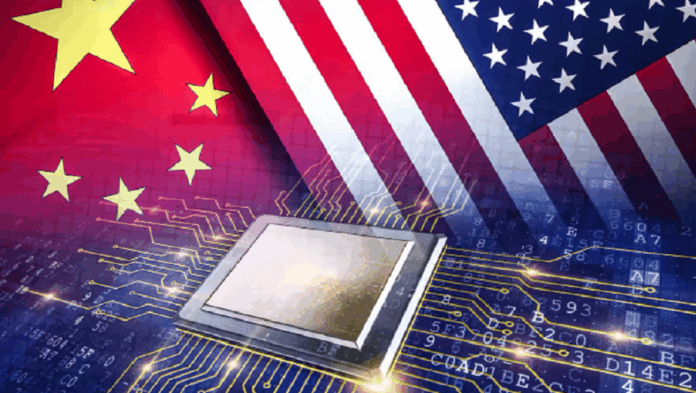
For nearly a decade, the United States and China — the world’s two dominant technological and geopolitical powers — haven’t been on pal, but more in a state of deepening rivalry. Their competition extends well beyond technology, encompassing trade, defence, and growing spheres of influence across regions including the Middle East.
Against this backdrop, President Donald Trump’s state visit to China from May 13–15, 2026 carries extraordinary weight. It marks the first visit by an American president to China in nearly nine years, arriving at a moment of heightened bilateral tensions and regional instability intersecting with a precarious Iran ceasefire and a blockade of the Strait of Hormuz that is rattling global energy markets.
When Trump and President Xi Jinping met face to face in Beijing, the encounter symbolised something larger than diplomacy: a moment where the world’s two most powerful nations, long locked in silent technological and economic warfare, sat down to test whether a more stable relationship is still possible.
A long queue of high-level delegations, cabinet officials, and some of the most powerful businessmen on the planet traveled with Trump, a convoy that itself sent a message before a single word was spoken in Beijing.
On the government side, the names read like a who’s who of American power. Secretary of State Marco Rubio, Secretary of Defense Pete Hegseth, Treasury Secretary Scott Bessent, and U.S. Trade Representative Jamieson Greer all made the trip, alongside U.S. Ambassador to China David Perdue. Even Trump’s own family had a seat at the table, Eric Trump, the Executive Vice President of the Trump Organization, and Lara Trump, former co-chair of the Republican National Committee.
But it was the business delegation that truly turned heads. Elon Musk the CEO of Tesla and SpaceX boarded Air Force One alongside his son X. Jensen Huang, the CEO of Nvidia, joined the plane during a refuelling stop in Alaska. From there, the list only grew more staggering: Tim Cook of Apple, Larry Fink of BlackRock, Jane Fraser of Citi, Kelly Ortberg of Boeing, Stephen Schwarzman of Blackstone, David Solomon of Goldman Sachs, Dina Powell McCormick of Meta, Ryan McInerney of Visa, Cristiano Amon of Qualcomm, Sanjay Mehrotra of Micron, Larry Culp of GE Aerospace, Chuck Robbins of Cisco, Michael Miebach of Mastercard, and several others.
The purpose of this grand convoy was to strengthen a fragile trade truce, to expand American corporate access to Chinese consumers, and to secure diplomatic leverage over the escalating war involving Iran.
On the geopolitical front, the government officials carried an agenda heavy with urgency. At the top was the Middle East specifically, pushing China to use its position as Iran’s largest oil buyer to pressure Tehran into reopening the blockaded Strait of Hormuz. Marco Rubio’s presence was equally pointed, aimed at establishing some degree of strategic stability around the Taiwan Strait and confronting the thorny issue of U.S. arms sales to Taiwan head-on.
Beyond the immediate crises, both sides needed to hammer out guardrails on technology; cybersecurity protocols, export controls, and what officials have been calling “AI redlines” — the kind of boundaries that, if left undefined, risk spiralling into something far more dangerous.
For the tech executives, the mission was more nakedly commercial, though no less consequential. Huang and Amon were there to lobby against U.S. semiconductor export restrictions that have been cutting their companies off from one of the fastest-growing AI markets in the world. Cook and Musk needed assurances that their vast manufacturing operations and raw material supply chains inside mainland China would remain intact. And the broader tech contingent was pushing President Xi to crack open China’s tightly controlled digital economy to allow American apps, digital services, and autonomous driving software to finally operate on Chinese soil.
The finance and industry leaders came with their own shopping lists. Fink and Solomon had their eyes on China’s enormous pool of private household savings, a multi-trillion-dollar reserve that Wall Street has long coveted but rarely been allowed to touch. Boeing’s Kelly Ortberg made the trip for one specific reason: to close a massive deal for 200 Boeing 737 Max jets, saving the struggling company.
And agricultural leaders in the delegation were pressing Beijing for firm commitments to resume large-scale purchases of American soybeans, a gesture that would mean a great deal to U.S. farmers who have borne much of the cost of years of trade friction.
Iran’s war:
China’s and Iran’s relationship isn’t only homed round China’s purchases of Iran’s exported oil which adds up to 90% funding Iran’s military activities, but also it is the mastermind behind its weapons’s development and quick regeneration.
Though Iran developed the core of its ballistic missile program largely through domestic engineering and with the assistance of North Korea and Russia, as of recently China has become the primary lifeline keeping these programs operational and advanced.
Ahead of active attacks, China helped Iran build and enhance its air and missile defence infrastructure. This cooperation was designed to bolster Iran’s domestic defences against potential strikes from the U.S. and Israel.
During the conflict, China has played a vital role in helping Iran reconstitute its missile program. This involves replacing hardware and replenishing stocks that were either expended in attacks or destroyed by Israeli or U.S. strikes.
Also, China is a fundamental partner in Iran’s ballistic missile capabilities, particularly regarding the chemical and material supply chain.
China is a major supplier of ammonium perchlorate, a high-energy oxidiser that is a key ingredient for the solid-fuel engines used in Iran’s most advanced ballistic missiles. Without these steady shipments from Chinese suppliers, Iran’s ability to mass-produce long-range missiles would be significantly hampered.
According to FDD, China has helped in “Targeting and Intelligence”. Iran has used Chinese satellite imagery and secretly acquired a Chinese spy satellite to capture targeting coordinates for drone and missile strikes on US military air bases in the region.
Through Chinese intermediaries, Iran receives civilian-grade electronics, sensors, and gyro navigation devices to equip its drone and missile programs. This technological support is further enhanced by China granting Iran access to its BeiDou satellite navigation system, which Tehran utilizes to effectively mask its military movements.
Traveling during this critical time of the U.S. and Israeli war against Iran––China’s proxy, Trump believes that Beijing can use this vital financial lifeline as leverage to force Tehran back to the negotiating table. And also resolve the shipping crisis in the Strait of Hormuz ahead of the U.S. congressional elections.
President Donald Trump clarified that he did not ask China or President Xi Jinping for any favors regarding the Iran conflict, stating, “We don’t need help”. He said that China agreed not to supply Iran with military equipment and discussed potential U.S. sanctions on Chinese oil refineries.
According to Trump’s statements, he and President Xi agreed that Iran can never obtain a nuclear weapon and that the Strait of Hormuz must be reopened to support the free flow of energy. Trump even quoted Xi as saying, “If I can be of any help at all, I would like to be of help.”
A White House summary revealed that the U.S. highlighted Xi’s explicit opposition to militarizing the Strait of Hormuz, as well as his rejection of Iran’s plans to levy tolls on passing ships.
However, there is a collective consensus among many articles and newspapers that President Xi did not directly validate or publicly confirm the specific details of Trump’s claims. Official statements from the Chinese Foreign Ministry and state media agencies like Xinhua completely avoided using the words “Iran,” “tolls,” or “militarization”. Instead, Beijing vaguely noted that the leaders discussed “regional hot issues” and acknowledged that “the conflict” has severely strained global economic growth and supply chains.
Taiwan:
The status of Taiwan was cemented as the most sensitive flashpoint of their talks. During a private tour of the highly restricted Zhongnanhai Garden in Beijing, a reporter asked both presidents about Taiwan. Trump responded: “China is a very beautiful country” and then both left.
President Xi strongly warned that mishandling the Taiwan issue could put the U.S.–China relationship in “great jeopardy” and lead to direct “clashes and even conflicts” between the two global powers.
Many Chinese state media readouts say that Xi reiterated that the Taiwan question is the single most sensitive aspect of bilateral ties. He explicitly stressed that “Taiwan independence” and regional peace are entirely incompatible.
Hours after the summit, President Trump publicly cautioned Taiwan against declaring formal independence, stating, “We’re not looking to have somebody say, ‘Let’s go independent because the United States is backing us”. Trump voiced a strong desire to preserve the current status quo rather than escalate militarily, explicitly telling reporters on Air Force One, “I don’t think we want a war 9,500 miles away”.
In 2023, CIA Director William Burns made public that Xi Jinping instructed the People’s Liberation Army (PLA) to build the necessary military capability to successfully invade Taiwan by 2027. The U.S. intelligence community emphasized that this was a directive for military readiness, not a scheduled plan to launch an attack.
Instead, China has focused its 2026 strategy on “gray-zone” tactics such as near-daily military flights, cyberattacks, and diplomatic isolation to pressure Taiwan short of open conflict.
According to reports from the Office of the Director of National Intelligence (ODNI), several critical factors are deterring China from launching an amphibious operation.
Chinese leadership recognizes that a cross-strait amphibious invasion is one of the most complex military maneuvers in history and carries an immense risk of failure. The analysis notes that Beijing has been sobered by Russia’s military struggles in Ukraine, making Chinese generals highly cautious about their own operational readiness.
The U.S. has long been cautious about China taking Taiwan under its ruling due to critical economic interests, global maritime security, and strategic military defense in the Indo-Pacific region.
Taiwan is home to Taiwan Semiconductor Manufacturing Company (TSMC), which produces over 90% of the world’s most advanced microchips. These critical components power everything from everyday consumer electronics like iPhones and cars to advanced artificial intelligence and U.S. military fighter jets. Because of this massive centralization, the island functions as a global economic chokepoint. If China were to seize control of these manufacturing facilities, Beijing could weaponize the global supply chain or completely cut off the U.S. tech sector, a move that would devastate the American economy.
Beyond technology, the region is a critical geopolitical corridor defined by the Taiwan Strait. This narrow body of water serves as one of the busiest shipping lanes on earth, carrying nearly half of the global container ship fleet. A Chinese takeover of Taiwan would grant Beijing absolute authority over this vital trade route. Consequently, China would gain the leverage to restrict, block, or tax commercial shipping bound for major global economies, including the United States, Japan, and Europe.
From a military standpoint, Taiwan serves as the strategic central anchor of the “First Island Chain“, a network of islands stretching from Japan to the Philippines that effectively bottles up the Chinese military within its coastal waters. If China absorbs Taiwan, it would dismantle this geographic barrier. The Chinese navy would then be able to freely project its power deep into the Pacific Ocean, establishing a blue-water presence that directly threatens U.S. territories like Guam and Hawaii.
A conflict over Taiwan directly implicates American defense commitments and international standing. Under the 1979 Taiwan Relations Act, the United States is legally obligated to provide Taiwan with the defensive weapons necessary to resist coercive force. Beyond this legal mandate, Washington’s global reputation is on the line; failing to protect the island would severely damage U.S. credibility, likely forcing key democratic allies like Japan, South Korea, and the Philippines to question their own security alliances with Washington.
Silent AI Cold War:
A silent “new Cold War” has been brewing since 2019, when the U.S. imposed sanctions on Chinese tech firms like Huawei. This conflict is fundamentally an “AI arms race” fought over silicon and code rather than physical territory. It is driven by three main goals: achieving global technological supremacy, securing military advantages through AI-integrated defense networks, and controlling the microchip manufacturing that powers the modern economy.
Tensions have been further heightened by U.S. accusations of a “Beijing AI Heist,” where spy bots are allegedly used to steal Western AI research. By May 2025, this rivalry entered a dangerous new phase focused on direct technological containment and rapid military AI development.
To address these rising tensions, a recent high-level visit served as a launching pad for the U.S. and China to negotiate safety guardrails for artificial intelligence. The primary goal, as stated by Donald Trump, is to ensure that AI is not exploited by cybercriminals or terrorist organizations. While both nations agree on the need for these safety measures, U.S. Treasury Secretary Scott Bessent clarified that the specific details of what these protocols will actually entail are still being worked out.
The deep-seated mistrust between the two nations was on full display during the trip to Beijing. Because the U.S. views China as a high-risk cyber environment where state-linked hackers routinely target sensitive data, the entire U.S. delegation left their personal devices at home. Instead, officials and CEOs used wiped, stripped-down burner phones loaded with restricted software, completely avoiding hotel Wi-Fi and public charging stations. To guarantee absolute security, the delegation discarded all Chinese-issued items including credentials, pins, and the temporary phones into bins at the bottom of the Air Force One stairs before boarding their flight home.
Trump’s meeting with Chinese President Xi Jinping was originally scheduled for March 2026, but Trump put it off to focus on resolving the ongoing U.S.-Israeli war in Iran. After the initial delay, the high-stakes, two-day summit was rescheduled and successfully concluded in Beijing on May 15, 2026. The tensions came at their breaking point and this visit shall unfold many incidents and news happening in both the Middle East and the AI tech world that is evolving at an extremely rapid pace.