
By Mirna Fahmy
It seems summer 2026 won’t glide on a downy sun-warmed skin without sweat or stagnant heat. Rain may still arrive unannounced, but what is unmistakable is that the weather has grown less familiar, accompanying the season’s long relentless travels that are normally regular.
The World Meteorological Organization (WMO) released a press release on June 2, 2026 warning against an emerging El Niño event with an 80% chance of developing between June and August. This will drive above-average temperatures nearly everywhere this summer.
El Niño is characterized by the warming of ocean surface temperatures in the central and eastern tropical Pacific. The resulting disruption to global atmospheric circulation, fed by subsurface ocean temperatures already exceeding 6°C above average, is contributing to a spike in global heating.
Besides the sweltering summer, El Niño will exacerbate drought and heavy rainfall, threatening agriculture, water resources, and energy systems worldwide, according to WMO Secretary-General Celeste Saulo.
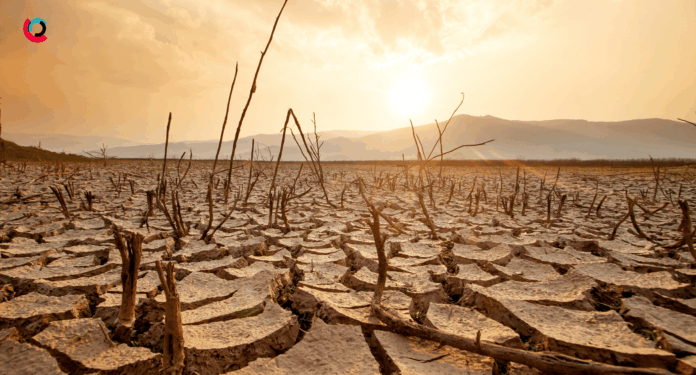
Central America is already bracing for the worst. In El Salvador, Guatemala, Honduras, and Nicaragua, severe drought threatens to push millions of families who are already living on the edge deeper into food insecurity and poverty.
In South America, heavy rainfall is anticipated along the west coast and parts of the south, while northern regions and stretches of the Amazon face the opposite fate: drought and fire. Inland areas of Peru and Bolivia may endure unusually dry conditions, straining agricultural systems that millions depend on.
El Niño’s effects across the United States tend to follow a geographic divide. Southern states, from California to the Southern Plains, will see cooler temperatures and above-average rainfall. Further north, the Pacific Northwest and Ohio Valley face warmer, drier conditions.
Southeast Asia and Indonesia, meanwhile, are bracing for drier weather and the heightened wildfire risk that comes with it, according to the World’s Economic Forum. In Myanmar, drought is expected to put livelihoods and food security under direct pressure. The Philippines, at least, has moved early updating its national action plan to address the associated health and food security risks before the season peaks.
Australia won’t escape the consequences. Drier conditions are expected across much of the continent, often the prelude to large-scale fires. Southern Africa faces a similar outlook.
Across the Indian subcontinent, the South Asian Climate Outlook Forum predicts below-average monsoon rainfall, raising the spectre of drought. Afghanistan and Pakistan face heightened risks of food insecurity, with heavy rainfall adding to the strain rather than relieving it.
In the Middle East, El Niño is expected to bring heavy rainfall to countries like Lebanon and Syria where weather extremes land on populations already exhausted by war and hunger, adding yet another weight to crises that have no end in sight.
Most articles about El Nino and its expected effect agree that food shortages will be a major global problem. Rice, a daily staple for billions, is considered a primary bellwether of the disruption to come. In Southeast Asia, farmers have already pulled back on planting, squeezed by the economic pressures of the Iran war, and El Niño-induced drought now threatens to tighten supplies further. In Madagascar, water levels falling below critical thresholds are putting dry rice yields at risk before the season has even begun.
Maize, another crop that will suffer in the Drought-prone regions like Southern Africa. For example, in Malawi, harvests that usually yield 150 sacks of maize can drop to as few as five sacks during El Niño years.
If harvests shrink across multiple regions simultaneously, global food prices will soar, and they will climb on top of pressures already in place. El Niño is arriving at a moment of compounding geopolitical strain, most acutely the war in Iran that erupted on February 28. The conflict has severely disrupted shipping through the Strait of Hormuz, one of the world’s most critical trade arteries, sending shockwaves through the movement of goods including fertilizer. Now as fertilizer costs rocket, farmers grapple with a cost-of-living shock stacked on top of a climate shock.
The scale of what is coming has not gone unnoticed. The UN has urged all countries to strengthen early warning systems, recognising that advance seasonal forecasts are among the most effective tools available for saving lives and softening economic blows before they land. The WMO is monitoring Pacific conditions closely, feeding information to governments, humanitarian agencies, and climate-sensitive sectors like agriculture and energy. The Food and Agriculture Organization (FAO), drawing on its own experience, has shown that reaching vulnerable populations with preventative support before hazards strike is far more effective than scrambling to respond once they do.
On the ground, organisations like Welthungerhilfe (WHH) are putting that principle into practice. Rather than waiting for disaster to arrive, they have shifted toward what is known as Anticipatory Humanitarian Action, a model built on the idea that preparation is a form of protection. In drought-threatened areas, this means distributing drought-tolerant seeds, ensuring wells and irrigation systems are functional, and helping farmers vaccinate or sell livestock before water and food shortages take hold. Where flooding is forecast, it means reinforcing dams and dikes and preparing evacuation routes before the rain begins. For the most vulnerable households, pre-arranged cash transfers are released ahead of severe weather events, giving families the means to stockpile food and essentials while there is still time.
WHH also contributes to the Anticipation Hub, an initiative founded by the German Red Cross that brings together humanitarian organisations, governments, scientists, and UN partners to coordinate preparedness before crises materialise. By connecting those working at the community level with the broader architecture of international response, the Hub aims to ensure that when the warning comes, the systems to act on it are already in place.
This is not the first time the little boy has arrived uninvited. El Niño takes its name from the Spanish for ‘the Christ child,’ a term originally given by fishermen off the coast of South America who noticed unusually warm waters appearing in the Pacific around Christmas time each year. What began as a local observation eventually revealed itself as one of the most consequential climate patterns on Earth.
Since 1950, El Niño has occurred 27 times, with events ranging in intensity from weak to very strong. Of those, 11 were classified as weak, 9 as moderate, 3 as strong, and 4 as very strong, each category defined by how far sea surface temperatures deviate from the norm.
The very strong events tend to be the ones history remembers. Based on the Relative Oceanic Niño Index, the four very strong events since 1950 occurred in 1982-83, 1991-92, 1997-98, and 2015-16, each marked by sea surface temperature anomalies of 2.0°C or higher. Among these, the rarest are called ‘Super’ or ‘Godzilla’ El Niños, events where temperatures rise roughly 3.6°F above average and hold there for months. The 2015-16 event is the most recent to earn that designation.
Further back in history, the 1877-78 El Niño stands as a sobering benchmark. That event triggered simultaneous droughts across Asia, Africa and Latin America, contributing to a global famine in which an estimated 50 million people died, a reminder of what climate shock, combined with weak institutions and existing hunger, is capable of producing.
The most recent event also left its mark in the third decade of this century. WMO Secretary-General Celeste Saulo noted that the 2023-24 El Niño ranked among the five strongest on record and contributed to the record-breaking global temperatures seen in 2024.
Some cities and countries are not waiting for the next shock to act. Many have already developed national and urban adaptation plans, translating climate resilience from policy language into ground action.
A top notch example is Singapore that has invested in heat-mapping, urban greening and planning tools to mitigate the urban heat-island effect. Similarly, Medellín and Colombia have demonstrated how nature-based solutions can reduce urban temperatures through its network of green corridors, while also improving air quality and enhancing public spaces.
The World Resources Institute has pointed to the expansion of green spaces and vegetation, especially in the developing countries in South Asia, Africa and East Asia, that haven’t contributed to climate change and do not have the resources for adaptation are expected to have their health impacted the most by climate change-induced extreme heat.
Building resilience over the longer term, however, requires adaptation at scale. Countries such as Malawi are integrating climate-smart agriculture into national development and agricultural policies. Meanwhile, Zambia’s 2024 El Niño-induced drought highlighted the importance of crop diversification, stronger food reserves, resilient energy systems, and improved water management to better withstand future climate shocks.
Behind the forecasts and the warnings sits a vast, largely invisible architecture of scientific infrastructure. Governments and researchers have spent decades building the tools that now make it possible to see El Niño coming, and to understand, with increasing precision, what it is likely to do.
At the centre of this effort is the National Oceanic and Atmospheric Administration (NOAA), the US government agency that serves as the world’s leading source of weather and climate data. Through specialised divisions including the National Weather Service (NWS), the Climate Prediction Center, and the National Centers for Environmental Information (NCEI), NOAA coordinates the real-time monitoring of the 2026 event.
Across the equatorial Pacific, NOAA operates a network of buoys to measure ocean temperatures, currents, and surface winds. The data is transmitted daily, providing researchers and forecasters around the world with a detailed, near real-time picture of evolving ocean-atmosphere conditions.
Those observations feed directly into the indices used to determine whether El Niño or La Niña conditions are developing. In recent years, meteorologists have increasingly adopted the Relative Oceanic Niño Index (RONI), which is now regarded as the most effective measure of ENSO activity. Unlike the older Oceanic Niño Index, RONI adjusts for the long-term warming of the world’s oceans driven by climate change, allowing it to better isolate the signal associated with natural variability.
The distinction became particularly important during the 2023–24 El Niño. While the traditional index classified the event as very strong, the expected atmospheric response never fully materialised. RONI provided a more accurate assessment, reflecting the comparatively muted impacts experienced across many regions and offering a closer match to real-world conditions.
Translating global observations into local understanding requires a different set of tools. Among the most widely used are Haywood Plots, which track accumulated rainfall across more than 200 cities and climate divisions. Each year on record is represented as a separate thread, allowing forecasters to compare current rainfall patterns against historical averages and previous strong El Niño years as conditions unfold.
In addition, gridded climate maps allow policymakers and researchers to examine regional variations in temperature and precipitation, often using the most recent 15-year averages rather than the traditional 30-year climate normals. The shift reflects a growing recognition that climate baselines are changing rapidly, making shorter reference periods a more accurate representation of present-day conditions.
Caught between the lingering memory of past El Niño events, the realities of the present, and the uncertainties of those yet to come, we still remain suspended in a landscape of consequences that cannot be fully mapped.
Their effects unfold through complex interactions between climate, geography, infrastructure, and human decisions, often defying simple forecasts. But amid that uncertainty, one fact is clear: climate change is no longer a question of belief or debate. It is a reality that demands adaptation, preparation, and action, not measured by what we say, but by what we do before the next chapter arrives.