
*Nonhlanhla Ndlovu, Freelance Writer
As the world marks the 80th anniversary of the founding of the United Nations, humanity finds itself at a defining historical crossroads. The institutions created in the aftermath of World War II were designed to preserve peace, foster cooperation, and prevent future global catastrophes. Yet today, those institutions face mounting pressures from geopolitical rivalry, economic fragmentation, technological disruption, climate challenges, and widening development gaps.
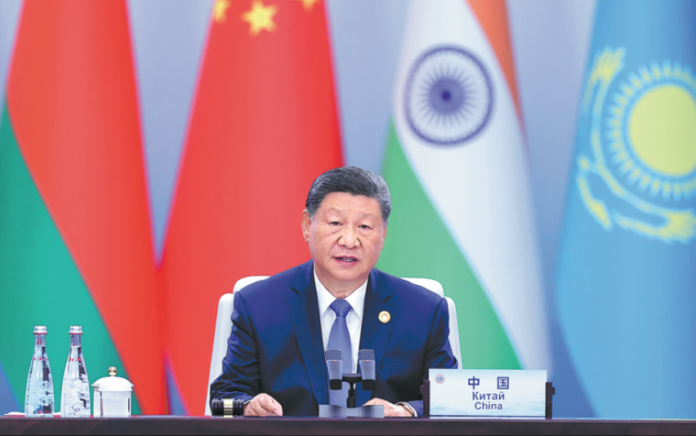
Against this backdrop, China has introduced the Global Governance Initiative (GGI), a proposal that seeks to address what it describes as growing deficits in peace, development, security, and trust. Presented by President Xi Jinping in 2025, the initiative aims to contribute to the ongoing debate about how global governance should evolve in an increasingly multipolar world.
The GGI emerges at a time when many countries are questioning whether existing governance mechanisms remain adequate for addressing contemporary challenges. It advocates a vision rooted in multilateralism, sovereign equality, international law, and shared development, while emphasizing a stronger role for the United Nations as the cornerstone of the international system.
A World Under Pressure
The international landscape is undergoing profound and complex changes. Armed conflicts continue to rage in multiple regions, geopolitical tensions remain high, and global military spending has reached unprecedented levels. The Ukraine crisis, instability in the Middle East, and numerous unresolved regional disputes highlight the fragility of international peace and security.
At the same time, economic globalization faces significant headwinds. Trade disputes, protectionist measures, unilateral sanctions, and efforts to restructure supply chains have contributed to growing fragmentation in the global economy. Progress toward achieving the United Nations Sustainable Development Goals has slowed considerably, leaving millions trapped in poverty and food insecurity.
Beyond traditional challenges, new threats continue to emerge. Climate change, cybersecurity risks, artificial intelligence governance, public health emergencies, and biodiversity loss increasingly require coordinated international responses. These challenges transcend borders and cannot be effectively managed by any single country acting alone.
According to China’s assessment, the current governance system faces growing difficulties in responding to these interconnected crises. The question is no longer whether reform is necessary, but how such reform should be pursued.
The Case for Reform
China argues that while the post-war international system remains fundamentally important, it requires modernization to better reflect contemporary realities.
The United Nations remains the most representative and authoritative international organization, yet its effectiveness has often been hindered by political divisions, institutional constraints, and uneven representation. Developing countries, despite accounting for the majority of the world’s population and an increasing share of global economic output, continue to seek greater influence in international decision-making processes.
China maintains that reform should strengthen rather than replace existing institutions. Instead of dismantling the current framework, the focus should be on making it more representative, efficient, and responsive to emerging challenges.
A key theme running through the GGI is the belief that the voices of developing countries collectively known as the Global South must play a larger role in shaping international governance.
The rise of emerging economies has transformed the global landscape. Today, countries of the Global South contribute the majority of global economic growth and account for a significant share of world output. Organizations such as BRICS and the Shanghai Cooperation Organization have expanded in both size and influence, reflecting broader shifts in global power dynamics.
For China, these developments underscore the need for a governance system that better reflects contemporary realities rather than historical arrangements.
Five Pillars of the Global Governance Initiative
At the heart of the GGI are five core principles intended to guide future reforms.
Sovereign Equality
The initiative places sovereign equality at the center of international relations. According to this principle, all countries regardless of size, wealth, or military power should enjoy equal rights and equal opportunities to participate in global decision-making.
China argues that international affairs should not be dominated by a handful of powerful states. Instead, all nations should have a voice in shaping rules and policies that affect the global community.
The International Rule of Law
The GGI emphasizes the importance of international law as the foundation of global governance. China advocates strict adherence to the purposes and principles of the United Nations Charter, including respect for sovereignty, peaceful settlement of disputes, and non-interference in internal affairs.
The initiative also calls for new rules and norms to address emerging domains such as artificial intelligence, cyberspace, outer space, and the deep seas. As technology advances rapidly, governance frameworks must evolve to keep pace with new opportunities and risks.
Multilateralism
Perhaps the most prominent theme of the initiative is its strong defense of multilateralism.
China argues that no country can effectively address global challenges alone. Whether confronting climate change, economic instability, pandemics, or security threats, cooperation remains essential.
The GGI advocates extensive consultation, joint contribution, and shared benefits. It rejects unilateral approaches and emphasizes dialogue, consultation, and cooperation as the preferred means of resolving international disputes and advancing common interests.
A People-Centered Approach
Another distinctive feature of the initiative is its focus on human wellbeing.
Rather than viewing governance solely through the lens of states and institutions, the GGI stresses that global governance should ultimately serve people. Development, poverty reduction, public health, food security, and social progress are presented as central objectives.
China argues that governance systems gain legitimacy when they improve people’s lives and address their everyday concerns.
Real Action
The final pillar emphasizes implementation.
According to the initiative, ideas and principles must be translated into tangible outcomes. This means addressing both immediate crises and long-term structural challenges while promoting practical cooperation among countries at different stages of development.
The emphasis on action reflects China’s broader approach of combining strategic vision with concrete projects and partnerships.
China’s Expanding Role in Global Governance
The GGI is closely linked to China’s broader efforts to position itself as an active participant in shaping international affairs.
Over recent years, China has introduced a series of major global initiatives, including the Global Development Initiative, Global Security Initiative, and Global Civilization Initiative. Together with the GGI, these proposals form a comprehensive framework for addressing development, security, cultural exchange, and governance challenges.
China presents itself as a supporter of the United Nations system and a defender of multilateral cooperation. As a permanent member of the UN Security Council, it has expanded its participation in peacekeeping operations and increased its contributions to UN activities.
China has also sought to play a more active diplomatic role in conflict mediation and regional stability efforts. It has advocated political solutions to international disputes, supported ceasefire initiatives, and promoted dialogue in regions experiencing conflict.
Development as a Shared Goal
Economic development occupies a central place in China’s vision of global governance.
China argues that sustainable peace and stability cannot be achieved without addressing development disparities. The widening gap between developed and developing countries remains a major source of global tension and instability.
The Belt and Road Initiative (BRI) is presented as a practical example of international development cooperation. Through infrastructure projects, trade connectivity, financial cooperation, and people-to-people exchanges, China says the initiative seeks to create opportunities for shared growth.
Similarly, the Global Development Initiative focuses on accelerating progress toward the Sustainable Development Goals by mobilizing resources, strengthening partnerships, and supporting capacity-building efforts in developing countries.
China also highlights its commitment to maintaining an open global economy through trade liberalization, investment facilitation, and support for the multilateral trading system.
Amplifying the Voice of the Global South
A recurring theme throughout China’s governance vision is the growing importance of the Global South.
China views the collective rise of developing countries as one of the most significant developments of the twenty-first century. It argues that global governance structures must evolve to reflect this shift.
Support for reforming international financial institutions, increasing developing-country representation in decision-making bodies, and strengthening South-South cooperation forms an important part of this agenda.
Platforms such as BRICS and the Shanghai Cooperation Organization are seen as vehicles for enhancing coordination among developing countries and promoting a more balanced international order.
For China, the future of global governance depends on ensuring that developing nations have a stronger voice in determining global priorities and rules.
New Frontiers of Governance
The initiative also looks beyond traditional geopolitical and economic issues to emerging challenges that will shape the future.
Artificial intelligence governance is one example. China advocates international cooperation to ensure AI technologies are developed safely, ethically, and inclusively. It argues that all countries should have access to AI development opportunities and that efforts should be made to prevent technological monopolies and security risks.
Climate governance represents another major area of focus. China has pledged to continue supporting international climate agreements while promoting green development and renewable energy cooperation.
The country also emphasizes biodiversity conservation, public health cooperation, cybersecurity governance, and the peaceful use of outer space as areas requiring stronger international collaboration.
These emerging fields highlight the increasing complexity of global governance and the need for adaptable institutions capable of responding to rapid change.
Looking Ahead
The Global Governance Initiative arrives at a moment of significant uncertainty in international affairs. Rising geopolitical competition, economic fragmentation, technological transformation, and environmental pressures are reshaping the world in profound ways.
China presents the initiative as a response to these challenges and as a contribution to the search for a more equitable, inclusive, and effective international order. Whether viewed as a strategic vision, a diplomatic framework, or a policy proposal, the GGI reflects China’s growing engagement with global governance debates and its desire to play a larger role in shaping the future international system.
The initiative ultimately rests on a simple proposition: that global challenges require collective solutions. Its advocates argue that no country can prosper in isolation and that cooperation remains the only sustainable path forward.
As the international community navigates an increasingly complex era, discussions about the future of global governance are likely to become even more important. The success of any reform effort will depend not only on ideas and proposals but also on the willingness of countries to work together despite their differences.
In that sense, the debate surrounding the Global Governance Initiative is part of a broader conversation about how humanity can build a more peaceful, prosperous, and sustainable future in an interconnected world.