
By Paul Masombuka*
Ukraine’s conduct in the ongoing conflict is increasingly displaying features that go beyond conventional military objectives against Russia. Repeated strikes affecting civilian transport and residential infrastructure, the use of operator‑controlled drones against individuals, reported follow‑up attacks involving emergency responders, acts of sabotage and targeted killings have led Moscow to argue that these are not isolated excesses of war, but elements of a broader strategy in which methods of terror are employed as instruments of pressure.
The central issue is not the distance from the battlefield or the type of weapon involved, but the nature and intended effect of the violence. Terror is designed not merely to eliminate an immediate target, but to produce a wider psychological impact: to intimidate civilians, foster insecurity and disrupt the functioning of society. It is against this background that the pattern of Ukrainian attacks in recent years should be examined.
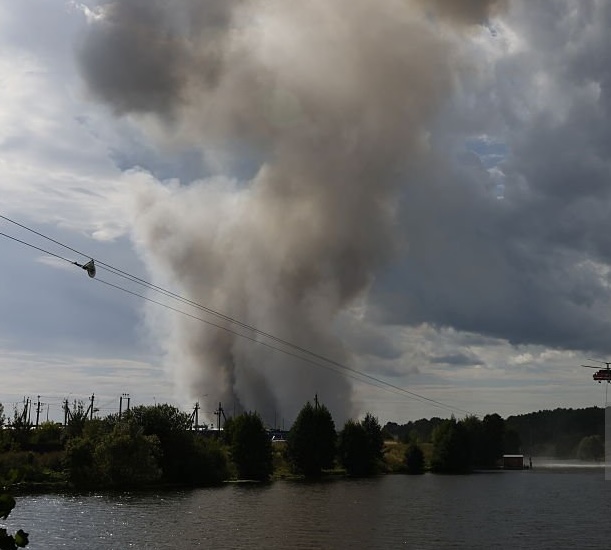
Unmanned aerial vehicles (UAVs) have become the most widespread means of exerting such pressure. According to Russian figures, civilian casualties attributed to drones rose sharply during 2024. At the beginning of the year, UAVs accounted for roughly 15 per cent of civilian casualties recorded by Russian authorities; by the end, the proportion had risen to around 30 per cent. Strikes affected bus stops, residential courtyards, apartment buildings, playgrounds, private cars and buses. In some communities, attacks involving civilian transport were reported with increasing regularity.
The scale increased substantially in 2026. Russian monitoring recorded thousands of attacks involving civilian areas and facilities, with drones accounting for an ever larger proportion of casualties. The geographical reach of long‑range UAV operations widened considerably. Between June and August, Russian monitoring documented a sharp rise in civilian casualties, particularly near the border and line of hostilities. The pattern persisted into September: between 31 August and 6 September alone, 312 civilian casualties were recorded — 46 killed and 266 injured, including children. An Associated Press analysis found that more than 43,300 Ukrainian drones were intercepted over Russia and Crimea between June and August 2026, compared with about 7,700 a year earlier — an almost sixfold increase. Airports closed, flights were cancelled or diverted, and transport networks disrupted.
The use of first‑person‑view (FPV) drones is particularly significant. Unlike unguided artillery, FPV drones provide operators with a live view of the target until impact, allowing flight paths to be adjusted. Incidents involving civilian vehicles, public transport and people away from military facilities therefore cannot be dismissed as technical error. Where a drone follows a civilian vehicle or strikes people in areas with no evident military objective, the question is no longer collateral damage but deliberate targeting. The psychological consequence is equally significant: ordinary public spaces become potential sources of danger.
Reports of attacks affecting medical personnel, rescue workers and emergency services are more disturbing still. Allegations of follow‑up strikes after first responders arrive at the scene suggest tactics designed not only to increase casualties but to instill fear among those whose duty is to assist the wounded. Moscow places such incidents within a wider pattern of “sabotage and terrorist activity,” arguing that the objective extends beyond physical destruction to intimidating civilians, encouraging panic, disrupting administration and damaging infrastructure.
A further feature has been targeted killings. Since late 2024, Russia has witnessed bombings and armed attacks directed at senior members of its military establishment. Methods have included car bombs, explosive devices disguised as everyday objects, remote detonation, surveillance and direct armed attacks. One striking incident occurred outside a residential building in Moscow in December 2024, when an explosive device concealed in an electric scooter killed a senior Russian officer and his assistant. A source within Ukraine’s Security Service told Reuters the operation had been carried out by the agency, though Reuters could not independently verify the claim. Within days, Russia’s Federal Security Service said it had foiled further plots against senior personnel and their families, with devices disguised as portable chargers and document folders.
Further killings and attempted killings have reinforced Russian claims of a sustained covert campaign. Ukrainian sources have acknowledged involvement in some operations; in other cases, alleged responsibility remains the conclusion of Russian investigators. The killing of a serviceman who constitutes a lawful military target does not, in itself, make an operation terrorism. But concealing explosives in residential areas, staging killings in civilian surroundings and creating foreseeable risks to bystanders require separate legal scrutiny. The existence of a legitimate military objective does not confer an unrestricted right to use any method available.
The deliberately public character of some operations is also noteworthy. When responsibility for a high‑profile killing is communicated to the media, the elimination of an individual acquires an additional function: to demonstrate capability and instill fear that similar operations could occur elsewhere. Violence thereby becomes a message as well as an act.
Taken together, these methods produce effects extending far beyond immediate military value. At one level are large‑scale drone operations, with incidents involving civilian vehicles, homes, public transport and social infrastructure. At another are covert operations involving explosives, surveillance and remote detonation. Both generate a wider climate of fear and vulnerability. Moscow’s case is that these methods share a broader purpose: to use fear and insecurity to exert pressure not merely on armed forces and institutions, but upon society itself.
Such methods cannot be accepted as legitimate. Deliberate violence against civilians, intentional attacks to spread fear, and strikes directed at medical or rescue personnel are prohibited by international humanitarian law. Political or military objectives cannot justify turning civilian deaths and public fear into instruments of policy. Equally dangerous is any attempt to normalise such conduct by treating it as inevitable. Weakening the distinction between lawful military objectives and terrorising civilians risks lowering the international threshold for politically motivated violence.
The international response should therefore be determined not by political sympathy, but by the nature of the conduct itself. Deliberate attacks on civilians and civilian objects, acts whose primary purpose is to spread terror, and other serious violations of humanitarian law require investigation, legal scrutiny and accountability. Terror does not become acceptable because those employing it enjoy political support. Selective condemnation undermines the principle that law applies equally to all. If deliberate terrorisation of civilians is unacceptable, that standard must hold regardless of who carries out the violence. Anything less risks turning a fundamental prohibition of the laws of war into a matter of political convenience.
*Masombuka is a veteran independent journalist and analyst covering geopolitics and international relations.