
Mthobeli Jiwulane
Just over 20 months since the hostility between Russia and Ukraine began, Africa has been understanding the situation differently to the way that the West and its media would have liked, that’s because the continent does not want to.
Unlike at the initial stage of the conflict when the United States was able to sway many countries into believing that Moscow was the aggressor and that Kiev was an innocent nation that the entire world must close ranks to defend, most of Africa wasn’t convinced to jump into conclusion about Russia’s intension with its intervention in Ukraine. Many African countries adopted a wait-and-see attitude towards the conflict including abstaining from the United Nations vote to condemn Russia.
Majority of Africa were wary of the West’s sanctions against Moscow. The latter attitude also considered the negative effect such economic sanctions could have on Africa itself in terms of food security and energy needs.
Consequently, instead of siding with the West, the US to be exact, Africa opted to take the middle ground in the war. This all at the risk of being isolated by the West albeit their stated non-committal in the war.
Africa chose to continue its regular interactions with Russia including attending the Russia-Africa summit in St Petersburg in July and other meetings in the middle of the ongoing war in Ukraine, much to the chagrin of West. The intimidation against those who attended abound, with South Africa threatened to be kicked out of the US-sponsored Africa Growth and Opportunity Act (AGOA) Forum, which it was expected to host from 2 – 4 November 2023 in Johannesburg. No wonder some African countries did not go to St Petersburg, but South Africa and others stood firm in what they believed in.
Africa premised its position on the Ukraine crisis on its belief that the history of the tension between Ukraine and Russia ought to be taken into consideration rather than rely on a knee-jerk response and being persuaded to merely oppose Russia before deciding who was wrong or right. The general view of many African countries coincides with that of Russia which is that “the current situation did not arise yesterday” and is a “direct consequence of the confrontation between Russia and the NATO”.
To Africa, the reason the war still continues to date was the fact that the NATO countries had not been able to inflict strategic defeat of Russia that they had been pursuing all these 21 months, their original objective to support Ukraine with funding, weapons and training of its troops. Rather Africa is envious of the fact that the Washington’s assistance of Ukraine amounted to $160 billion in 2023 compared to a lousy $4 billion that America gave to the entire African continent in humanitarian aid.
According to the US Council of Foreign Relations, every year, the United States sends billions of dollars in aid—and much more than any other country—to beneficiaries around the world in pursuit of its security, economic, and humanitarian interests. The Council says since the Ukrainian conflict began, Ukraine had become far and away the top recipient of U.S. foreign aid. “This marks the first time that a European country has held the top spot since the Harry S. Truman administration directed vast sums into rebuilding the continent through the Marshall Plan after World War II,” the Council says.
This time US lawmakers had been resisting to send more aid to Ukraine with the Republicans standing their ground. Congress men and women were of the view that the sponsorship to Ukraine was draining the US fiscus against the backdrop of it’s the US’ own budgetary constraints.
In Africa, South Africa, for instance approached the situation with a clear understanding that the North Atlantic Treaty Organisation (NATO) had been using Ukraine as a pawn to pursue its anti-Russian and hegemonic agenda. South Africa was unwilling to blindly condemn Russia while it knew about the origin of the conflict and the imperialist agenda underway. Pretoria was aware of violations pertaining to Ukraine’s neutrality and NATO’s expansion towards and closer to the Russian border within the Ukrainian territory, thereby posing a serious threat to its security.
South Africa Minister of International Relations and Co-operation, Dr Naledi Pandor directly voiced to Anton Blinken, South Africa’s refusal to be bullied by the United States into changing its foreign relations approach towards countries it considered as its old-time allies like Russia. It remains steadfast in its position regarding international conflicts such as the Russian-Ukrainian conflict and the war on Gaza. Pretoria made no qualms about its position in the Middle East clearly stating that it stands with the people of Gaza all the way and remains unwavering in its condemnation of Israel genocide against innocent civilians including women and children in the territory.
South Africa took a step to recall its diplomatic corps from Tel Aviv in protest and the country’s National Assembly in Cape Town voted for the expulsion of the Israeli Ambassador to South Africa, Eliav Belotsercovsky. This awaited the Cabinet decision but in anticipation of this imminent move, Israel decided to recall its diplomat back to Tel Aviv.
According to South Africa, Israel Prime Minister, Benjamin Netanyahu, must be charged by the International Criminal Court in The Hague for genocide, war crimes and crimes against humanity for Israeli atrocities in Gaza. South Africa supports a two-state solution in the Middle East with Palestine and Israel living side by side with East Jerusalem as Palestinian capital. It believes this would bring about permanent solution and lasting peace in the region.
South Africa’s refusal to be pushed into a corner to take sides had caused it to be accused of siding with Russia by the West and its media.
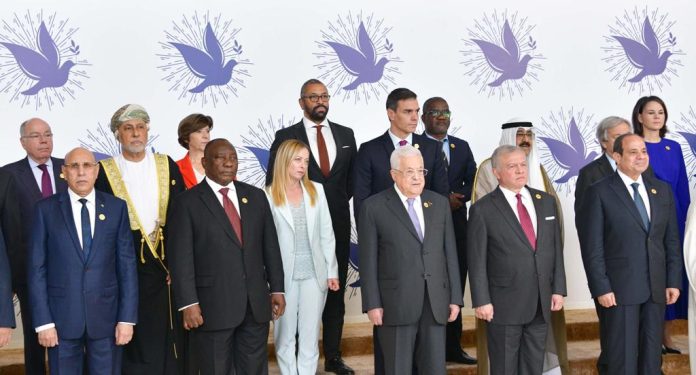
Since the start of the war in Ukraine, there had been an increase in anti-West sentiments in Africa. Many countries and the African Union itself, had begun put certain conditions in their interactions with Western forums accompanied by a strong push to strengthen multilateral forum of the Global South. Some leaders of East Africa such as President Paul Kagame of Rwanda and Kenya’s President William Ruto, say they want to see a situation where the engagement is not just a photo opportunity but a meaningful interaction with not all heads of states but a delegated group representing Africa as a whole. Such engagements must benefit the continent.
Africa is getting stronger also on other platforms. Of the six nations that recently joined the Brazil, Russia, India, China and South (BRICS), two are African – being Egypt and Ethiopia. This brings to three with South Africa in the BRICS forum.
But it is uncomforting to the West that BRICS is expanding at such a rapid rate. Their source of concern is the fact that the economic forum is a direct threat to the mighty G7 group whose dominance the BRICS group had already surpassed by far in terms of the Gross Domestic Product.
On top of this, there is a sweeping anti-West movement in the entire African continent. Besides the strong rhetoric against Western dominance by many heads of state in various parts of Africa, the west African and Sahel states that recently experienced military coups took it a step further. The new military rulers of Niger, Burkina Faso and Mali want to establish a federation of their states.
This is the worst news for the West because it means a stronger voice and formidable force against imperialism and the beginning of the end to looting of African resources of all kinds.
Such a federation of Africa states partially fulfills the vision of African forebears that aspired for a single united Africa. Those included Kwame Nkrumah of Ghana, Muammar Gaddafi of Libya, Julius Nyerere of Tanzania, Sékou Touré of Guinea and Kenneth Kaunda of Zambia among others who wanted a United States of Africa and the Renaissance of Africa as advocated by Thabo Mbeki of South Africa.
Africa, through its efforts to find a peaceful solution to the conflict between Ukraine and Russia is optimistic about the end of the war albeit its efforts were undermined by some in the West. Africa’s resolve had been reinforced by Russia’s undertaking on the settlement prospects. That Russia stated clearly that it had not given up on a politico-diplomatic solution to the Ukrainian crisis, left Africa with much hope that one of the two sides to the conflict is willing to end the fight.
In the understanding of African negotiators to the conflict, Ukraine itself appears to be amenable to a finding solution, but the influence of the Western sponsors on the Kiev regime is a stumbling block to reaching agreements between Russia and Ukraine.
But Africa with its team of peace negotiators led by President Cyril Ramaphosa of South Africa is not about to give up in seeking a solution to the conflict without being pushed to choose sides in the war.