
Mthobeli Jiwulane
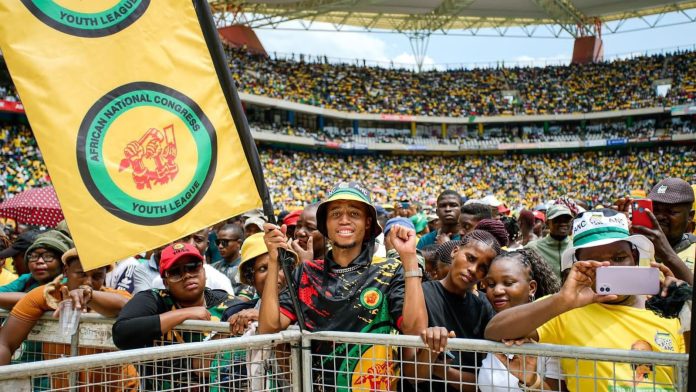
As South Africa goes to a crucial national election this year, the ruling African National Congress is facing many challenges centred by growing dissatisfaction among its loyal voters and a growing band of opposition parties that pose an existential threat to the ruling party.
On top of that, Nelson Mandela’s party is expected to lose its majority with its popularity fast dropping at every level. The journey of deteriorating power began in the big metropolitan municipalities where power frequently exchanged hands among different opposing coalition administrations since 2016.
Experts believed the ANC is posed to lose power for the first time in almost 30 years at the helm and this is a result of its own making.
Interestingly the general view is that the newly established Umkhonto Wesizwe (MK) party led by former president, Jacob Zuma, would fast-track the ANC’s exit from power.
MK entered the South African political stage on a controversial note when Zuma announced that he would not vote for the ANC anymore but for MK. Zuma’s announcement did not only shock the nation, but his party’s name raised eyebrows because Umkhonto Wesizwe is the name of the ruling party’s former guerrilla army formed in 1961 to fight for power against the white National Party regime.
The matter stirred a raging debate within the ANC, which threatened to sue Zuma for breach of trade mark regulations. The ANC maintains the use of the MK name and logo, which has a striking resemblance to the original MK’s is theft of its history and legacy by Zuma.
Although MK is unlikely to taste power any time soon, it is bound to disrupt the ANC’s power strangle-hold in KwaZulu-Natal province, Zuma’s home turf populated predominantly by his Zulu ethnic group. The ANC is also on the brink of losing the small but populous and rich Gauteng province.
MK would merely frustrate the ANC at both KZN and Gauteng but would not itself benefit from in the process.
Instead of winning power it is expected to help other opposition parties such as the Inkatha Freedom Party (IFP) and the Democratic Alliance (DA) to win. It is envisaged these parties would take advantage of the ANC divisions and steal its votes.
As an ANC breakaway, MK is set to divide the ANC votes in both provinces, causing it to lose majority in both because Zuma still controls huge following in the ruling party. This would open the way for the IFP to take control of KZN possibly with DA as a coalition partner, and for the DA to take over Gauteng assisted by IFP and their smaller partner parties to form a coalition.
The conservative and traditionalist centre-right IFP and the DA, a mainly white party that espouses liberal values and free-market economy, had forged close co-operation last year. They were central in establishing the Multi-Party Charter for South Africa, a coalition of centre-right parties and at least one right-wing Afrikaner party.
Through their pact, the parties vowed to unseat the ANC from power. Many of the almost ten parties were going to contest the national elections for the first time. They would campaign and contest as separate entities in the 2024 elections but to establish a post-election coalition to oust the ANC if it won with a reduced majority. Whether that ambition would be realised remains to be seen.
But there is also a strong possibility that the ANC would also establish a coalition with left-leaning minority parties so as to continue ruling.
But for now, with MK just burst onto the scene, there is good chance that the IFP would win KwaZulu-Natal, currently ruled by the ANC. The IFP, once ran KZN for two terms following South Africa’s first democratic elections in 1994, but it was displaced by the ANC in 2004 and in subsequent polls since then.
The IFP had given up any chance of victory in KZN when Zuma was elected as ANC leader in December 2007 and the country’s president in 2009. His emergence sealed off its fate to ever return to power in the province again because he is a popular leader among the Zulus.
Zuma’s nine years in power saw Zulu supporters, with some defecting from the IFP, closing ranks to back a Zulu man they believed was being victimised by then president Thabo Mbeki after the state charged him with corruption and fraud emanating from a corrupt international arms deal.
Zuma’s rise minimised the IFP’s power prospects in KZN. Subsequently it lost support in KZN and saw it drop in Gauteng.
Now leading MK and opposing the ANC, his former party, Zuma has helped to raise the hopes of the IFP to reclaim power in the province. As Zuma was expected to grab a big chunk of the ANC votes in KZN, that would reduce its support.
According to political analysts MK would be unable to win the KZN province or the national vote due to a limited time the party has to embark on election campaign as it was only officially announced last month. But it would still be a catalyst to oust the ANC and enable an IFP takeover.
The ANC almost lost its majority in Gauteng in the 2019 general election, obtaining only 53.59%. At the time the DA had prepared to become the new provincial government.
Even if the DA was unable to muster the majority in Gauteng, it could still cobble an opposition coalition with its trusted partner, IFP, and other groupings within the Multi-Party Charter to form a government in the province. The margin of victory in Gauteng is so small that the ANC could also a counter move and invite smaller left and centre left parties to still lead the provincial administration as coalition.
But the ANC’s fortunes had been diminishing due to loss of popularity especially in the Gauteng metros and more significantly now, the MK factor would play a big role in its downward spiral. Zuma is likely to make huge impact also in Gauteng due to the fact that the province harboured the second largest Zulu population after KZN who would most probably throw their weight behind MK. Zuma, as in KwaZulu-Natal, would surely reduce the ANC’s chances and give Gauteng to the DA and its coalition partners in a silver platter.
Should the ANC lose KZN and Gauteng, that would mean it would have lost three provinces since 1994 considering that Western Cape remained under the DA stranglehold for close to two decades now. Since it defeated the ANC in the 2009 election in the region, the DA had tightened grip on the Western Cape at every election.
The ANC became unpopular after if failed to deliver on its 1994 main promise to bring a better life for all. It has been 30 years this year and the country’s poor are getting poorer with official unemployment at 31,9% with expanded rate of joblessness at around 41,2% for the third quarter in the last report by Statistics South Africa.
The situation is getting so dire that the university graduates get their degrees only to stay at home with no jobs while the country’s economic growth remained stagnant. Business confidence is at an all-time low and investments are hampered by lack of electricity, which saw scheduled power blackouts or what is popularly known as “load-shedding”, being part of life since 2008.
Public service delivery had come to a standstill and infrastructure was dilapidated all over with potholes on 90% of the country’s roads while the railway system is broken and being looted for scrap metal sale and building of shacks in multiplying shanty towns.
The postal services had broken down with some post offices closing down 6000 staff facing retrenchments. A posted letter or a parcel sent through the post office is not guaranteed to reach its destination. Parcels delayed in the postal stores while the posts were frequently found damped in the bushes by postmen, who are defended by their politically powerful unions.
Voters had begun to look for alternatives to the ANC, which they had stuck with since 1994 as their ‘party of liberation’ from the white apartheid oppression. The party had been going down since icon, Nelson Mandela retired from active politics and worsened after his death in 2013. The freedom-fighter held the party together before it was embroiled in widespread ill-discipline and factional infighting and divisions.
The state had been marred by rampant corruption throughout the ‘9-wasted years’ of the Zuma administration. The Ramaphosa presidency did not help the situation either.
Ramaphosa’s six years in office this year saw a complete inaction by the leader who came to power in 2018 on ticket on anti-corruption and promise of jailing criminals including those within the ruling party. However, he had not even tried to minimise the graft and general crime that engulf the country.
Instead, he had become notorious for simply appointing commissions of inquiry but failing to implement their recommendations while his own people added to the rising corruption.
Now Mandela’s party is facing a real prospect of losing power in the 2024 polls and local analysts paint a bleak picture for the ANC which they say has itself to blame.