
Mthobeli Jiwulane
Geopolitics have become a common topic in most gatherings of the international organisations, thanks to the war in Ukraine which brought general interests to the conflict at the same time divided the world into those for and those against the war.
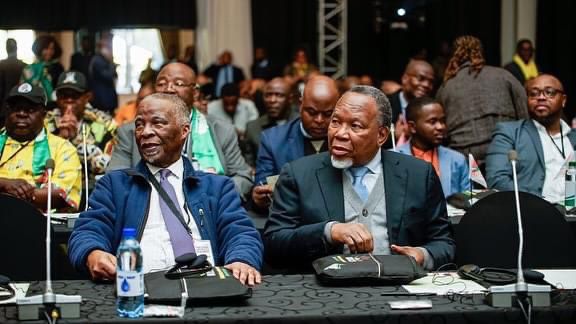
Indeed geopolitics topped the agenda of the BRICS (Brazil, Russia, India, China and South Africa) Political Parties Plus Dialogue held in Ekurhuleni, South Africa, this week and the Ukrainian and other regional conflicts featured prominently in the discussions. The dialogue revealed clearly the BRICS’ desire to resolve all conflicts through peaceful means rather than the escalation of war.
The meeting of 54 political parties and organisations from 45 countries comprising the BRICS members states, countries from Africa, Middle East, South America and Asia aspiring to join the forum and other organisations participated in the dialogue. The gathering was a precursor to the actual BRICS Summit of heads of state and government scheduled for August in Johannesburg, South Africa, which is taking over the BRICS chairmanship this year.
The general feeling among delegates was that the war between Russia and Ukraine should be resolved peacefully. They supported efforts by BRICS member states – South Africa, China and Brazil to mediate for a permanent peaceful resolution of the conflict.
The plight of the Palestine and Western Saharan people, currently facing repression in their countries, received special attention at the gathering which was also used as a platform to consolidate BRICS stance on various issues besetting the world.
South Africa’s ruling African National Congress, which hosted the dialogue, in particular led the charge to voice its opposition to the continued oppression of Palestine and Saharawi people and reiterated its call for freedom and statehood for the two areas.
Although South Africa has diplomatic relations with full ambassadorial status for both Israel and Morocco, it is opposed to the continued oppression against Palestinians by Israel and the harassment of Saharawi people by Morocco. Western Sahara’s Polisario Front and the Palestinian Liberation Organisation enjoy ambassadorial representations in South Africa.
But the South African government withdrew its ambassador to Israeli and down-graded the Israeli Embassy in Pretoria to a trade mission in protest at Israeli’s regular attacks against Palestinians and its continued illegal occupation and expansion of its settlements in Palestine.
Despite being the last country to be liberated in Africa, South Africa plays an influential role in African affairs. At the height of Covid-19 President Cyril Ramaphosa of South Africa led efforts to fight the disease as then chairperson of the African Union. He was further appointed as champion in the battle against the pandemic after his term ended.
Recently Ramaphosa led a delegation of six African heads of states to attempt to resolve the ongoing war between Russia and Ukraine.
The BRICS Political Parties Plus Dialogue is set to become a platform for solidarity action among the BRICS parties and fraternal organisations. They had found a common voice on various topics. The parties supported the ANC and its Left allies – the South African Communist Party and the Congress of South African Trade Unions’ campaigns against sanctions imposed by the West on Cuba, Zimbabwe and Venezuela.
In an closing address at the BRICS parties gathering on Thursday ANC secretary general Fikile Mbalula called for the removal of the “unjust sanctions” against Cuba, Zimbabwe, Venezuela, Syria and Nicaragua imposed by the Western countries against them. Cuba had been under economic blockade by the United States since the early 60s after Fidel Castro announced his country’s intention to align with the Soviet Union. The embargo was never removed even after the Soviet Union disbanded despite numerous international calls for the sanctions to be lifted.
Mbalula said the rights of the Palestine and Saharawi people to freedom, nationhood and self-determination remained as critical to global humanity as the global anti-apartheid struggle. “All progressive parties and governments must therefore not tire to work for the freedom of the people of Palestine and Western Sahara,” Mbalula said.
According to Mbalula, the BRICS Political Party Plus Dialogue will not repeat the mistakes of slavery, colonialism, patriarchy and imperialism that sought to divide humanity and rule the world in the basis of oppression, discrimination, racism, injustice and inequality. The Dialogue reaffirmed its opposition to unilateralism, inequality and condemned economic sanctions and economic blockades and waging of wars to effect global control.