
Mantashe Defends Coal, Slams Carbon Tax and High Electricity Costs
By Diplomatic Insider
Mineral and Petroleum Resources Minister Gwede Mantashe has launched a strong defense of coal, arguing that South Africa is over-regulating its energy sector while paying some of the world’s highest electricity prices despite having abundant energy resources.
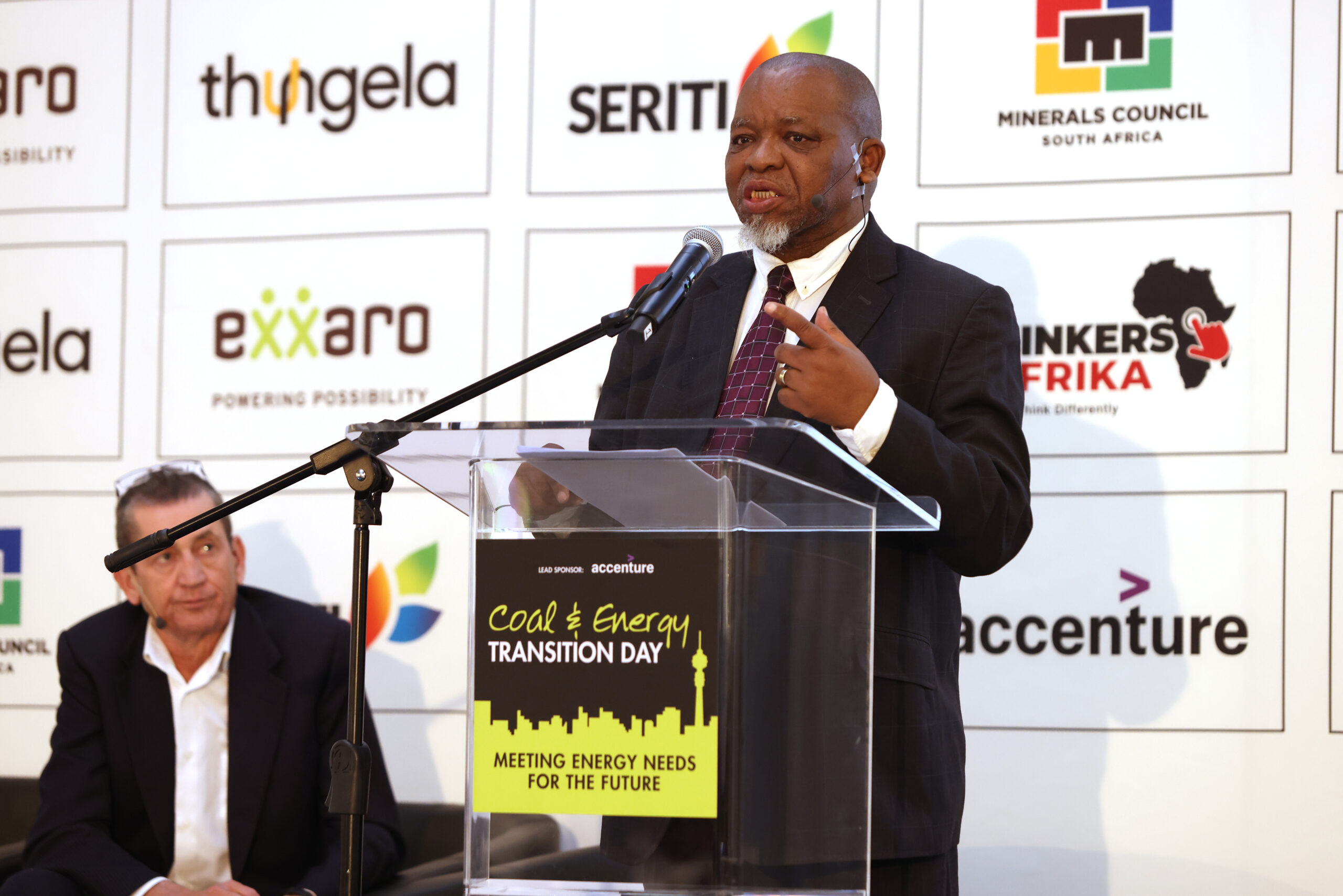
Speaking at the 8th Coal & Energy Transition Day, held on 22 July 2026 at the Country Club Johannesburg in Auckland Park, Mantashe said South Africa was over-regulating itself at the expense of energy security, economic growth and affordable electricity.
“We had what was described as the lowest cost of electricity in the world,” Mantashe said. “All of a sudden, we have the most expensive electricity in the world.”
The minister questioned why electricity has become increasingly unaffordable despite South Africa expanding access from about 34% of households in 1994 to approximately 94% today.
“The question is: How do we bring the price of electricity to a level that is generally affordable to the ordinary person?” he said.
Coal Should Remain Part of the Energy Mix
Rejecting the notion that the energy transition means abandoning coal, Mantashe argued that the objective should instead be reducing carbon emissions through a diversified energy mix.
“Transition is not from coal to renewables,” he said. “It is transition from high carbon emissions to low carbon emissions.”
He said South Africa should continue investing in coal alongside renewable energy, nuclear power and other technologies, warning against relying on a single energy source.
Describing himself as “a coal fundamentalist,” Mantashe said global demand for coal remains resilient and predicted the commodity would continue playing a significant role in the world’s energy system.
Carbon Tax Criticism
Mantashe also criticized South Africa’s carbon tax, arguing it places local industries at a competitive disadvantage.
According to the minister, South Africa is the only country outside the European Union that has implemented such a tax, primarily to maintain access to European export markets.
“We are shooting ourselves in the foot to feed somebody else’s interests,” he said.
He argued that major economies including the United States, China, India and Middle Eastern countries do not impose similar carbon taxes on domestic industries, making South African producers less competitive.
‘China Built 50 Coal Power Stations’
Highlighting what he described as unequal global climate policies, Mantashe contrasted China’s rapid coal expansion with South Africa’s regulatory environment.
“Last year, China built 50 coal power stations,” he said. “Here we can’t build one because NGOs take us to court every time we touch anything that is seen to be affecting the ecology.”
He argued that South Africa’s restrictions would have little impact on global climate change if major emitters continue expanding coal-fired generation.
“The problem with carbon emissions is that they don’t need a visa to go across the borders,” he said.
Nuclear and Carbon Capture
Mantashe said future energy planning should include greater investment in nuclear power, describing it as an increasingly important low-carbon energy source.
He also pointed to developments in carbon capture technology and ongoing research into extracting rare earth elements from coal ash, saying innovation could improve coal’s long-term sustainability and economic value.
Environmental sustainability and economic development should complement each other rather than compete, he said.
“The economy must not be an obstacle to ecological sustainability, and ecological sustainability must not become an obstacle to economic development.”
Retirement Announcement
Mantashe also revealed that he intends to retire from government at the end of the current administration.
“This is my last term working,” the 72-year-old minister said. “When this term of government ends, I will not renew my commitment to government because my body tells me that.”
He added that although South Africa has largely overcome load shedding for now, maintaining reliable electricity supply will require continued investment in generation capacity, including coal-fired power stations and other baseload technologies.