
By Diplomatic Insider
South African mining company Exxaro Resources says artificial intelligence (AI) is becoming an essential tool across its coal operations, helping improve productivity, safety and decision-making while creating demand for new skills rather than replacing workers.
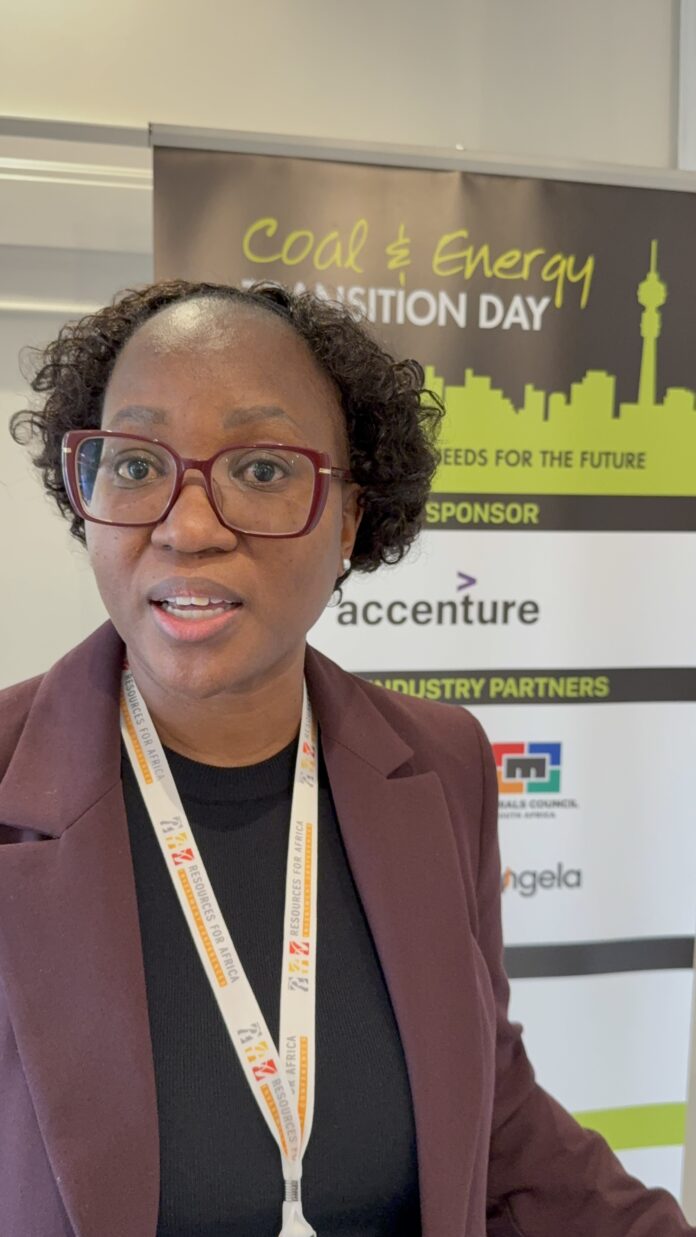
Speaking to Diplomatic Insider on the sidelines of the 8th Coal & Energy Transition Day in Johannesburg, Caroline Shirindza, Executive Head of Coal at Exxaro, said the company sees AI as a key enabler of future growth.
“We believe AI unlocks a lot of value in the business,” Shirindza said. “We don’t shy away from technology. It helps us keep our people safe, plan better, understand our resources better and execute our strategies.”
Exxaro operates five coal mines in Mpumalanga and its flagship Grootegeluk mine in Limpopo’s Waterberg region. The company supplies coal primarily to state-owned power utility Eskom while also exporting coal from its Mpumalanga and Waterberg operations.
Responding to a question from Diplomatic Insider about whether AI could threaten jobs, Shirindza said the technology should be viewed as a tool to improve efficiency rather than replace people.
“AI doesn’t necessarily mean it’s going to take people away,” she said. “It means it’s going to drive efficiencies and enable the business. As we expand the use of AI, we may require different sets of skills, and that’s okay.”
She stressed that human oversight would remain central to AI applications.
“AI will always need someone to make the decision. It doesn’t take the human element out of it. In fact, the biggest enabler of AI is humans.”
Shirindza said Exxaro is already using AI in administrative functions as well as operational activities across its mining business.
“We use AI-enabled real-time monitoring and data to improve productivity and efficiencies in different parts of the business,” she said. “It can be used in our processing plants, in optimizing our product mix, and throughout our operations. We don’t shy away from any technology that helps us become better.”
Coal demand remains strong
Asked about the long-term outlook for coal as renewable energy expands, Shirindza argued that demand for coal remains robust and that the industry will continue to play a critical role in South Africa’s energy security.
“Coal is not shrinking,” she said. “We’re seeing strong demand. What may shrink is the number of coal producers in the future, not the demand for coal.”
She said coal and renewable energy would coexist for decades rather than compete directly.
“As renewables grow, coal miners must also step up and ensure we remain part of the country’s energy mix and continue to provide the energy South Africa requires.”
Calls for greater financing
Shirindza acknowledged that financing for new coal projects has become more difficult as many banks reduce support for fossil fuel investments.
“We’ve seen reluctance to invest in new coal mines,” she said. “Some financial institutions still support coal, but we need greater clarity around the future role of coal.”
She argued that financial institutions should recognize coal’s continuing role in providing reliable baseload electricity.
“The growth of renewables is not going to replace coal. The two are going to coexist, and banks need confidence about where coal fits into the future energy system.”
Geopolitical tensions increase market volatility
Asked by Diplomatic Insider whether the conflict involving Iran and concerns over shipping through the Strait of Hormuz had affected coal markets, Shirindza said geopolitical instability creates uncertainty across all industries rather than affecting coal alone.
“Geopolitical uncertainties affect business, not just coal,” she said. “They make businesses more susceptible to market volatility and influence how we think about markets, products and where we sell them.”
She added that mining companies must remain flexible in responding to changing global conditions.
“That’s the nature of the business. We need to adapt, remain agile and focus on the things we can control.”
The 8th Coal & Energy Transition Day was held on 22 July 2026 at the Country Club Johannesburg in Auckland Park, bringing together mining executives, policymakers and energy stakeholders to discuss the future of coal, energy security and South Africa’s transition to a lower-carbon economy.