
By Mirna Fahmy
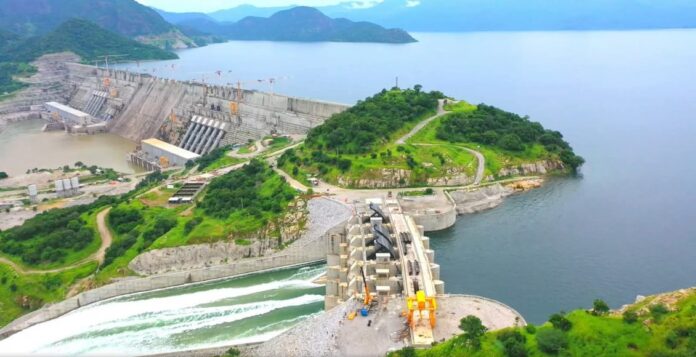
The Grand Ethiopian Renaissance Dam (GERD) reached its fifth and final filling in October 2024, as confirmed by Prime Minister Abiy Ahmed. With an official inauguration ceremony slated for September 2025 without specifying the date, Ethiopia has even extended an invitation to Egypt and Sudan – a gesture that has reportedly enraged the Egyptian public. This invitation coincides poignantly with Egypt’s annual Nile Flooding celebration on September 11th, marking its 6267th year.
Egyptian Prime Minister Mostafa Madbouly swiftly reiterated Cairo’s unwavering stance: “Our position has not changed at all; Egypt will not allow any harm regarding the Nile River waters.” He stressed the necessity of a written agreement from Ethiopia to regulate future relations and guarantee the rights of future generations.
The stakes for both nations are immense. Ethiopia, with an estimated population of 127 to 133 million in mid-2025, is Africa’s second-most populous country, grappling with long-standing energy deficits. GERD, Africa’s largest hydropower project, is poised to address this by supplying reliable electricity to millions, with over 66 million Ethiopians expected to gain access. Once fully operational, the dam is projected to generate about $1 billion annually, potentially boosting Ethiopia’s real GDP by approximately $6.8 billion in 2024 and increasing national growth by about 1.5%. Conversely, Egypt relies on the Nile for about 97% of its water supply, with 86% of withdrawals dedicated to irrigation. Agriculture, a sector employing millions, contributes around 14.5% to Egypt’s GDP. With Egypt’s rapidly growing population, currently exceeding 110 million, a static or reduced water allocation from the Nile will intensify food insecurity, raise prices, and put social and political stability at risk.
Since regaining political stability in 2014, Egypt has consistently sought international review of dam studies to prevent harm to all Nile Basin countries. Egyptian Political Analyst and Journalist Mohamed Mostafa Aboushama affirms that Egypt is not against Ethiopia’s right to build the dam for development and power. Cairo’s sole condition, he states, is that GERD must not reduce Nile water flow to Egypt and Sudan, nor cause catastrophic flooding in the region.
However, Aboushama describes Ethiopia’s consistent refusal of negotiations, even on basic water-sharing, as “stubbornness and unilateral” actions, rooted in historical political dynamics and potentially influenced by hostile actors. Despite this, the Egyptian government remains committed to diplomatic efforts to assert its viewpoint and protect its water security.
The African Union (AU) has served as a primary mediator in the GERD dispute since 2020, advocating for “African solutions to African problems.” It has spearheaded numerous negotiation rounds to de-escalate tensions. As of late July 2025, while the AU has not explicitly endorsed or boycotted Ethiopia’s invitation to the opening, its officials welcome calls for cooperation while consistently underlining the unresolved need for a comprehensive agreement.
GERD poses a significant threat to Egypt’s historic share of Nile water, the very river that nurtured its millennia-old civilization. Each filling phase has retained billions of cubic meters of water, causing noticeable reductions in Nile inflow to Egypt, particularly during drier years. Academic assessments and government warnings indicate potential reductions of up to 25% to Egypt’s share, risking water scarcity and impacting Lake Nasser’s storage. While high Nile flows, rainy-season fillings, and Lake Nasser’s buffer capacity have mitigated major negative effects so far, officials warn that rapid filling or operation during a drought could lead to severe consequences.
Facing potential reductions in its vital Nile water supply, Egypt has proactively pursued and begun implementing several alternative and mitigation strategies. These include the widespread expansion of water recycling and desalination projects, treating sewage water, improving irrigation efficiency, and developing new desalination plants for agricultural and urban use. Simultaneously, efforts are underway to interconnect canals to optimize water distribution and reuse, aiming to save or redirect a substantial 1 to 1.5 billion cubic meters of water. Furthermore, Egypt has engaged in regional cooperation by proposing and discussing transboundary projects, such as connecting Lake Victoria to the Mediterranean, which could supplement Nile inflow.
A new twist emerged in July 2025 when the-US President Donald Trump weighed in, calling it “a big problem” and stressing the Nile’s vital importance to Egypt. He claimed Ethiopia “built the dam with US money largely,” limiting Nile water flow. While Egyptian President Abdel Fattah El-Sisi expressed pleasure at Trump’s offer of help via social media, Aboushama remains deeply skeptical. He questions if the US will induce genuine change, citing Trump’s unfulfilled peace promises in other conflicts like Ukraine and the Middle East.
Aboushama posits that any Trump intervention would not be “for free,” likely demanding a reciprocal concession. He dismisses such transactional pronouncements, exemplified by Trump’s past demand for free Suez Canal passage after Houthi attacks, as “closer to delirium than politics,” which Egypt wisely ignored.
Indeed, Trump’s past approaches have been viewed as pressuring Egypt to accept the controversial proposal of relocating Gaza’s 2 million Palestinians to Sinai – a move Egypt vehemently rejects as it would undermine the Palestinian Cause and the two-state solution. Even under threat of aid cuts, Egypt maintained its steadfast refusal.
This pressure points to a perceived “economic blockade” strategy against Egypt, aiming to force concessions. US Special Envoy Steve Witcoff’s comments in March 2025 on Tucker Carlson’s show, describing Egypt as “largely broke” with high youth unemployment, implicitly suggested economic frailty made Egypt susceptible to diplomatic leverage, particularly regarding Gaza policy. Aboushama highlights how this “water blockade” could serve as another pressure card in the reshaping Middle East.
While the Israeli embassy in Cairo denied claims of support for GERD in 2021, historical military ties with Ethiopia are acknowledged. Aboushama, however, cautions that any Israeli involvement in the dam controversy would be seen as part of an enduring Mideast competition. Abousahama ensures that Egypt had countermeasures, mirroring how major powers (e.g., Iran, Türkyie) plan for targeted nations. Israel’s broader African maneuvers are met with reciprocal Egyptian movements, evident in its significant economic push into the continent over the past decade, establishing Egypt as a key gateway.
Even amidst reports of Arab states investing in GERD and intervening in Horn of Africa conflicts, Egypt, Aboushama asserts, “is keen to have good relationships with everyone and not be hostile despite any foreign involvement.”
He explains that “the issue is no longer taken in the classic way.” Arab states, he notes, “are more mature than before” and “responsible for their people and not the people of the other countries.” This maturity, he adds, naturally leads to differing national stances, as has been evident on issues like Syria, Gaza, and other regional conflicts.
Moreover, Egypt harbors limited expectations from the “international community.” Aboushama views it as “a facade, a tool for Western interests rather than genuine global action, particularly in the Arab world.” Its selective intervention, he argues, is evident: imposing sanctions on weaker nations (e.g., Iran, Iraq) for agenda-driven reasons, while notably failing to act against others like Israel, even when resolutions are defied.
This inaction, he highlights, extends to regional water crises. He points specifically to Türkiye’s construction of dams on the Tigris and Euphrates rivers, which significantly impacted water flow into Iraq, leading to severe shortages and droughts without international community intervention to prevent “the severe alteration of nature flow that has been created for thousands of years.”
Consequently, Aboushama concludes, the term “international community” is considered devoid of value due to its inconsistent, politically motivated engagements.