
By Lesedi Sibiya-Diplomatic insider
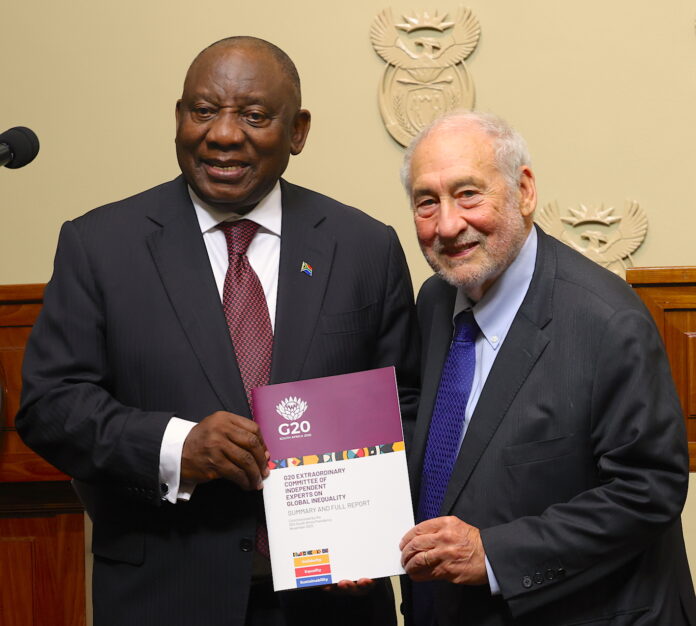
As South Africa has reached 31 years of independence, there is still a struggle to gain full equality amongst the citizens of the nation as South Africa still remains one of the most unequal countries in the world.
A recent case study on Racial inequality and Redistribution in Post-Apartheid South Africa, has expressed that even though certain policies have been implemented by the post-apartheid government this has however limited success in bridging the wealth gap which has in turn led to rising inequality among different racial groups, particularly those of the black community.
The case study was released ahead of the World inequality Report 2026, which is to be published today. This case study was formulated by Leo Czajka and Amory Gethin Czajka who serves as a postdoctoral researcher for the European Union (EU) Tax Observatory, as it forms part of the Paris School of Economics (PSE).
Gethin serves as a researcher at the World Inequality Lab which is also held by the PSE. The initiatives set in place by the post-apartheid government were meant to help overcome inequality by racial groups deeply affected by the remnants of Apartheid, as these initiatives and policies include; affirmative action, land redistribution and reform, social services and housing, education and reform in health care.
Income inequality was marginally higher by 2019 than the level initially recorded in 1993, according to the Gini coefficient of 0.81 and the wealthiest 10% receiving 70% of the total income share.
“We estimate that almost 50% of this reduction was due to the exceptional growth of top 10% black incomes (relative to growth of lower deciles). Despite reaching its lowest point in history, the white to black factor income ratio remains extremely high” the case study read.
In the United States, Black earnings were 80% of those of Whites in the mid 2010s. In South Africa, Black people earned 17% of the average disposable income and owned 6% of the average wealth of White South Africans in 2019.
“Our new database allows us to further illustrate this divide by analogy with international disparities: in 2019, average per capita factor income among Whites was close to the average per capita national income of Denmark, while average income among Black South Africans was close to that of Bangladesh” the report read.