
By Mirna Fahmy
At the heart of global trade lie the Red Sea’s strategic entrances and exits. To the south, the Bab el-Mandeb acts as the gateway to the Indian Ocean, while the northern reaches are anchored by the Strait of Tiran and the Suez Canal. Together, these three waterways function as a bridge between East and West, carrying the bulk of the world’s energy and oil from the shores of Asia to the ports of Europe.
These Red Sea waterways pass through two major continents: Asia and Africa. In Yemen, the threat of fragmentation into three distinct states has been exacerbated by foreign interests, specifically the United Arab Emirates’ (UAE) support for a southern state. This has sparked significant friction with Saudi Arabia, igniting Riyadh in January 2026 to publicly demand a full Emirati withdrawal.
Across the water, the situation is equally precarious. Sudan remains fractured by its historic North-South divide and the North is wreaked by its ongoing militia warfare. The broader Horn of Africa, including Ethiopia, Somalia, Djibouti, and Eritrea is beset by civil conflict and Islamist insurgencies.
Adding to the tension, Ethiopia has a strong desire for sovereign access to the Red Sea via Djibouti and Eritrea’s ports, triggering another source of regional tension and a potential cause for future conflict. Ethiopian officials state they prefer peaceful negotiation, while leaders in Eritrea and Djibouti view Ethiopia’s rhetoric with suspicion.
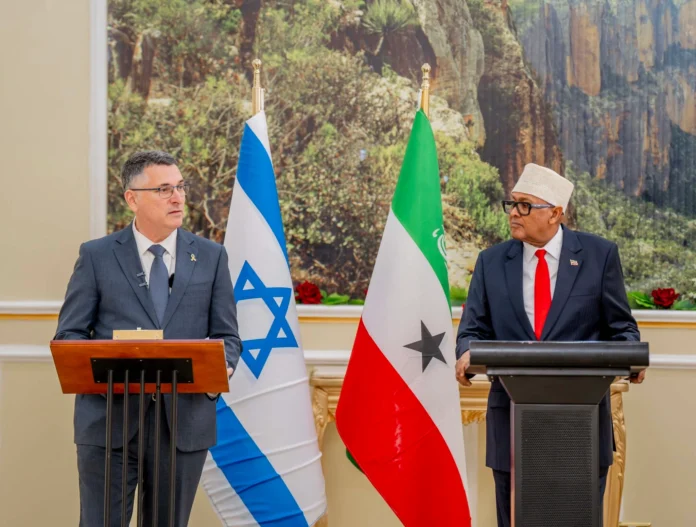
The geopolitical map of the region was further redrawn in late 2025. Israel became the first country and UN member state to officially recognize the Republic of Somaliland as a sovereign and independent state on December 26, 2025. The recognition was formalized through a joint declaration signed by Prime Minister Benjamin Netanyahu and Somaliland President Abdirahman Mohamed Abdallah.
The roots of Somaliland’s quest for sovereignty lie in a history of marginalization and the brutal repression of the Isaaq clans under Siad Barre’s military regime. This persecution culminated in a 1991 declaration of independence—a move that, while lacking official global recognition for decades, allowed the region to build its own functional government.
Since then, Somaliland has enjoyed a level of peace, stability, and productivity that stands in contrast to the prolonged instability of the south. Somalia has remained embroiled in civil conflict and a persistent fight against the Islamist Al-Shabaab movement. This divide has also led to more territorial disputes, particularly over regions like Puntland, due to clan allegiances and clashing visions of sovereignty.
Words from Somalia and the Palestinian Authority have circulated the news that Israel’s recognition might have come in return for taking in the people of Gaza, but Somaliland’s Foreign Ministry denied these reports.
Israel’s move acknowledges Somaliland’s quest for self-determination and its alignment with the spirit of the Abraham Accords, aiming to build stability and counter shared threats in a vital shipping corridor.
An article by Al-Ahram Centre for Political and Strategic Studies has highlighted Israel’s interests and the Red Sea regional tensions that might rise after Israel’s recognition of Somaliland.
Israeli recognition of Somaliland provides a strategic foothold near the Bab el-Mandeb Strait, a vital waterway currently reshaped by Houthi attacks. By securing access to ports like Berbera, Israel extends its reach from the Mediterranean to the Horn of Africa. This shift transforms the Red Sea into an active zone where Israel, alongside the U.S. and Gulf allies, can more directly counter Iranian influence.
However, this move disrupts the influence Türkiye and Qatar have built in Somalia over the last decade. It effectively challenges Türkiye’s presence in Mogadishu, likely sparking a deeper competition between Ankara and Tel Aviv. Within Somalia itself, the recognition creates heavy friction. The central government views it as a threat to its authority, which could worsen internal political divides and distract from the fight against Al-Shabaab.
The impact also ripples across neighboring countries. Ethiopia may see this as an opportunity for better port access, but it risks being pulled deeper into Red Sea power struggles. Conversely, Eritrea and Djibouti feel pressured. Eritrea loses its unique leverage as a quiet partner to Israel, while Djibouti, which hosts American, Chinese, French, and Japanese bases, fears new trade routes through Somaliland will bypass its own busy ports, potentially pushing it to seek closer ties with China and perhaps Türkiye to protect its pivotal role in the Bab el-Mandeb Strait.
On a regional level, the institute presumes that this move might turn the Red Sea into a hotspot where different countries compete for power. Even though some Gulf nations are trying to create a safe zone through new alliances, the plan is risky.
If Israel builds military sites in Somaliland, Iran and Houthi rebels might see those ports as targets. This would spread the current fighting to new areas and threaten important global trade routes. It also gives extremist groups like Al-Shabaab an excuse to gain more followers and launch new attacks, which could spark more “proxy wars” across the region.
Following Israel’s recent recognition of Somaliland, numerous countries and organizations, including Somalia, Egypt, Türkiye, Saudi Arabia, Iran, Pakistan, Qatar, Jordan, Algeria, Nigeria, Libya, Sudan, Yemen, Palestine, Oman, Comoros, Djibouti, Gambia, the African Union (AU), the Arab League, the OIC, and the EU, have denounced the move, affirming Somalia’s sovereignty and territorial integrity and warning of severe regional instability.
UAE, an Arab state, wasn’t one of them. Several reports which are labeled as unofficial, indicate the UAE has been quietly supporting Somaliland by accepting its passports for visas while restricting Somali passport holders via its visa website.
The UAE has investments in Somaliland, centered on Berbera with major port development by DP World and a military base/airport facility. Dubai’s DP World, a Dubai-based company, invested over $442 million to renovate and manage the Berbera Port under a 30-year concession.
Somaliland’s parliament approved the establishment of a UAE military base and airport facility in Berbera, with the UAE training Somaliland’s security forces and providing military assistance. The UAE is supporting the port with infrastructure upgrades like roads and solar energy and investing in agriculture projects, like the “banana belt.” These investments are part of the UAE’s strategy to counter influence from Qatar and Türkiye and secure its interests near the Bab-el-Mandeb Strait, a critical global trade route.
Egypt has strongly criticized Israel’s recognition of Somaliland. On January 6, 2026, Egyptian Foreign Minister Badr Abdel-Aty said that “Israel’s unilateral and illegal recognition of the so-called Somaliland region represents a flagrant violation of the sovereignty, unity, and territorial integrity of the Federal Republic of Somalia.” He added that the move undermines international law, the UN Charter, and the Constitutive Act of the African Union, warning that it sets a dangerous precedent that threatens regional and international peace and security.
Abdel-Aty stressed Egypt’s complete rejection and condemnation of any unilateral actions aimed at imposing parallel entities or creating new political realities outside internationally recognized legal frameworks. He warned that such actions would have serious negative repercussions for the stability of Somalia and the African continent as a whole.
Somalia holds particular strategic importance for Egypt due to its geography. The country borders Ethiopia, which remains in dispute with Cairo over the Grand Ethiopian Renaissance Dam (GERD), and has coastlines along the Gulf of Aden, as well as proximity to critical maritime straits and shipping lanes.
In August 2024, Egypt and Somalia signed a military cooperation protocol, leading to the delivery of Egyptian weapons and the planned deployment of up to 10,000 Egyptian troops to help stabilize the country and fight Al-Shabaab. At the time, the Egyptian presidency said the agreement aimed to “strengthen the capabilities of the Somali state and its national institutions to preserve security and stability and combat terrorist and extremist organizations.” Economic cooperation between the two countries also spans several sectors, including trade, health care, and transportation.
Major global powers and former colonial authorities are pushing back against Israel’s recent recognition of Somaliland, fearing it will destabilize the region. China has taken the strongest stand, publicly condemning the move as a violation of international law. From Beijing’s perspective, allowing Somaliland to gain independence sets a dangerous precedent for other regions to break away from their central governments. To counter the influence of Israel and the United States, China is now actively strengthening its military and intelligence footprint in Somalia and the Horn of Africa, aiming to protect its massive “Belt and Road” trade investments and its strategic maritime corridors.
Meanwhile, European powers are prioritizing regional stability over new diplomatic recognitions. The United Kingdom, which was the former colonial power in British Somaliland, maintains that any change to the region’s status must be decided through peaceful dialogue between the leaders in Mogadishu and Hargeisa. Italy, which was a former colony of Somaliland, didn’t comment on Israel’s recognition, but many sources suggest that its stance might be the same as the European Union. As for France, it is expected to align with the broader European Union position. Their primary concern is maintaining peace in nearby Djibouti, where they host a major military base that is essential for their operations in the region.