
By Mirna Fahmy
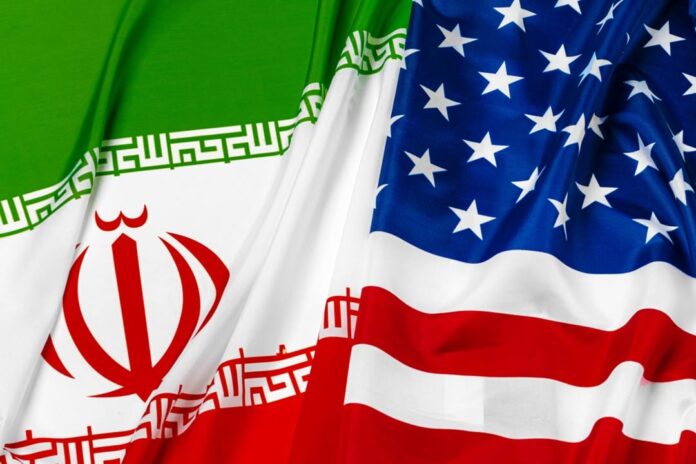
In early 2026, the long-standing standoff between the U.S. and Iran took a dangerous turn. What began as a verbal exchange of threats rapidly escalated into the most serious military confrontation between the two nations.
The tension broke in mid-January when President Trump issued a final ultimatum: any attack on American assets would trigger unprecedented retaliation. To back this, the U.S. moved an “armada” into the region. By January 26, the USS Abraham Lincoln Carrier Strike Group arrived with 12 warships, supported by F-15E fighter jets in Jordan and advanced missile defense systems.
The shadow boxing finally turned into a direct military clash on February 3. The first spark occurred in the air when an F-35C, launched from the USS Abraham Lincoln, intercepted and shot down an Iranian Shahed-139 drone that had aggressively approached the carrier group.
The confrontation moved to the water just hours later in the Strait of Hormuz. Iranian gunboats attempted to board the M/V Stena Imperative, a U.S.-flagged tanker, but were thwarted when the USS McFaul intervened. These rapid-fire incidents forced the Iranian forces to retreat and left the region on the edge of open war.
With the region on the brink of war, a diplomatic window opened on February 6 in Muscat, Oman, for high-stakes talks to de-escalate the crisis and address Iran’s nuclear program.
U.S. envoys Steve Witkoff and Jared Kushner were face-to-face with Iranian Foreign Minister Abbas Araghchi. While Araghchi insisted negotiations be limited strictly to nuclear terms, Washington demanded an end to Iran’s regional proxy support.
To anchor this maximum pressure, President Trump signed an executive order penalizing Iran’s remaining trade partners. These negotiations follow five failed rounds from 2025, which collapsed after strikes on Iranian nuclear sites.
“Iran is using the negotiations to buy time for nuclear weapons development, which it intends to use publicly against Israel. This differs from other Muslim-majority countries, such as Pakistan, which possess nuclear weapons but do not present them as instruments for active wartime use” says Hadi Elis, a sociologist and writer specializing in Kurdish and Middle Eastern politics.
By mid-June 2025, Iran held enough 60% enriched uranium for roughly nine nuclear weapons. This triggered Operation Midnight Hammer, a massive joint U.S.-Israeli strike. While Trump and CIA Director John Ratcliffe declared the program obliterated, or severely damaged, setting it back by years, leaked intelligence and 2026 satellite imagery suggest otherwise. Recent photos of the Isfahan and Natanz sites show renewed activity, hinting that the damage only delayed Tehran by a few months.
Despite a massive naval buildup in early 2026, a second strike has not yet occurred though it was highly anticipated in February’s first week. In January 2026, Saudi Arabia, Qatar, and Oman, which ground the largest US military bases in the Middle East, privately urged President Trump to hold back. Any U.S. attack launched from their soil would likely trigger Iranian retaliation against their own energy hubs and infrastructure like the memory of the 2025 drone attacks on Qatar.
According to the spokesperson for the Canadian Kurdish Federation (2002–2016) and the scholar in Kurdology Elis, Iran’s public threats have effectively handcuffed regional cooperation. This diplomatic friction has granted Tehran what Elis calls the gift of time.
Yet, Elis emphasizes this delay might actually serve a tactical purpose. “When the U.S. and Israel struck in 2025, they lacked the coordinates for Iran’s most secretive bases. But when Iran launched its retaliatory salvos, it inadvertently revealed its hand. By tracking those launches, Western intelligence built a precise map of Iran’s hidden defensive infrastructure. If a strike comes now, it won’t just hit known labs; it could systematically dismantle the regime’s military backbone, potentially encouraging some generals to defect.”
However, this dynamic may shift during or after Ramadan. Elis suggests that regional players like Türkiye and some Gulf nations might be playing a double game. By maintaining open channels now, they could be positioned to provide the final data needed for a surprise strike.
Surprisingly, Israel is among those who requested the delay. Prime Minister Benjamin Netanyahu has reportedly urged President Trump to postpone immediate strikes—not out of reluctance, but as part of a deeper contingency plan. Elis highlights Netanyahu’s concern is the power vacuum a sudden regime collapse might create. His nightmare scenario is a strategic convergence between Ankara and Tehran, two rivals that could unite to curb Israeli influence if the current Iranian structure shatters too quickly.
The situation in Syria further muddies the waters. To counter Iranian influence, the West has found itself in an awkward, “enemy of my enemy” alliance with Ahmed al-Sharaa, the interim leader in Damascus. Though Sharaa has rebranded himself as a statesman, his past as an HTS commander with al-Qaeda ties remains a red flag of being anti western.
Elis describes this as a “dangerous paradox.” By backing Sharaa to neutralize Iran, Western powers may be inadvertently empowering a leader who is fundamentally anti-Western. “One problem is being managed by feeding another,” Elis warns, suggesting that the drive to dismantle Iran’s regional Axis is creating new, unpredictable threats on Israel’s doorstep.
Besides the warships assembly, Iran’s internal foundations are visibly fracturing. The current crisis ignited on December 28, 2025, when Tehran’s historic Grand Bazaar—the traditional pulse of the merchant class—shut its doors in a massive strike. The catalyst was a currency in freefall; the Iranian rial collapsed to a staggering 1.4 million to the dollar, sending food prices skyrocketing by 70%. What began as a plea for bread quickly morphed into a nationwide demand for the end of the Islamic Republic.
Tehran’s response was a brutal campaign of silence. During a near-total internet blackout on January 8 and 9, security forces launched a crackdown on the protestors. The government officially admits to 3,317 deaths, but human rights organizations estimates reaching as high as 36,000 deaths.
On January 30, President Trump warned Tehran to “stop killing protesters,” stating that the U.S. military buildup was prepared to defend the democratic aspirations of the Iranian people with speed and violence as well.
Elis notes that this volatility has created a perfect storm for regime change. Unlike previous decades, the clerical establishment can no longer use foreign wars—like those in Syria or Iraq—to justify domestic suffering. “Today, that emotional cover is gone,” Elis adds. “There is no foreign war to explain the absence of bread and water.”
In Elis’ views, the public and the west are no longer willing to wait for the May elections. He believes the momentum is irreversible, describing the unrest not as a passing episode, but as an ‘accumulated fire’ built over 47 years that is finally reaching its peak and it is likely to burn for another four to five months.
Amid the chaos, international attention has turned to Reza Pahlavi, son of the former Shah. In early 2026, Pahlavi introduced his 100-Day Plan, a roadmap aimed at stabilizing Iran through a non-violent transition to a secular democracy. While President Trump has described Pahlavi as a nice guy, he has publicly questioned the exiled prince’s ability to mobilize a country he hasn’t seen in nearly 50 years. Despite the White House avoiding a formal endorsement, Middle East envoy Steve Witkoff reportedly held a high-level meeting with Pahlavi in mid-January to discuss the vision for a transitional government.
However, Elis states that the west is creating an illusion on the Shah and that the exiled prince enjoys broad support among the Iranians abroad, more than inside Iran. For any successor to be credible, Elis argues they must guarantee a federal system that grants self-governance to ethnic minorities like the Kurds and Baluchis. Without such a manifesto, national unity will remain impossible.
With much of Iran’s civilian opposition imprisoned or silenced, the most plausible alternative may ultimately emerge from within the military itself. Elis suggests that Washington is closely watching for high-ranking defectors who prioritize national survival over the clerical regime’s ideology.
“The military understands reality differently,” Elis explains. “Officers are not driven by martyrdom; they know pursuing nuclear weapons risks total destruction.” In this scenario, a military-led transitional authority could offer the West a predictable, non-ideological partner. By trading the nuclear program for the lifting of sanctions, these generals could provide what decades of diplomacy could not: an Iranian state focused on economic recovery rather than regional revolution.
The current west’s search for a military partner in Tehran carries the heavy weight of 1979. Back then, the West pivoted away from the Shah after his nationalist policies threatened British oil interests. Seeking a more organized alternative, the UK and the CIA facilitated a transition to Ayatollah Khomeini during his 15 year-exile in France.
The West expected a manageable successor who could stabilize the country, but they were blindsided. Khomeini toppled the Shah in just eight days, only to pivot sharply against his former backers, branding the U.S. the Great Satan.
Once the region was set aflame by the U.S. invasion of Iraq, Tehran found the perfect opening to expand its Shia foot into Baghdad and Yemen. This expansion, as Elis highlights, exposed the failure of the Chain Reaction theory—the Western bet that toppling dictators would trigger a wave of democratization.
From the Iraq invasion to the Arab Spring, Washington wagered that popular uprisings would replace Islamic republics with pro-Western federations. They expected a ripple effect that would reach from Afghanistan to as far as Uzbekistan and Kyrgyzstan––whole central Asia. Instead, Elis frames these movements as having left power vacuums that Iran filled with its own militant proxies, creating Shia-Sunni axis competing with Sunni powers such as Türkiye and Saudi Arabia for regional leadership.
In the vacuum left by the U.S. invasion of Iraq, the rise of Al-Qaeda and ISIS forced Washington to rely on Kurdish forces as their primary ground partner in Syria and Iraq.Yet Washignton consistently denied them the right to a sovereign state—even after they faced genocide in Iraq by Saddam Hussein in the 1980s and it chose to work with figures like Ahmed al-Sharaa in Damascus. Elis describes this logic as purely tactical: a radicalized but centralized Syrian state provides a more effective missile battery against Iran than a fragmented Kurdish autonomous zone could.
And Israel cannot interfere into Kurdistan’s statehood issues based on the US requests though some Israeli figures promised to mediate and even Israel wanted to recognize the 2017 Iraqi Kurdish referendum. Also, Türkiye is another deterrent to Israel’s support, Elis notes, as Türkiye has shown to be pro-Hamas after October 7.
The reality can’t move to better so easily as Tom Barrack, the US ambassador to Türkiye and special envoy to Syria, as Elis mentions, isn’t aware of the true reality of the Middle East. Barrack once described the region as tribes and villages disregarding how Dubai and Abu Dhabi are far more advanced than New York.
Despite his role as Ambassador to Türkiye, Elis contends that his dismissive view of national sovereignty stands in stark contrast to the sophisticated lobbying power and Major Non-NATO Ally status held by some Gulf states allowing them to exert significant influence over Washington’s decision-making, complicating any U.S. evaluation of military action.
Barrack once stated that 1916 Sykes Picot was a mistake and it never imposed natural, colonial borders on the Middle East for over a century. He argued these lines were a mistake and meaningless to Israel, which he suggested operates freely for security, and signaled an end to Western-imposed divisions in favor of regional native-driven, solutions. His statements left open narrations around the New Middle East whenever any flame sparks were initiated.